_1768872582663.webp)
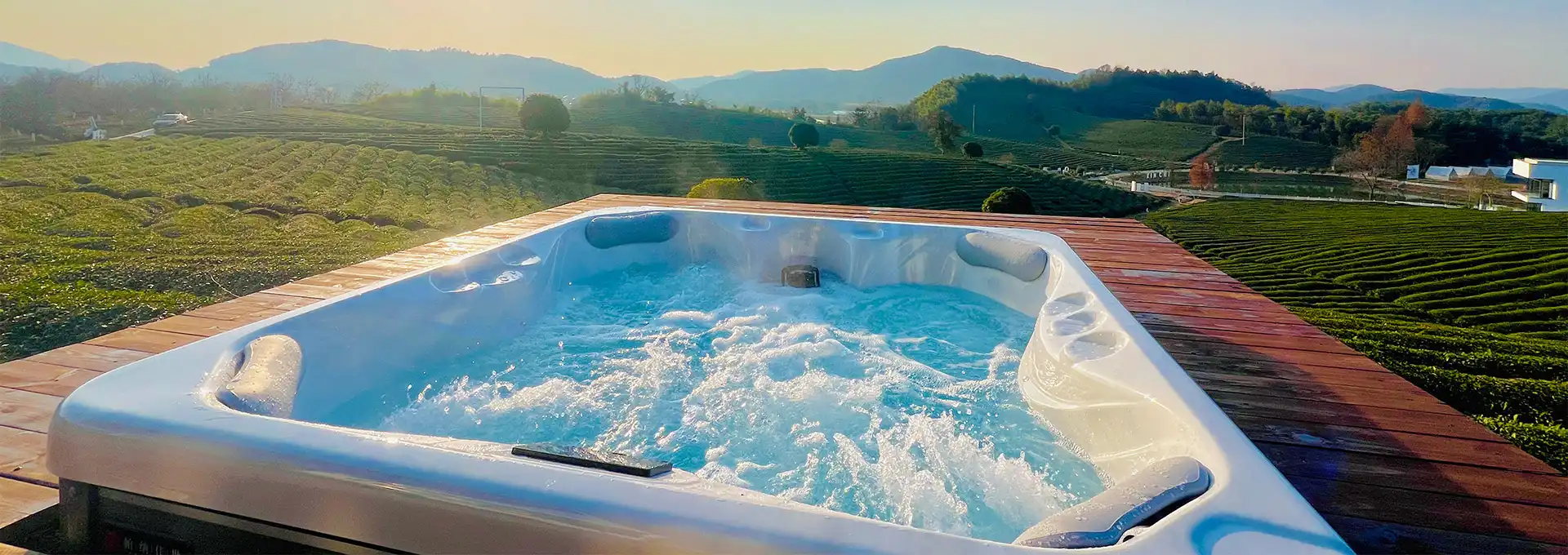
3-4 Person Hot Tubs vs. Larger Models: Which Is Better?
When people ask me whether a compact spa or a larger model makes more sense, my answer depends entirely on how the tub will actually be used. For most budget-conscious homeowners, couples, and small hospitality operators, 3-4 person hot tubs deliver everything needed — genuine hydrotherapy, durable construction, and manageable running costs — without the spatial and financial burden of oversized units. If your patio, deck, or poolside area is tight and your guest count rarely exceeds four, a well-engineered compact spa almost always wins.
Understanding the Key Differences Between 3-4 Person Hot Tubs and Larger Models
Size is the most important factor when buying a spa because it affects almost every other choice, from how to install it to how much it will cost each month.
Dimensions and Footprint
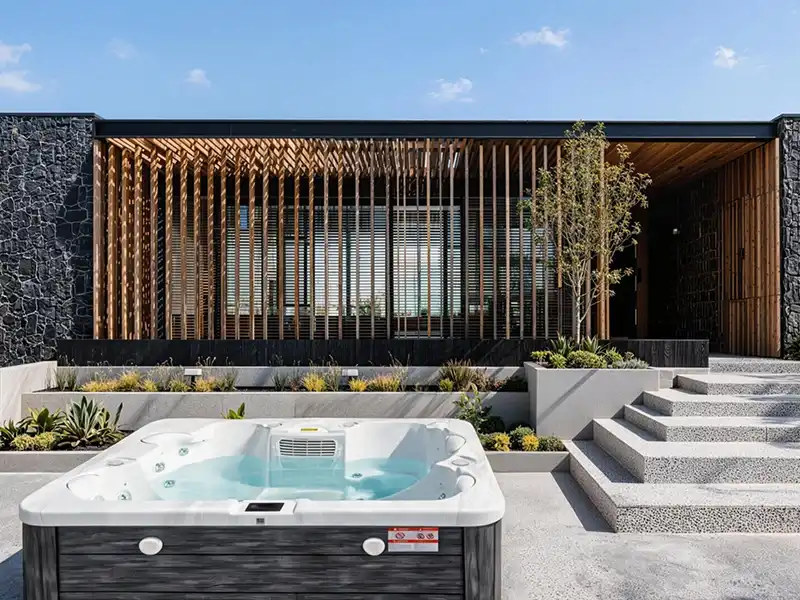
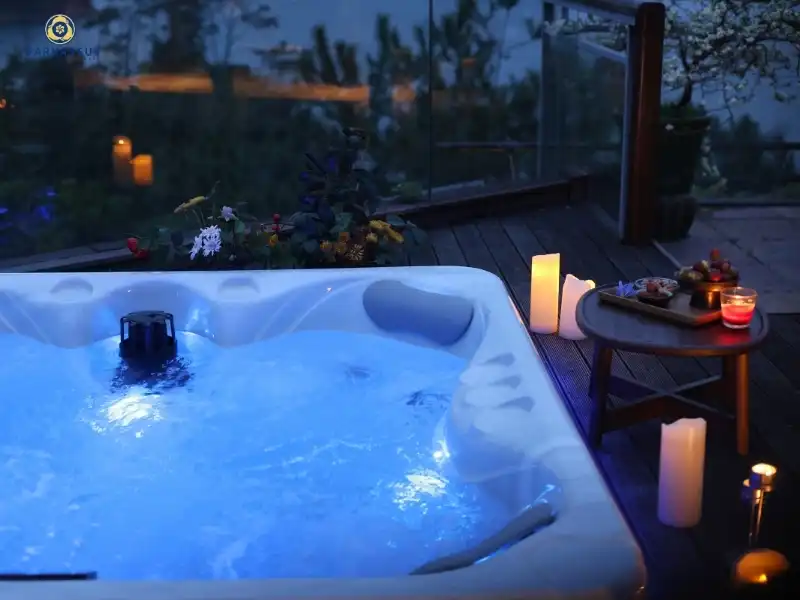
Smaller spas that can fit three or four people usually have a square shape that is 78 to 80 inches in size. The iParnassus® 4S01 is exactly 1.8 meters square, so it fits easily onto a standard patio and usually doesn't need any extra support for the structure. Models for six to eight people, on the other hand, are usually eight to nine feet wide, which means they need much bigger decks and stronger supports. That size difference is what makes the difference between a private eco-villa and a studio apartment patio.
Jet Configuration and Seating Ergonomics
There are often claims that larger tubs have more jets—sometimes 50 or more—but more jets does not mean better therapeutic quality. The 4S01 has four full seats, and each one has a soft head pillow and massage jets that are carefully placed across them. The jets are set up to work on the neck, shoulders, lower back, and legs all at the same time. This means that focused treatment is delivered instead of pressure that is spread out and not as strong. Every seat is a useful spot, not just a bench to fill space.
Energy Performance by Size
The California Energy Commission stated in 2022 that bigger hot tubs use slightly more energy to heat and keep the water warm. Small models with well-insulated cabinets can heat up and keep set temperatures faster, which means they use less energy when they're not in use, which is important for people who run units all year.
Evaluating Operational and Maintenance Considerations
If you want to keep your spa in good shape, you should look at the upkeep needs along with the purchase price.
Running Costs and Heating Efficiency
Water Treatment and Change Frequency
One of the things that spa owners complain about most is how hard it is to change the water so often. An ozone and UV sterilization system built into the iParnassus® 4S01 takes care of this. This two-barrier method gets rid of germs and other contaminants without using too many chemicals, so the water doesn't have to be drained as often. Less work to clean the water means lower labor costs and fewer service interruptions for guests.
Material Durability: Acrylic vs. Inflatable
The material of the shell affects the whole experience of owning it. The 4S01 is made with high-quality acrylic that was brought in from the United States. Well-known brands like Jacuzzi and Cal Spa trust this type of material. USA acrylic is much more resistant to UV damage, surface cracking, and stains than inflatables made of PVC. The difference between a hard plastic shell and an inflatable shell is like the difference between an asset and a constant repair cost for business users who use the tub every day, all year long.

Health and Wellness Benefits: Suitability by Size and Use Case
Hydrotherapy in Compact Spas
A study in the Journal of Rheumatology showed that regular soaking in warm water helps people with arthritis move around better and feel less pain in their joints. Using buoyancy to lower joint stress and heat to increase circulation works just as well in a four-person tub as it does in a ten-person business pool. The 4S01 does a good job of controlling both the water temperature and where the jets are placed. The jets make it feel like a professional is working out your muscles, which makes them great for recovering from a workout or relaxing at the end of the day.
When Larger Models Are the Right Fit?
Large resort pools, group therapy settings, and commercial wellness centers that get a lot of visitors every day can sometimes justify the cost of eight-person or larger configurations. These settings put throughput—getting a lot of people through a health circle quickly—above private, individualized hydrotherapy. If your business depends on having multiple groups meet at the same time, it makes sense to have a bigger footprint.
Procurement Insights: Making the Right Choice for B2B Buyers
Cost Structures and Logistics
The 4S01 has a logistical benefit for distributors and facility managers who buy custom hot tubs in bulk that goes beyond unit price. This type can fit 18 units in a normal 40-foot high cube container. That higher loading density significantly lowers the cost of sending each unit, the fees for customs, and the room needed in the warehouse. These are details that aren't often shown in product brochures but are very important when figuring out the landed cost and profit.
When it comes to buying, here are the main benefits that make small spas appealing to business buyers:
- Lower unit acquisition cost relative to larger models, freeing capital for additional inventory or facility upgrades
- Simplified installation requiring no structural permits in most jurisdictions, reducing project lead times
- Reduced ongoing chemical and energy costs, improving the total cost of ownership across a fleet
- Higher container loading efficiency, directly compressing per-unit logistics expenditure
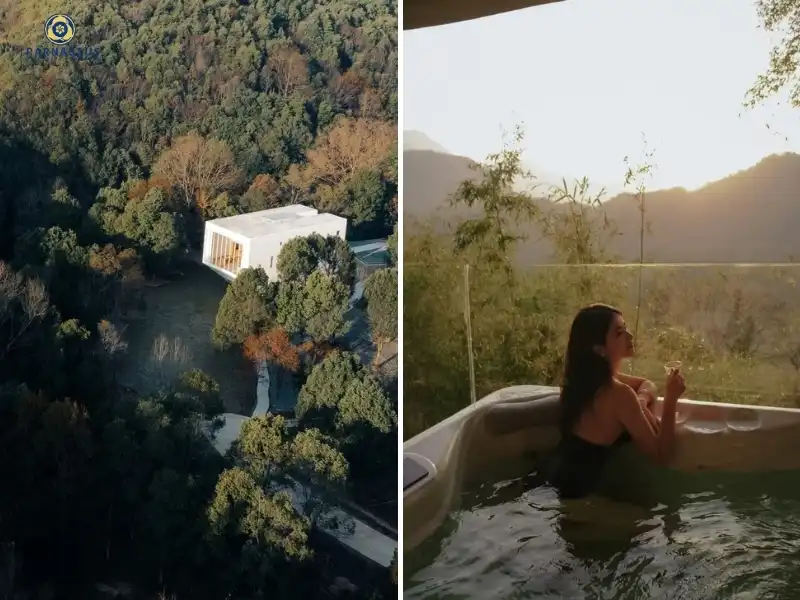
Because of these benefits, smaller spas are especially appealing to people who run rental properties, build eco-villas, or help hotel chains add wellness amenities without spending a lot of money. Instead of buying two big tubs, a buyer can fill three different rooms with small ones for the same price, which increases the property's health impact.
Brand and Supplier Comparison: Top Choices for 3-4 Person Hot Tubs
The top level is made up of well-known Western names like Jacuzzi, Sundance, and Cal Spa, which have large dealer networks in North America and strong brand memory. Their small models usually cost a lot more than people on a tight budget—often more than $6,000 to $10,000 before installation. Coleman and Bestway make inexpensive inflatable options, but they are made of PVC, which makes them less durable, and the soothing jets don't work very well.
iParnassus® stands out in this market because it is made in the USA from plastic, is sterilized with ozone and UV light, has smart control integration, and is the result of 18 years of manufacturing experience, all at an affordable price. With 80 patents filed by 2026 and active commercial deployments in Europe, North America, the Middle East, and Australia, the brand brings a level of manufacturing depth that can be matched to a market area that is usually controlled by either high prices or cheap materials.
Decision-Making Framework: Which Hot Tub Size Is Better for Your Business?
The right size is found by honestly looking at three factors: the space that is available, the number of real users, and the total cost of ownership over three to five years.
A small spa like the 4S01 is better when the installation area is less than 200 cm², the main users are two to four people, and it's important that the spa is easy to use. It's good for couples, small families, boutique hotels, and eco-villa builders who want a clean, reliable wellness feature that doesn't require a lot of engineering know-how.
A bigger model is better for places with a lot of foot traffic, like vacation pools, wellness centers with group activities, or places where spa flow directly brings in money. The trade-offs in terms of energy cost, upkeep work, and installation difficulty are only acceptable when usage data backs them up.
Conclusion
This means that small hot tubs, including 3-4 person hot tubs that can fit three to four people, are a smart and reliable choice for most home and light business uses. They offer real hydrotherapy, take up very little space, and have lower running costs, but buyers don't have to give up quality materials or clean water. With its USA acrylic cover, built-in ozone and UV system, ergonomic four-seat setup, and smart control features, the iParnassus® 4S01 lives up to these standards. Larger models have their place in high-capacity business settings, but for most people reading this, the compact option is not a compromise; it is the right specification.
FAQ
1. What is the standard size of a 3-4 person hot tub?
Most three-to-four-person spas measure between 78 and 84 inches square. The iParnassus® 4S01 sits at 1.8 square meters, making it one of the most space-efficient four-seat options available and a reliable fit for standard patios and decks.
2. Are smaller hot tubs less therapeutic than larger ones?
No. Therapeutic effectiveness depends on jet placement, water temperature, and seating ergonomics — not on overall tub volume. A well-designed compact spa with targeted jets can deliver equivalent or superior hydrotherapy compared to a larger model with more jets distributed across more seats.
3. How often do I need to change the water in a 3-4 person hot tub?
With an ozone and UV sterilization system, water change frequency drops significantly compared to chlorine-only systems. Most operators on this system change water every three to four months rather than monthly, reducing both labor and water consumption.
4. Is entry-level pricing a sign of lower material quality?
Not necessarily. The iParnassus® 4S01 uses USA-imported acrylic — a premium shell material — at an entry-level price point, made possible through efficient manufacturing scale and high container loading density rather than material substitution.
Ready to Source the Right Compact Spa? Contact iParnassus® Today
iParnassus® is a trusted company that has been making 3-4 person hot tubs for 18 years and has 80 filed patents. Quality plastic from the USA, ozone and UV sterilization, and a 1.8-meter, four-seat design make the 4S01 perfect for buyers on a budget and wholesalers who buy a lot of products. Check out the whole selection at info@iparnassus.com to ask about sourcing. Our team gets back to you quickly and understands how you do business.
References
1. California Energy Commission. Appliance Efficiency Regulations: Residential Pool Pumps and Spa Equipment. 2022.
2. Becker, B.E. "Aquatic Therapy: Scientific Foundations and Clinical Rehabilitation Applications." PM&R: The Journal of Injury, Function, and Rehabilitation, 2009.
3. Verhagen, A.P., et al. "Balneotherapy for Rheumatoid Arthritis and Osteoarthritis." Cochrane Database of Systematic Reviews, 2015.
4. Association of Pool & Spa Professionals (APSP). 2023 Residential Hot Tub Consumer Report. 2023.
5. Mooventhan, A., and Nivethitha, L. "Scientific Evidence-Based Effects of Hydrotherapy on Various Systems of the Body." North American Journal of Medical Sciences, 2014.
6. IBISWorld. Hot Tub & Swimming Pool Industry Report: Market Size and Forecast. 2023.

Send Inquiry