4 Person Round Hot Tub Maintenance Tips for Easy Ownership
The 4 person round hot tub is one of the most gratifying purchases you can make in your home, hotel, or resort. But like any fine equipment, it requires regular upkeep to work at its best. Whether you have one backyard unit or operate many tubs at a commercial site, the suitable maintenance regimen will keep the water clean, the parts functioning properly, and the visitors or family members really comfortable. This book leads you through everything you need to know from daily checkups to seasonal thorough cleans, so ownership remains easy and hassle-free.


Understanding the Maintenance Needs of Round Hot Tubs
That’s only the tip of the iceberg of everything you need to do to care for a circular spa. The most significant sections are the heaters, pumps, jets, filters, and plastic casings. If you don't meet their demands, it might be expensive to correct problems and make people upset.
Pumps and Heaters
The system that warms and cleans the water contains pumps that transport the water through it. Check the tubes that go to the pump at least once a month for leaks or weird noises. Every season, check all the heating components. Hard water heaters can have a lot of breakdowns due to calcium scale buildup.
Jets and Shell Surfaces
Dead skin cells, body oils, and lotions will become trapped in the jets over time. Wipe the jet plates down once a week with a moist soft cloth. Every month, immerse the removable jet plugs in a mild solution of white vinegar. Take care of the interior of the shell also. Smooth, clean spa shells. Plastic is easy to scratch.
Recommended Maintenance Schedule
Follow this schedule if you want to conduct maintenance correctly. Here is a plan that you may use:
- Daily: Check water temperature and clarity and remove visible debris.
- Weekly: Test pH, alkalinity, and sanitizer levels. Rinse filter cartridges.
- Monthly: Deep clean jets and filter housings; check pump seals and heating connections.
- Seasonally: Drain and refill the whole tub; examine shell, cover, and all fittings.
Check pH, alkalinity, and sanitizer levels and wash filter capsules weekly.
Clean jets and filter housings extremely thoroughly at least once a month. Also look for damage on the heater pipes and pump seals.
- Drain and fill the tub to the top every season. Also check the shell, cover, and all of the associated parts.

Effective Cleaning and Water Care Practices for Longevity
Water chemistry is the most important determinant in how long a 4 person round hot tub lasts and how safe it is to use. Most failures of spa equipment in commercial settings are due to incorrect water balance, the Pool & Hot Tub Alliance says.
Draining and Scrubbing Protocol
Completely empty the tub every three to four months, or more regularly if the tub is heavily used for commercial purposes. After draining, scrub the shell with a pH-neutral spa cleanser, giving special attention to the waterline where oils and scale like to accumulate. Rinse it well before refilling so the chemicals do not contaminate the fresh water.
Chemical Dosing and pH Balance
Maintain pH in the range of 7.4-7.6 and total alkalinity 80-120 ppm. For proper sanitation, quantities of chlorine or bromine should be between 3-5 ppm. Test strips are good for a fast daily check, but a liquid test kit will provide more reliable results for weekly examinations. An incorrect pH can speed up corrosion on the metal fittings and irritate the skin of bathers.
Filter Maintenance and Eco-Friendly Options
Filter cartridges should be flushed with fresh water on a weekly basis and soaked in a filter cleaning solution on a monthly basis. Replace cartridges every 12 months or sooner if pleats are visibly damaged. Enzyme-based spa clarifiers and non-chlorine oxidizers are a good option for properties with green aspirations since these products lessen the harsh chemical load without compromising water safety.
Energy Efficiency and Operating Best Practices
A well-cared-for spa can save you a lot of money on your monthly energy expenditures. The U.S. Department of Energy advises if you don't cover your hot tub, the cover might allow up to half the heat to escape.
Ideal Temperature Settings
If you use the water daily, maintain it around 100°F to 104°F. Some people enjoy it around 102 degrees F since it keeps them warm and doesn't put too much strain on the heater. You may save a lot of electricity by setting it below 98 degrees Fahrenheit. In this manner, the unit does not have to warm up for a long period while it is not in use.
Insulation and Cover Quality
On top of the high-density foam cover, there is still an air barrier so that a lot of heat cannot get out. Inspect the seals on covers every season and replace damaged seals immediately. Insulating the room surrounding the rack of gear properly will reduce the workload on the heater and pump in cold locations.
Smart Controls and Automation
The iParnassus® 4R02 hot tub may be controlled remotely with the phone. You can check the temperature, see how much water there is in it, and lock the settings. The system contains built-in safety safeguards to keep it safe whether the water level is low or the temperature is high or low. Simply put, you don't have to do anything while nobody is utilizing the system. When you are operating a lot of units at once, those who operate hotels like this save time and don't make errors that cost a lot of money.

Troubleshooting Common Issues and Safety Considerations
Things can go wrong even if you take care of them. Knowing how to quickly figure out what's wrong is helpful for people and keeps them safe.
Jet and Heater Malfunctions
Have a look to see whether the filter 4 person round hot tubs are clogged. That might happen if the jets lose pressure. That's almost usually the case. Often there is something at the tip of a single jet that doesn't work.” Turn the jet counterclockwise to rinse it out. Usually, an error signal on the TV screen signifies a damaged heating element. “Most of the time, it's either a scale buildup or a high-limit monitor tripping the alarm.”
Water Clarity Problems
What is hazy water? It might be because there is not enough chlorine in the water, that the filter is unclean, or that there are a lot of people in it. Shock the water with an oxidizer that does not include chlorine. Clean the filter and test the chemical again after 24 hours. If the color is green, it suggests algae is growing. To fix it, shock the water by raising the chlorine to 10 ppm for a brief period. Don’t modify the dosage until the water clears.
Safety Features to Verify Regularly
Test the GFCI (ground-fault circuit interrupter) by pushing the test button on the switch every month. Safety elements are to include temperature limitations and emergency cutoffs. Ensure that they are working properly on each annual inspection. By following these safety procedures, your building will comply with NEC and IEC regulations across the globe. This will also protect visitors and management against lawsuits.
Procurement Insights: Selecting and Maintaining Your 4 Person Round Hot Tub
It will be easy and cheap to keep the model in good shape over time if you buy the right one the first time.
The iParnassus® 4R02 Model
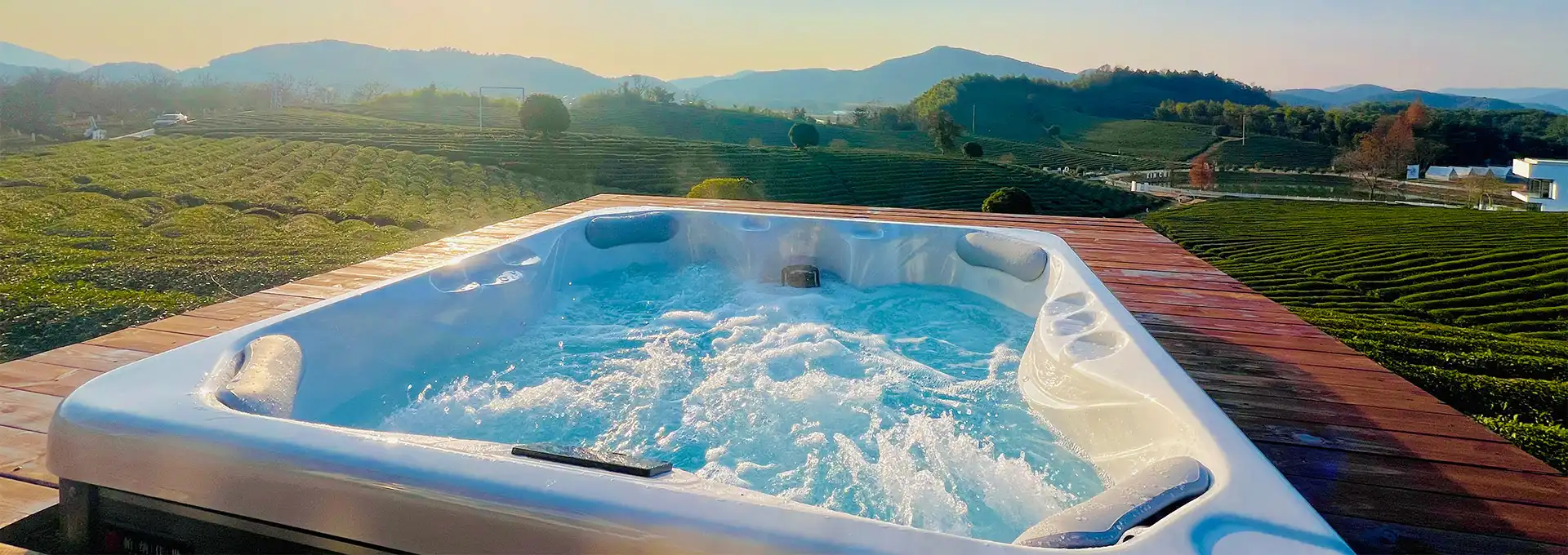
The 4R02 circular hot tub was the result of a great deal of thinking. It was meant to be used at hotels and on vacation. The interior is designed to be crack- and corner-free so that dirt has nowhere to hide. In hectic company environments, it saves time and money on labor expenditures. It’s 2.1 m broad and 92 cm deep. Four or five individuals fit without being squashed, and the shoulders are completely immersed for true hydrotherapy. The water is 92cm deep – around shoulder height for an adult. Whether individuals are on vacation or recovering from jet lag, there is always a spa holiday feel.
Here are the essential elements that make 4R02 an excellent business phone:
- So, it doesn't take as long to clean up after each visitor, since the floor has no traps.- The circle is 2.1 m wide, so families and small groups may fit without losing ease.-- Putting your shoulders in water up to 92 cm deep helps your whole body feel well and gets rid of weariness. This one is safe to leave unattended. It features water level and safety shutoffs.
- Interior design that decreases scrubbing time between guest sessions; trap-free.
- Families and small groups are comfortably accommodated in a spacious 2.1 m diameter.
- Full-body hydrotherapy and fatigue recovery with soaking at 92cm shoulder depth.
- Intelligent control system with remote monitoring, water level sensors, and safety automatic shutoffs.
Not all guests have the same experience, and when there are so many people in the hotel at once, the technology breaks down. This is a list of the most typical challenges faced by hotels. These features remove these difficulties.
OEM Parts and Professional Support
By purchasing your replacement components from the business that sold you the original 4-person round hot tub, you can maintain your warranty and ensure that the new parts will fit. We have been building spas for 18 years, and we have 80 patents on our work. They state they can always aid you and supply you with spare parts. When they build anything, qualified specialists look for wiring mistakes, water leaks, and insulation gaps that may make a lot of things go down fast.

Conclusion
A 4 person round hot tub can endure a long time if you take care of it. Use sophisticated controls to monitor energy consumption, do regular pool cleaning, and balance water chemistry to safeguard your investment and make sure every soak is enjoyable. The iParnassus® 4R02 facilitates this work, since dirt cannot accumulate, and it includes a self-monitoring control system 24 hours a day. Whatever the size of your operation – one room or a hotel with many – these recommendations can help you keep expenses down, repair items less frequently, and keep tenants satisfied.
FAQ
1. How often should I fully drain and refill my round hot tub?
For residential use with two to four regular bathers, drain and refill every three to four months. In commercial or hotel settings with daily high-traffic use, every four to six weeks is more appropriate. More frequent water changes reduce total dissolved solids and keep chemical dosing more manageable.
2. What is the ideal water temperature for daily use?
Most users find 102°F comfortable for regular soaking. The safe range is 100°F to 104°F for healthy adults. During lower-use periods, setting the temperature to 98°F saves energy without requiring a long reheat before the next session.
3. Are eco-friendly spa chemicals effective in round tubs?
Yes. Enzyme-based clarifiers and non-chlorine oxidizers work well in circular spas with moderate bather loads. They reduce chemical odors and are gentler on acrylic shells and jet components. You still need a primary sanitizer like bromine or chlorine, but the overall chemical volume can drop meaningfully with these additions.
4. How do I know when to replace the filter cartridge?
Replace the cartridge when the pleats appear frayed, discolored, or fail to recover clarity after a chemical soak. Even if the filter looks intact, replace it after twelve months of regular use, since microscopic tears reduce filtration efficiency before visible damage appears.
Ready to Source a Low-Maintenance Round Hot Tub? Contact iParnassus® Today
The well-known 4 person round hot tub maker iParnassus® has been in business for 18 years and has locations in North America, Europe, and Australia. The 4R02 and all of our other products were made to cut down on maintenance time while still providing real hydrotherapy benefits. Email our team at info@iparnassus.com to find out about prices, details, and how we can help you with your project.

References
1. Pool & Hot Tub Alliance. (2022). Residential and Commercial Spa Water Quality Guidelines.
2. U.S. Department of Energy. (2023). Energy Efficiency Tips for Residential Hot Tubs and Spas.
3. NSF International. (2021). Standards for Recreational Water Treatment Chemicals.
4. National Electrical Code (NEC). (2023). Article 680: Swimming Pools, Fountains, and Similar Installations.
5. World Health Organization. (2006). Guidelines for Safe Recreational Water Environments, Volume 2: Swimming Pools and Similar Environments.
6. American National Standards Institute (ANSI). (2020). ANSI/APSP/ICC-14: American National Standard for Portable Electric Spa Energy Efficiency.

Send Inquiry