_1768872582663.webp)
8 Person Hot Tub Installation: Space and Setup Guide
Buying an 8 person hot tub is a huge financial decision and must be carefully planned in terms of space, structural stability, electrical compliance and long-term operational efficiency. If you own a resort, a luxury rental property, or a commercial entertainment venue, setting it up perfectly the first time may protect your investment and provide your visitors a terrific experience. This book guides you through each crucial stage from site evaluation to water care practices, with practical insights tailored for commercial and high-end residential buyers.
Understanding Space Requirements for an 8-Person Hot Tub
Proper planning of the area before any equipment arrives is what distinguishes a good installation from an expensive error.
Dimensions and Clearance Zones
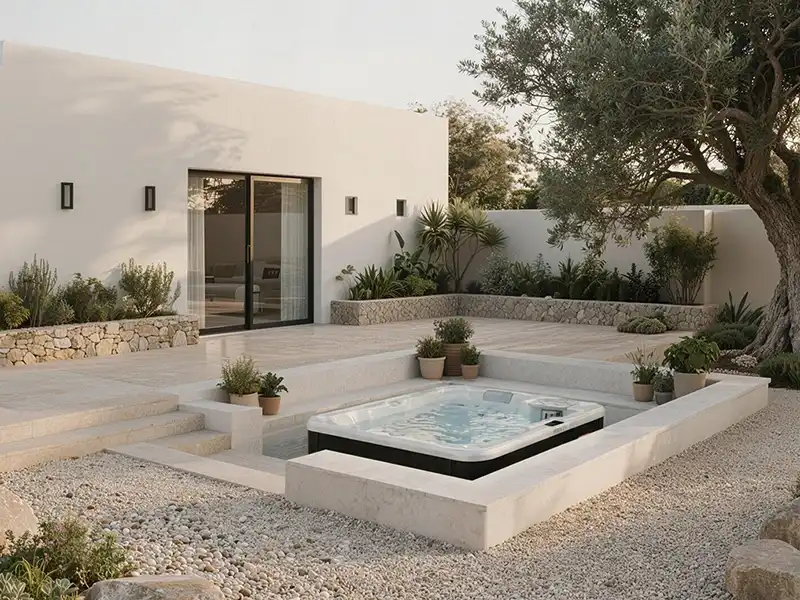
Usually, a full-size hot tub for 8 people is 259 cm wide at its widest point. The iParnassus® 8R10 is a hefty 259 cm wide, firmly in the big format category. The normal height is between 86 and 96 cm. A common building code requirement and manufacturer suggestion is a minimum of 91 cm (36 in) clearance on all accessible sides in addition to the unit. Normal maintenance, emergency escapes, and servicing of equipment are available. For interior installations such as hotel spa suites or yacht charter decks, we recommend a minimum ceiling height of 244 cm for easy access and appropriate ventilation.
Structural and Foundation Requirements
Most people don’t realize how much an 8-person hot tub filled with water weighs. For instance, a large acrylic spa may weigh anywhere from 750 to 1,000 pounds when empty. But the overall burden may be in the region of 6,000 to 6,500 kg, with 475 to 650 L of water and 8 people on board. This means that a foundation must be established for a long time and a lot of weight.
Some suggested alternatives for bases include:
- 4-inch reinforced concrete pad: The most popular option for commercial, long-term installations. It distributes the load equally and stops movement on the ground.
- Concrete pavers on a compacted gravel base: a practical alternative for resort terraces or planted areas where appearance is crucial.
- Composite decking (engineered): If the deck is built to carry the entire wet weight, with a margin of error, then it is OK to be raised.
- Pea gravel bed: It's a good basis for temporary or residential uses since it drains well, but it has to be leveled from time to time.
Drainage design is similarly important. The area around the spa must slope away from the unit at a minimum 2% gradient to minimize water gathering after splash-out or maintenance draining.
Step-by-Step Installation Guide
A structured installation sequence minimises downtime and ensures compliance with local codes when installing an 8 person hot tub.
Pre-Installation Checklist
Site inspection prior to arranging delivery. Check that the access routes are suitable for delivery equipment. Most big acrylic 8-person hot tubs will need a crane or forklift to get into their final position. Check local electrical and plumbing permit requirements; commercial projects in most U.S. jurisdictions need a licensed contractor's sign-off before energizing equipment.
Electrical and Plumbing Connections
The iParnassus® 8R10 is driven by a triple 3.0 HP pump that powers 113 massage jets. This power configuration requires a dedicated 240V/60A circuit with a GFCI breaker within 5 feet of the device but no closer than 6 feet from the water’s edge per NEC Article 680 regulations. All connections must be made by a certified electrician, and all compliance paperwork must be signed off before the first fill.
The plumbing connections should include a dedicated fill line and a drain of enough capacity to an authorized sanitary or gray water system. Once it's in place and connected, fill the spa and operate each pump circuit separately to check the flow and pressure before putting the spa into full operation. Commissioning: Record all readings for warranty/maintenance records.
Energy Consumption and Efficiency Considerations
There are substantial financial consequences for running a big commercial 8-person hot tub all the time. A large-capacity machine with numerous 3HP pumps generates a big peak electrical demand, but effective control cuts daily usage significantly.
The iParnassus® smart control system does this directly. These are the basic energy efficiency features that provide demonstrable savings:
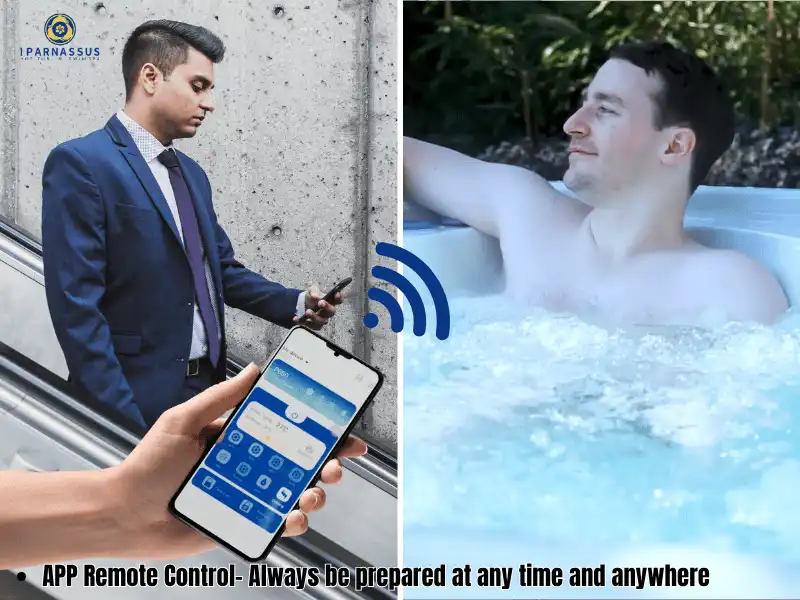
- Smartphone control with real-time monitoring: Operators may remotely start, stop, and modify the spa settings, preventing energy waste during low-occupancy times.
- Programmable timer scheduling: Programming heating cycles to match occupancy patterns may drastically cut off-peak energy use.
- Self-protection programs automatically: In case of water scarcity or temperature anomalies, the system switches to protective standby. This avoids energy-intensive recovery cycles.
- Insulated cover integration: Thermal coverings prevent heat loss by up to 80% while the spa is idle, a well-known efficiency measure.
These capabilities make a meaningful difference in hospitality settings where an 8 person hot tub may operate 365 days a year. Pairing an energy-efficient pump configuration with smart scheduling tools and a high-quality insulated cover represents the most cost-effective approach for commercial operators.
Maintenance and Water Care Best Practices
Commercial spas see far larger bather loads than residential units, and the water chemistry changes fast to reflect that.
Routine Water Management
A standard 8-person hot tub contains 475 to 650 gallons of water. At the commercial level of occupancies, the total dissolved solids build up quicker than they do in the smaller household tubs. Test water chemistry at least twice a week, including pH, total alkalinity, and sanitizer levels. Shocks water following high-use times to oxidize organic pollutants. For heavy commercial usage, do complete water changes every 60-90 days. Or, use the "drain interval formula" by taking the gallon capacity of the spa, dividing it by three, and then dividing again by the average daily bather count.
Equipment Inspection Schedule
Perform monthly checks on jet operation, filter condition, pump seal integrity, and cabinet ventilation. The iParnassus® 8R10 has an inbuilt floating ball water level sensor that senses low water situations automatically to minimize the possibility of dry-run pump damage. OSHA and the local health agency need documented emergency shutdown procedures and hazardous handling procedures. Staff have to be trained on these.
Making the Right Purchase and Installation Decisions
Procurement choices of this magnitude have long-term operational repercussions. Based on shell durability, hydrotherapy seats, and component design for serviceability, commercially, the iParnassus® 8R10 and other acrylic shell spas beat inflatable spas every time. Inflatable versions are not approved for prolonged commercial usage and have limited warranty coverage compared to.
The 8R10 has one lounge seat, two main chairs, and two love seats, all with shoulder massage function, 113 jets, and is powered by three 3.0HP pumps. This setup provides targeted hydrotherapy in all sitting positions simultaneously, which is unique in general large-format spas. If you choose to work with an authorized provider of 8-person hot tubs, you will get a valid guarantee, qualified installation, and prompt after-sales service. iParnassus® delivers bulk buying and customization for multi-unit hospitality projects.
Conclusion
Successful installation of a commercial-grade 8 person hot tub depends on disciplined pre-planning, code-compliant electrical work, a properly engineered foundation, and an ongoing maintenance programme calibrated for high-occupancy use. The iParnassus® 8R10 is a versatile platform with 113 jets, triple 3.0 HP pump power, smart control technology, and a 259 cm footprint designed for demanding commercial environments. With 18 years of spa manufacturing experience and 80 registered patents, iParnassus® delivers the technical depth and long-term support that procurement professionals require.
FAQ
1. How much clearance space is required around an 8-person hot tub?
A minimum of 91 cm on all accessible sides is the standard recommendation. This allows maintenance technicians to service pumps, filters, and plumbing connections without restriction and satisfies most local building code requirements for commercial installations of an 8-person hot tub.
2. How do I estimate energy costs for continuous operation?
Calculate your daily kilowatt-hour draw by multiplying total pump horsepower by 0.746, then multiply by average daily run hours. Add heating element draw. Multiply by your local utility rate. Smart scheduling and insulated covers can reduce effective daily run time significantly for an 8-person hot tub.
3. What permits are required for commercial hot tub installation in the U.S.?
Most jurisdictions require a building permit, electrical permit, and plumbing permit for permanent commercial spa installations. Health department approval may also apply in public accommodation settings. Always engage a licensed contractor familiar with NEC Article 680 and local amendments.
4. Is an acrylic spa better than an inflatable for commercial use?
Acrylic shell spas are the appropriate choice for commercial environments. They support structured seating and sustained jet performance and carry comprehensive warranties that protect the long-term investment value of an 8-person hot tub.
Partner With iParnassus® for Your Next Commercial Spa Project
iParnassus® is a trusted 8 person hot tub supplier serving hospitality operators, resort developers, and commercial venues across North America, Europe, the Middle East, and Australia. The 8R10 is available for bulk procurement with customisation options to match your property's specifications. Contact our team at info@iparnassus.com to request a quote and speak with a specialist who understands large-scale spa deployment from the ground up.

References
1. Bullfrog Spas. (2023). How Many Gallons Does an 8-Person Hot Tub Hold? Bullfrog Spas Blog.
2. National Electrical Contractors Association. (2023). Commercial Pool and Spa Wiring Requirements. NECA.
3. National Fire Protection Association. (2023). NFPA 70: National Electrical Code, Article 680 — Swimming Pools, Fountains, and Similar Installations. NFPA.
4. U.S. Department of Energy. (2023). Energy Efficiency of Hot Tubs and Spas.
5. Pool & Hot Tub Alliance. (2022). Residential and Commercial Spa Water Quality Management Guidelines. PHTA.
6. Association of Pool & Spa Professionals. (2022). ANSI/APSP-2: Standard for Portable Residential Spas. PHTA Standards Library.

Send Inquiry