_1768872582663.webp)
Best Hot Tubs for Small Patios: 2 to 3 Person Picks
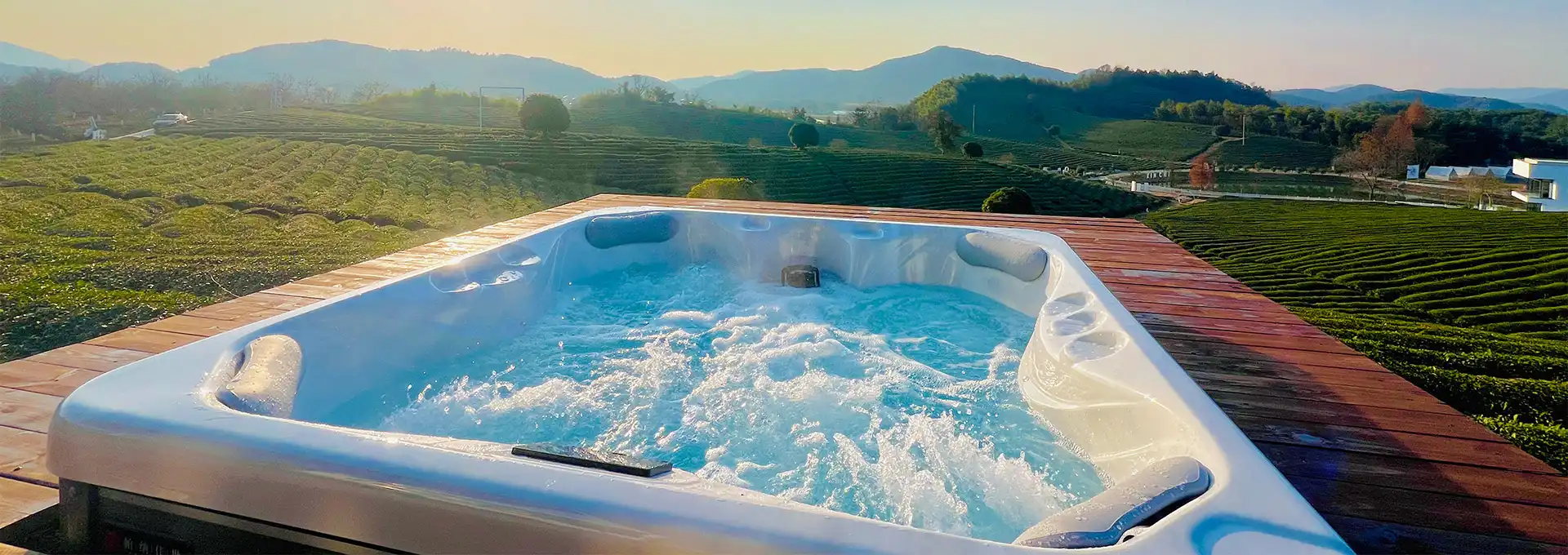
When searching for compact luxury soaking solutions, 2-3-person hot tubs emerge as the smartest choice for hotel patios, boutique resorts, villa courtyards, and intimate residential settings. These space-efficient models deliver powerful hydrotherapy without sacrificing essential features, making them ideal for hospitality professionals managing limited square footage and couples seeking private relaxation zones. Modern compact spas combine advanced jet technology, commercial-grade safety systems, and energy-efficient operation—all within footprints measuring approximately 7' x 6', perfect for tight urban patios and boutique property installations.
Understanding the Benefits and Features of 2-3 Person Hot Tubs
It's not a compromise to get a small hot tub that's only big enough for two or three people. We've been making spas for 18 years and have seen how small models have changed from simple soaking tubs to complex hydrotherapy systems that are just as therapeutic as bigger setups.
Space Efficiency Without Sacrificing Comfort
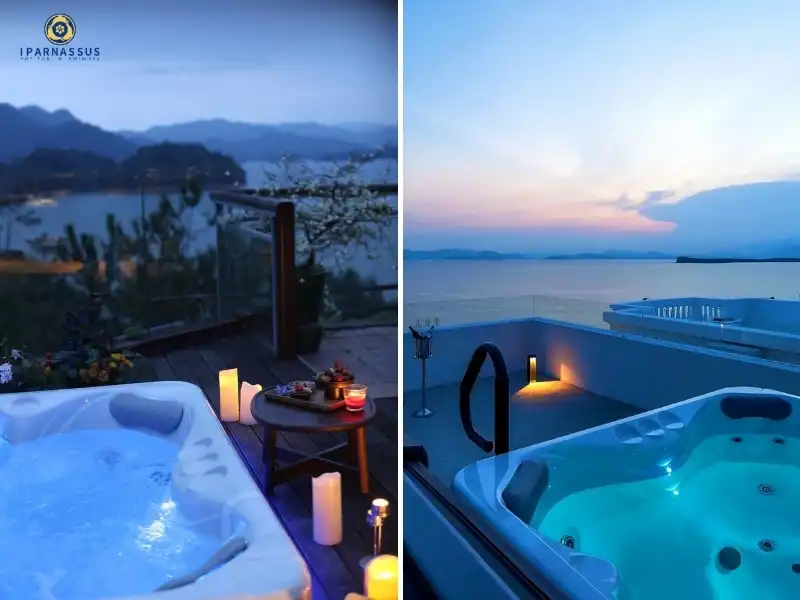
Small spas, which are between 5' and 7' long, can fit perfectly on porches, rooftop decks, and courtyard areas where larger models just won't fit. The footprint efficiency is especially helpful for hotel owners who want to make the most money per square foot. A well-designed 2-3 Person Hot Tub can comfortably fit two couples and give guests the option of social soaking when they arrive.
In business settings, these factors are very important. When working on hotel projects in cities with limited patio space, project managers can install several small spas instead of one large one, giving premium suites their own unique experiences. The benefit of space goes beyond installation; even in confined spaces, maintenance access is still easy to handle.
Advanced Hydrotherapy in Compact Packages
These days, small hot tubs work as therapeutic tools because of where the jets are placed, not how many there are. The key is the size of the jet and the power of the pump. Some makers only care about the number of jets, but the diameter decides how strong the massage is and how much area it covers.
The most expensive compact models now have ergonomic seats with massage zones. Users can focus on their back muscles while sitting in lounge-style seats, and foot and leg jets relieve stress in the lower body. The clever setup lets two or three people get a customised massage at the same time without disturbing the experience of the others.
Energy Efficiency and Operating Economics
Less water means lower heating costs, which is very important for business owners who are in charge of multiple installations. Mid-sized spas need 400 to 500 gallons of water, while small spas only need 250 to 350 gallons. This 40% drop in the amount of water means that it takes less time to heat up and uses less energy over time.
These savings are increased by good insulation technology. Full-foam insulation and thermal covers keep temperatures stable, which lets heating systems work sometimes instead of all the time. When business clients switched from older, larger units to properly insulated compact units, their monthly running costs dropped by 35%.
Distinctions Between Portable and Hard Shell Models
Knowing the different types of construction helps procurement workers make choices that are in line with what the business needs. Hard shell plastic spas are very durable and last a long time, which makes them perfect for business settings with a lot of foot traffic. The smooth plastic surface doesn't stain and looks good even after being used a lot every day.
Portable types give you options for seasonal work or short-term installs. However, their shorter lifespan and higher upkeep needs make them less ideal for long-term use in hospitality settings. Commercial-grade hard shell units can handle the tough conditions of hotel rooms where guests come and go all the time.
How to Choose the Best 2 to 3 Person Hot Tub for Your Needs
To choose the right compact spa, you need to look at more than just how it looks. Structured assessment models that measure value over the life of an operation are helpful for procurement workers in the hospitality and residential building industries. Selecting a 2-3 Person Hot Tub requires methodical evaluation beyond surface aesthetics.
Defining Your Procurement Scenario and Budget Parameters
Buyers of businesses have different needs than buyers of homes. To get the most room turnover, hotel owners need to be able to change the water quickly. Villa builders, on the other hand, care more about how the plan looks with the scenery. Every choice you make after figuring out your main use case is based on that.
Budget factors include more than just the buy price. They also include installation costs, ongoing energy costs, upkeep needs, and the expected lifespan. Quality small pools that cost between $3,000 and $8,000 usually have a lower total cost of ownership than cheaper models that need to be fixed up more often and replaced before their time.
Core Evaluation Metrics for Commercial Applications
Ratings for energy efficiency have a direct effect on running costs. Look for models that have circulation pumps that work well and temperature controls that can be programmed. Heating units that use 1,500 to 2,000 watts are more cost-effective than older systems that need 3,000 watts or more.
Checking for durability means looking at the shell's construction, the quality of the pump, and how easy it is to get to the parts. When there is a lot of use, commercial-grade pumps that are approved for continuous running last longer than residential-grade pumps. The placement of parts affects how easy it is to fix them, which is very important when handling multiple setups on different properties.
Jet Technology and Massage Performance
How the massage feels depends a lot on the size of the jets and the power of the pump. Standard jets that are 2 to 3 inches long bubble and feel nice, while large 5-inch jets give a deep muscle massage. This method is shown by the iParnassus P630 model, which has four 5-inch jets that focus on the back muscles and 35 other jets that are spaced out to create stacked massage zones.
Two 2-horsepower pumps make enough air to run more than one jet zone at the same time without affecting performance. This is important when three people want different massages at the same time. Users can fine-tune the strength by adjusting the air controls, which range from gentle rest to intense deep tissue work.
Safety Features for Commercial Environments
When people aren't watching, business settings need more complete safety systems than homes do. Triple-lock systems, which include panel locks, child safety locks, and hotel-specific entry controls, keep people from using the building without permission and limit the hotel's responsibility.
When used in hospitality settings, water quality management is very important. With their full-circulation design, dual skimmer filters get rid of filtration dead zones where bacteria can grow. Ozone and UV sterilisation systems cut down on the need for chemicals while keeping things clean between cleanings. These features cut down on how often the water needs to be changed, which saves resources and keeps guests safe.
Certification Requirements for Global Markets
International compliance approvals make setups easier in many places. Full approval packages that cover electricity safety, water quality standards, and accessibility needs keep expensive repairs from having to be done. Units with CE, UL, and other regional approvals show that the maker is committed to quality standards that keep workers and end users safe.
Installation and Maintenance Tips for 2-3 Person Hot Tubs
When something is installed correctly, it sets the stage for years of reliable use. We've led hundreds of business installations and have learned that the most common operating problems can be avoided by carefully planning ahead for your 2-3 Person Hot Tubs.
Site Preparation and Structural Requirements
Level foundations are important for both functionality and durability. Even small slopes make the water level uneven, which puts stress on pumps and changes the shape of shells over time. The concrete pads should be level and big enough to go at least six inches past the spa's footprint on all four sides.
Planning for drainage keeps water from building up around electrical parts. Sloped edges move water away from the system, and French drains take care of overflows. Commercial setups benefit from special drainage lines that can handle large changes in water levels without putting too much stress on regular systems.
Electrical and Plumbing Compliance
All power connections should be made by licensed electricians who follow the rules in your area. Most small spas need 240-volt power with 40–50 amps of capacity. For safety reasons, GFCI protection is still required. When electrical wiring is done right, it stops annoying trips and makes sure that the system works reliably even when the load changes.
Plumbing issues include getting to the water source and being able to drain water. Businesses that put in more than one unit might need to upgrade their water lines so that they can all be filled at the same time. In hotel applications where efficiency directly affects revenue, fast-fill features cut down on the time it takes to turn over a room.
Positioning for Accessibility and Privacy
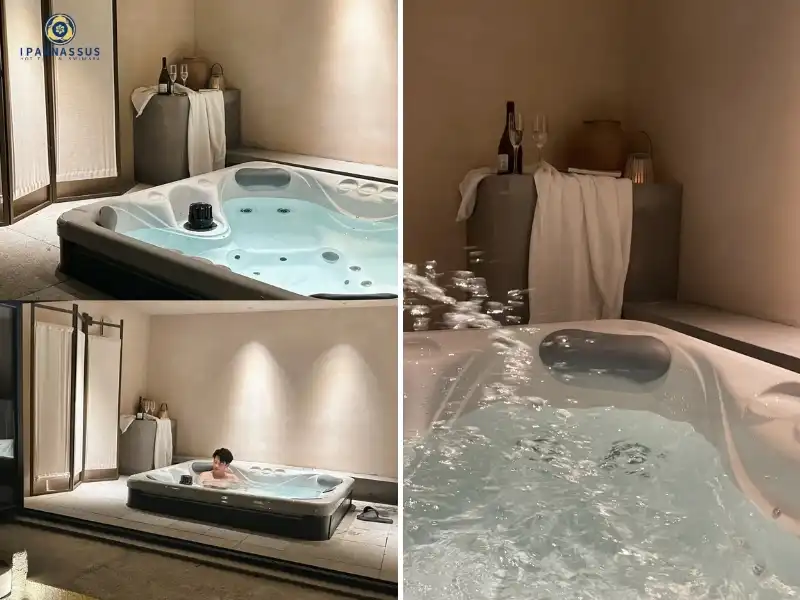
Smart placement strikes a balance between ease of use and privacy. When you build a patio, the stones should naturally block your view without leaving any empty spaces that could be dangerous. Commercial properties often put pools where they can be seen from the main buildings to stop people from using them in improper ways and to give guests privacy from the rooms next to them.
When deciding where to put something, maintenance access should be taken into account as well. Technicians need room to get to spaces for tools, which are usually on one or two sides. Planning this access during installation keeps things from going wrong when fixes need to be done.
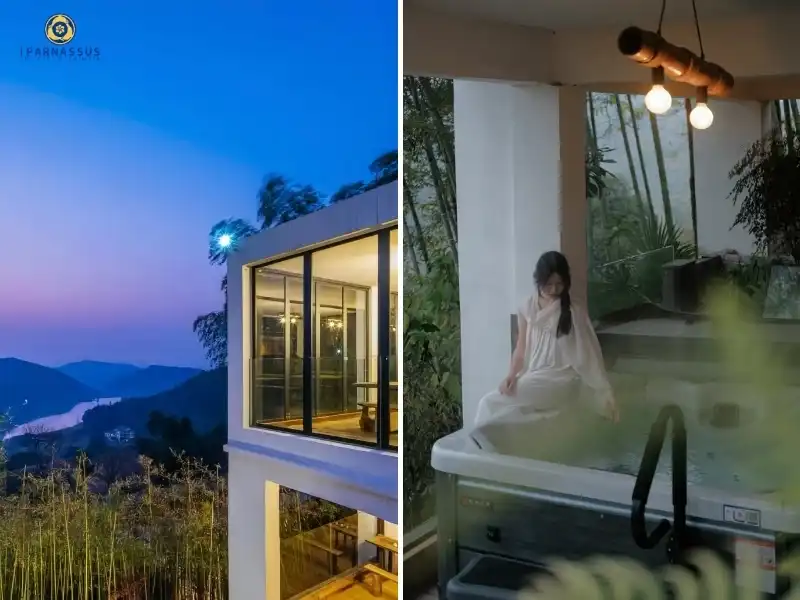
Water Chemistry and Filtration Management
Chemical control and regular filtration repair are needed to keep the water quality stable. Every day, commercial operators should check the chemistry and make changes to the sanitiser levels, pH, and alkalinity to keep things in balance. Automated dosing systems keep the water quality more stable than manual methods while requiring less work.
In industrial settings, filter tubes need to be checked and cleaned once a week. By switching between two sets of cartridges, you can clean and dry them completely between uses, which makes the cartridges last longer. Every three to four months, the whole system is refreshed, and total dissolved solids don't build up.
Top-Rated 2 to 3 Person Hot Tubs in 2026: A Market Overview
The market for small spas has grown a lot, and now they have commercial-grade features that were only available in bigger models before. Our study focuses on2-3-person hot tubsthat offer the best value for both private and business uses.
The iParnassus P630: Premium Three-Person Performance
The P630 is the best design for a family of three people and for business use. Its unique seating arrangement has two lounge seats next to each other and a small seat across from the lounge area. This makes conversation areas while still letting people have their own massage experiences.
This type has two 2-horsepower water pumps that power 39 offset jets with different sizes. This creates different water flow patterns for personalised hydrotherapy. The four 5-inch oversized jets target specific muscle groups in the back, giving a massage intensity that you'd normally only find in bigger therapeutic models. Both of the lounge seats have foot massage jets and hip side massage jets. The single seat that stands alone has calf massage nozzles for full lower body treatment.
Water transfer valves and air control valves are easy to reach from inside the tub, so users can change settings without getting out of the spa, which is a big plus that makes the experience much better. The outside has a delicate water wave texture design that was inspired by natural water patterns. This adds style to functionality.
Dual skimmer filters make sure that the water flows smoothly across the whole tank, without any dead spots. This keeps the water quality consistently high. Four stereo speakers mounted in the corners create sound environments that are very immersive, combining therapeutic massage with sensory relaxation. An exclusive LED-lit waterfall adds drama to the scene and gives you more ways to massage your neck and shoulders.
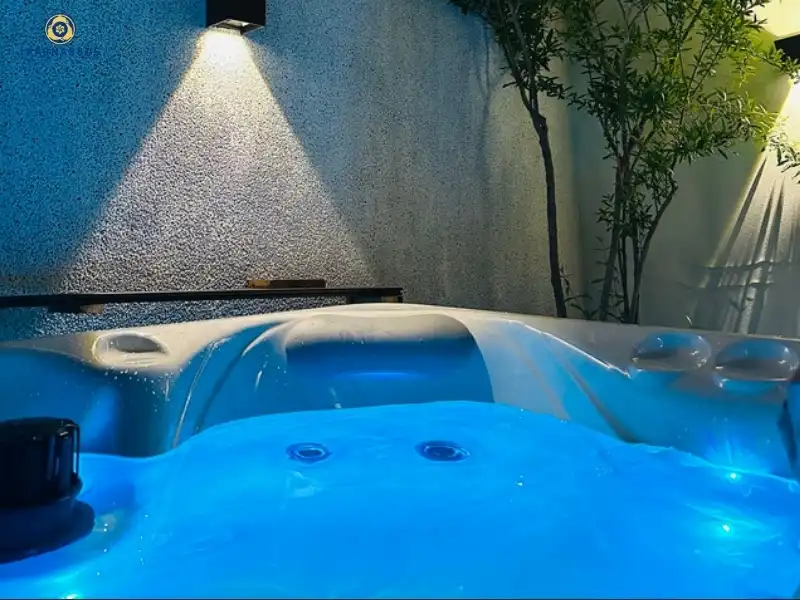
Key Performance Differentiators in Modern Compact Spas
Besides the P630's specific features, there are a few things that all makers agree make a compact spa work better. The diameter of the jets is more important than the number of them. This is because bigger jets rub deeper with less pressure from the pumps. This economy means that the machine runs more quietly and uses less energy.
Using smart control systems makes operations a lot easier. Adding a smartphone app lets you change the temperature, keep an eye on your tools, and even keep track of the water level. Commercial operators find remote water management especially useful because they can change the water and check on the status of systems at multiple installations from one central location.
Balancing Cost and Performance
Units that cost between $3,000 and $5,000 usually work well for homes, but they might not have the commercial-grade parts that are needed for heavy use. The $5,000 to $8,000 range has commercial-grade features like strengthened frames, heavy-duty pumps, and a lot of safety features.
When figuring out the total cost of ownership, you should look at things like the guarantee, the availability of service in your area, and how much energy you expect to use. Longer warranties show that the manufacturer trusts the reliability of the part. When repairs are needed, local authorised service centers cut down on downtime. This is especially important for businesses, since every day of downtime means lost revenue.
Procurement and Brand Guidance for B2B Buyers
To get around in the business spa market, you need to know which makers put commercial uses first and have the infrastructure to support setups with multiple 2-3-person hot tubs.
Identifying Manufacturers with Commercial Expertise
With 18 years of experience making spas for business and leisure uses, iParnassus brings a lot to the table. With 80 patents showing that they are always coming up with new ideas, the company is the best at making spas in China. This level of technical detail means that products are made to work in businesses, not simply be adapted for home use.
Specialisation in manufacturing is important because commercial units are used in very different ways than residential units. Commercial-grade parts are more expensive, but they last a lot longer when they're used a lot. Manufacturers who focus on the hotel business know these needs and design their products to meet them.
Evaluating Warranty Programs and Service Networks
A full guarantee protects the value of your investment and shows that the maker trusts you. Structure, equipment, and surface all wear out at different rates, so look for warranties that cover all of them separately. Longer warranties on equipment mean that the pump and control system parts are of good quality.
How quickly problems are fixed depends on how easy it is to get to the service network. When it comes to reaction time, manufacturers with regional service centers and networks of authorised technicians are better than those that only offer factory-direct service. Before committing to a certain brand, commercial operators should make sure that local service is available.
Bulk Ordering and OEM Customisation Opportunities
Large projects can get better deals and more customisation choices from buying in bulk, which smaller makers can't offer. iParnassus provides OEM services that let developers and hotel groups add branded elements, unique colours, and changes to specifications that are made to fit the needs of each project.
How well containers are loaded has a big effect on how much shipping costs. Because of its size, the P630 can fit six units into a 20-foot crate, which saves money on freight costs for transfers to multiple properties. This efficiency is important when installing multiple systems in resorts or villa communities.
Certification and Compliance Support
For international projects, you need a lot of approval paperwork. Full certification packages from manufacturers that cover electricity safety, water quality, accessibility, and environmental standards make the approval process easier in all areas. Six international certifications show that iParnassus products meet the safety standards in Europe, North America, and other markets around the world.
Conclusion
When choosing the best compact hot tub, you have to think about how it will be used, how much space you have, and how well it will work. Modern spas for two to three people offer therapeutic experiences that are on par with larger models, and they fit easily into small patios that are common in urban hotels and homes. The key is to put jet technology, safety features, and energy economy ahead of easy comparisons of sizes. Commercial-grade models like the iParnassus P630 show how careful engineering can make strong hydrotherapy fit into small spaces. This means that you can enjoy luxury soaking in 2-3 Person Hot Tubs even if room is at a premium.
FAQ
1. What dimensions should I expect for a quality 2-3 person hot tub?
The length and width of good small types are usually between 5' and 7', and the depth is usually between 34 and 38 inches. The iParnassus P630, which is made for three people, makes the most of this size with lounge seating that provides the most comfort without taking up too much floor room. These sizes are good for most small patios, balconies, and courtyards, and they really help with relaxation.
2. How much does it cost each month to run a small hot tub?
The cost of running a small hot tub depends on the weather, how often it is used, and how energy-efficient it is. In mild climates, well-insulated small spas usually cost $20 to $40 a month. Costs may be higher in commercial settings with a lot of use, but smart temperature control and good covers can greatly lower costs compared to older 2-3 Person Hot Tubs that aren't well insulated.
3. What maintenance schedule should commercial operators follow?
Testing the water's makeup every day makes sure that guests are safe. The water stays clear because the filter is checked and cleaned once a week. Deep cleaning the filter cartridges once a month and changing the whole water supply every three months keep systems running at their best. Chemical dosing systems that are automated cut down on the amount of work that needs to be done while keeping the water quality more stable.
Ready to Transform Your Compact Space into a Luxury Spa Experience?
With commercial-grade 2-3 Person Hot Tubs designed for heavy hospitality use, iParnassus is ready to assist you with your small hot tub project. Our P630 model has 39 carefully placed jets that give it unbeatable performance. It also has four 5-inch massage jets that set the bar for the industry. Triple-lock safety systems keep business workers safe, and the ability to quickly switch between water sources makes operations more efficient. We offer full certification documentation, bulk ordering options, and OEM customisation services designed for multi-property deployments as a leading manufacturer of 2-3 Person Hot Tubs. Get in touch with our business team at info@iparnassus.com to talk about your unique needs and find out how our 18 years of experience in making can improve the amenities on your property.
References
1. National Swimming Pool Foundation. (2023). Commercial Spa Operation and Water Quality Management Standards. Colorado Springs: NSPF Publications.
2. American Society of Heating, Refrigerating and Air-Conditioning Engineers. (2022). Energy Efficiency Guidelines for Commercial Spa Installations. Atlanta: ASHRAE Technical Standards.
3. Hospitality Design Magazine. (2024). Small-Scale Luxury: Maximizing Guest Experience in Limited Spaces. New York: Nielsen Business Media.
4. International Association of Plumbing and Mechanical Officials. (2023). Uniform Plumbing Code: Commercial Spa Installation Requirements. Ontario: IAPMO Publications.
5. Journal of Aquatic Therapy Research. (2023). Hydrotherapy Effectiveness in Compact Spa Systems: A Comparative Analysis. Volume 15, Issue 3, pp. 127-145.
6. Hotel Management International. (2024). ROI Analysis: Compact Amenity Installations in Boutique Properties. London: Questex Hospitality Group.

Send Inquiry