_1768872582663.webp)

Does a Square Stainless Steel Hot Tub Need Floor Reinforcement Before Installation?
A square stainless steel hot tub almost always requires a structural floor assessment before installation, and reinforcement is frequently necessary. Unlike lightweight acrylic shells, stainless steel construction carries significant dry weight. The iParnassus® 3-person model, for example, has a dry weight of 251.5 kg. Add roughly 280 liters of water and three occupants, and the total floor load can easily exceed 700 kg—concentrated across a 225 × 155 cm footprint. Whether the floor can bear that load safely depends on the substrate type, building code, and site conditions.

Understanding the Weight and Structural Demands of Square Stainless Steel Hot Tubs
Why Stainless Steel Weighs More Than You Might Expect?
Food-grade 304 stainless steel has a mass of about 7,900 kg/m³, which is almost eight times that of water. Because of the material's density, the shell is heavier than those made of acrylic or rotationally molded plastic. This problem is made worse by a square stainless steel hot tub footprint, which spreads the weight along four straight edges instead of spreading it out slowly across a curved base. When engineers check out a spot, they have to think about both static load and dynamic load. One of the most frequent and expensive mistakes made when installing a business spa is forgetting about dynamic factors.
Calculating Real Floor Load
The iParnassus® Square Stainless Steel Hot Tub is 225 cm long, 155 cm wide, and 80 cm high. It can hold about 280 liters of water at a depth that is good for three people. This is how a conservative calculation would look:
- Shell dry weight: 251.5 kg
- Water weight: ~280 kg
- Occupant load: ~225 kg
- Estimated total: ~756 kg across a 3.49 m² footprint ≈ 216 kg/m²
The International Residential Code says that standard residential wood-framed floors should be rated at 40 psf, which is about 195 kg/m². That standard is already less than the estimated load above. That's why structural review is required and not just possible.
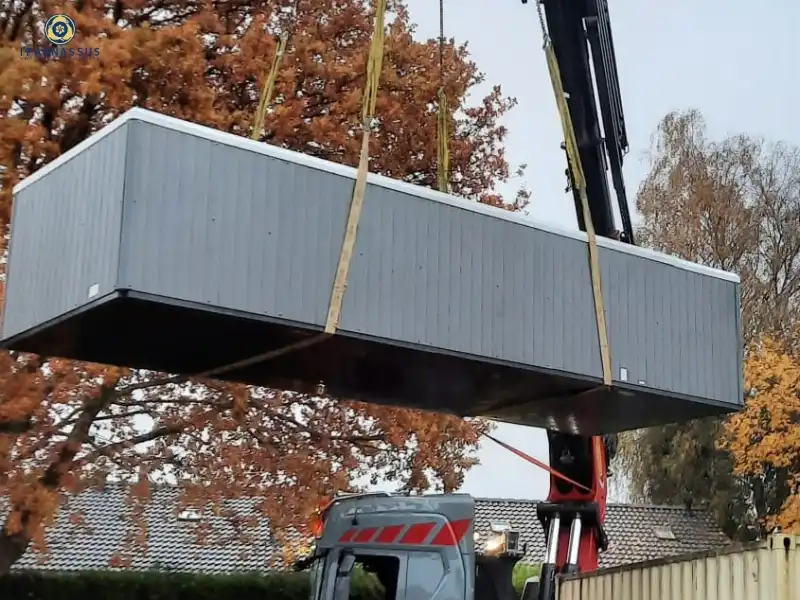
When and Why Floor Reinforcement Is Necessary: Structural Analysis for Installation?
Concrete Slab vs. Timber Joist Floors
For business spa setups, concrete slabs are the best base. Depending on the mix design and rebar configuration, a standard 100 mm reinforced slab can hold 300–500 kg/m², which is more than enough for most square stainless steel hot tub loads. A stainless steel spa can also be installed on a properly engineered slab when its filled weight is accounted for. There is a lot more danger in timber joist floors in homes or historic hotel buildings. Rated capacity depends on the distance between joists, the length of the span, and the type of wood used. Also, many older buildings were not built to handle concentrated wet loads this big.
Failure to reinforce where it's needed can make building insurance useless, void manufacturer warranties, and actually pose real safety risks. A number of well-known hotel renovation projects in the U.S. and Europe have had to pay six-figure costs to fix problems that were found during the installation process. Proactive structural analysis is a way to keep costs down, not just a legal requirement.
Regional Code Compliance Matters
Different places have different load-bearing standards. In the U.S., rules are based on the IRC and IBC; in Australia, they are based on AS 1170.1; and in Europe, systems usually follow Eurocode 1. When buying Square Stainless Steel Hot Tubs for resorts in more than one country, the procurement teams must compare each property to the local standard and keep a record of their findings for guarantee and insurance reasons.
Comparing Installation Requirements: Stainless Steel Hot Tubs vs. Alternatives
Installing a square stainless steel hot tub is very different from installing an acrylic or rotomolded model. Procurement managers need to know these differences in order to accurately estimate the total cost of the project.
When comparing the main parts of different types of spas, here are some examples:
- Acrylic hot tubs typically weigh between 250 and 400 kg when they are fully loaded. Their flexible shells don't spread weight out as evenly, but because they have less mass overall, normal domestic floors often don't need to be reinforced.
- Rotomolded polyethylene spas are the smallest choice, but they don't last as long or look as good. Over the course of 5–7 years, they are known to crack, stick to limescale, and break down from UV light.
- 304 stainless steel spas carry higher total weight but deliver corrosion resistance, hygienic smooth surfaces, and structural longevity that acrylic simply cannot match in commercial humidity environments.
These differences have a direct effect on operational economics in the long term. The smooth, scale-resistant inside of a stainless steel unit only needs to be rinsed to be cleaned regularly. This saves a lot of time and effort compared to plastic surfaces, which collect mineral deposits in tiny scratches over time. When needed, the initial cost of floor reinforcement is usually recouped through lower maintenance costs in the first two to three years of continuous business.
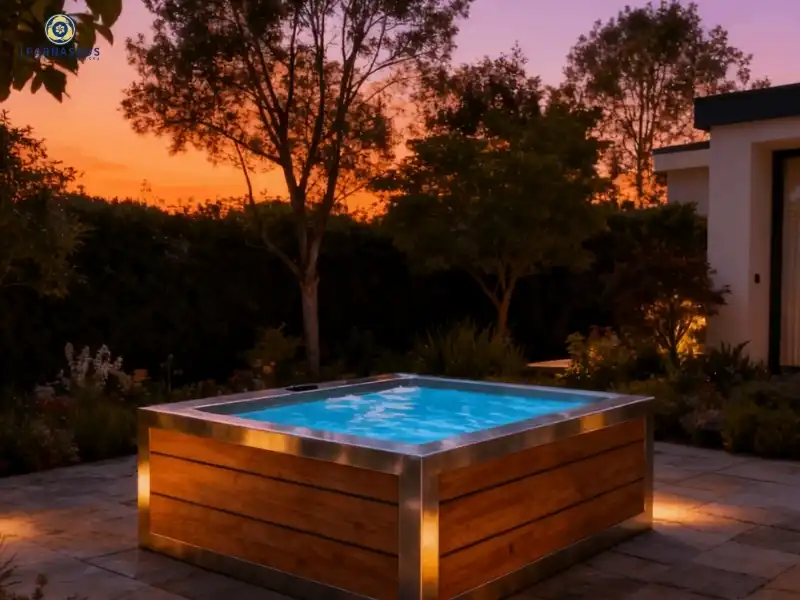
Professional Recommendations and Best Practices for Procurement and Installation
Pre-Installation Assessment Checklist
This is what procurement teams should do to make sure of a Square Stainless Steel Hot Tub installation spot for the stainless steel hot tub before agreeing to it.
- Obtain structural drawings and check with a qualified structural engineer to make sure the floor joist or slab specs are correct.
- Calculate the total wet load, including the weight of the shell, the water volume, the number of people who can fit, and the equipment.
- Compare the calculated load against the local building codes and add at least 20% as a safety cushion.
- Confirm drainage routing and sealing membranes are connected below the unit footprint.
- Verify electrical supply compatibility—the iParnassus® 3.0kW heater requires a standard 220–240V/50Hz connection with correct circuit protection.
Following this checklist cuts down on installation delays and protects both the warranty on the structure and the warranty on the equipment at the same time. Manufacturers like iParnassus®, whose pump and heater parts have CE, TUV, and UL certifications, back up their warranty terms with proof of proper installation. This means that a proper structural assessment protects your investment directly.
Working With Reputable Suppliers
Bulk procurement and OEM partnerships benefit significantly when the manufacturer includes technical installation documentation with the product. iParnassus® provides detailed load specifications, dimensional drawings, and installation guidance—assets that streamline site preparation for resort developers managing multiple units across a single property.
Maintenance and Long-Term Durability: Protecting Your Investment
The square stainless steel hot tub itself will last longer if the floor is properly prepared. If the base isn't level or isn't strengthened enough, it can cause the shell to move slightly over time. This puts stress on the welds and joints, which speeds up wear. The iParnassus® unit has a 304 stainless steel shell that has been tested for weld quality using liquid penetrant and ultrasonic inspection in line with standard NDT methods. However, even the most carefully made shell works best on a stable, designed base.
The integrated P78B138 purification system maintains water clarity and controls bacterial growth, but water chemistry management becomes harder when drainage is compromised by substrate settling. Similarly, the 19 ergonomically placed hydrotherapy jets—mapped to back, waist, and leg muscle groups—operate at peak therapeutic efficiency only when the unit sits level and plumbed correctly. Floor integrity and hydrotherapy performance are more connected than most buyers initially realize.

Conclusion
Floor reinforcement is not a bureaucratic hurdle—it is a structural prerequisite that protects both the building and the investment. A square stainless steel hot tub generates total wet loads that routinely exceed standard residential floor ratings, making engineering assessment essential before any installation proceeds. Concrete slabs generally pass without modification; timber floors frequently require reinforcement. Matching the right substrate to the right product, backed by certified documentation, is the mark of a professional procurement process.
FAQ
1. Does a stainless steel hot tub always need floor reinforcement?
Not all the time. Concrete slabs rated above 250 kg/m² typically support square stainless steel hot tub loads without modification. Timber joist floors, however, usually require assessment and often reinforcement given total wet loads of 700 kg or more for a 3-person unit.
2. How much does a 3-person stainless steel spa weigh fully loaded?
The iParnassus® 225 × 155 × 80 cm model has a dry weight of 251.5 kg. With water and three occupants, the total load approaches 750+ kg.
3. What certifications should I look for when sourcing a stainless steel hot tub?
Look for CE, TÜV, and UL certifications covering both the pump and heater. The iParnassus® 2.0HP pump carries CE/TUV approval; the 3.0kW heater carries CE/UL approval—confirming compliance across North American and European markets.
4. Can a square stainless steel hot tub be installed outdoors?
Yes. 304 stainless steel withstands temperature fluctuations and humidity, making it suitable for both indoor and outdoor installations in commercial and residential settings.
Ready to Source a Square Stainless Steel Hot Tub? Contact iParnassus® Today
iParnassus® is a trusted square stainless steel hot tub manufacturer with 18 years of spa engineering experience and 80+ patents. Our 3-person stainless steel spa—featuring 19 hydrotherapy jets, a CE/UL-certified heater, and the P78B138 purification system—is built for commercial durability and luxury residential appeal. We provide full technical documentation to support your structural planning. Reach our team at info@iparnassus.com to request specifications and a project consultation.

References
1. International Code Council. (2021). International Residential Code for One- and Two-Family Dwellings (IRC).
2. American Society of Civil Engineers. (2022). Minimum Design Loads and Associated Criteria for Buildings and Other Structures (ASCE 7-22).
3. U.S. Department of Housing and Urban Development. (2020). Residential Structural Design Guide.
4. National Association of Home Builders. (2023). Best Practices for Wet Area Installations in Residential Construction.
5. Building Research Establishment (BRE). (2022). Structural Floor Loading Standards for Residential and Commercial Buildings.
6. American Welding Society. (2021). AWS D1.6/D1. 6M: Structural Welding Code — Stainless Steel.

Send Inquiry