_1768872582663.webp)
Energy-Efficient 3 Seater Hot Tub Options
If you are searching for the right compact spa for your hotel, resort, or home, energy-efficient 3 seater hot tub options offer a practical balance between performance, running costs, and space requirements. A well-chosen three-person spa typically measures around 218 cm in length, holds approximately 220–230 gallons of water, and runs on systems designed to keep electricity bills predictable. This guide walks through what matters most—insulation, jet performance, water care, and procurement strategy—so you can make a confident, informed decision.

Understanding Energy Efficiency in 3-Person Hot Tubs
Efficiency in energy use is not a singular concept; rather, it is the outcome of a number of different factors working together. When all of those components are working together, both the operating expenses and the level of comfort are greatly reduced.
Insulation and Heat Retention
Installing full-foam insulation between the shell and the cabinet is one of the most effective techniques to maintain the temperature within the cabinet. The water temperature may remain the same throughout the night with little use of the heater if the spa is properly sealed. This results in a direct reduction in the amount of kilowatt-hours that are used. Heat retention is about 30–40% better when they are paired with a thermal cover that fits well than when they are used with covers that are not adequately insulated.
Variable-Speed Pumps
When there is only one speed available, standard pumps always operate at maximum power. Options with variable speeds adjust the output so that it corresponds to the actual demand. When circulation is poor, this reduces the amount of energy that the pump uses by as much as fifty percent. Buyers in the hotel business who are in charge of many units might realise significant savings over the course of a season by taking advantage of this opportunity.
Ozone and UV Water Sanitation
When ozone and ultraviolet light are used simultaneously, the number of chemicals that are required to maintain the cleanliness of water is reduced. You will conserve water and the energy that is required to heat up a refill if you reduce the frequency with which you inject chemicals. This will allow you to replace the water less often. The managers of hotels and resorts who need to maintain the water quality without having to do it by hand every day will find this approach to be an excellent choice since it requires little maintenance.

Key Features to Look for in an Energy-Efficient Compact Spa
When picking a three-seat spa for home or business use, you need to look at more than just the price. Long-term prices and user happiness are affected by the type of material used, the way it is heated, and the technology used to control it.
Shell Material and Cabinet Build
Many people think that acrylic from U.S. makers is the best material for hot tubs because it lasts the longest. Acrylic made in the United States is better than generic alternatives at resisting UV fading, surface cracking, and chemical wear. The cabinet around the shell should be made of weatherproof composite or fake wood pieces that keep heat in and can be left outside all year.
Heating System Options
Home and light-commercial spas that cost between $2,500 and $6,000 usually have electric heaters. It is easy to set them up and keep them up. People who live in colder places sometimes buy both an electric heater and a heat pump together to save money on heating costs per degree for a 3 seater hot tub. It takes less time for gas systems to heat up, but they cost more to install and run, which can cancel out any savings from smaller units.
Smart Controls and Programmable Thermostats
The spa has a touch-sensitive control screen that lets workers set the temperature to a lower standby temperature during off-peak hours. Before guests come, the spa will automatically return to the soaking temperature. iParnassus® offers a system that can be controlled from a smartphone. This system adds real-time monitoring of the water level, one-key lock/unlock, and automatic water replenishment reminders. All of these features cut down on manual oversight and energy waste.

Comparing Notable 3-Person Spa Models
Not every three-seat spa is worth the money. The comparison below is based on what's important for making choices about B2B purchases.
Hard Shell vs. Inflatable Models
When compared to inflatable spas, hard-shell plastic spas use much less energy in practically every manner. Due to the fact that the inflatable walls do not provide much protection, the heater has to be turned on more often. The greatest option for any commercial environment, such as a hotel room, a boat deck, or a holiday patio, is a hard-shell unit designed specifically for that purpose. It takes between one and two seasons for the reduced monthly operating expenses to make up for the greater startup cost that was first incurred.
The iParnassus® 3-Person Hydrotherapy Spa
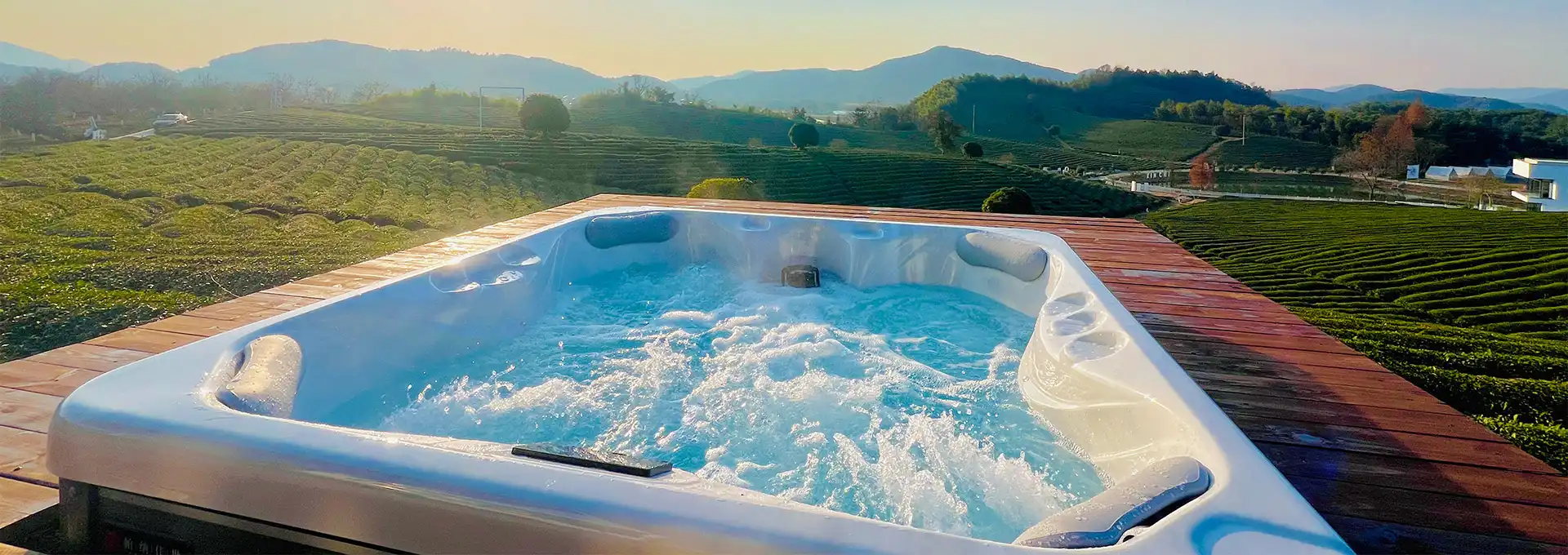
A tiny three-seat variant that is manufactured from acrylic imported from the United States and features a three-horsepower pump that drives twenty-one focused massage jets is available from iParnassus®. The muscles in your back, legs, and feet will all be worked on simultaneously by these jets since they are built in such a way. The three enormous illuminated ponds that are located adjacent to the lounge seat provide an ambiance that is calming, and the recessed leg jets in the lounge seat ensure that the user remains immersed during the whole experience. By incorporating handholds into the upright seats, the process of entering and exiting the chair is made more secure. Additionally, backrest cushions are supplied for each and every seat position. It is not necessary to alter the construction in order to accommodate the 218 cm footprint, which may be placed on standard decks, hotel balconies, and maritime locations.
What the Numbers Show
According to the United States Department of Energy, the cost of operating a hot tub that is well-insulated might range anywhere from ten to fifty dollars per month, depending on the climate and the frequency with which it is used. A spa that employs both ozone and UV sanitation, in addition to having a thermostat that can be programmed, is always located around the lower end of that range. This difference results in significant cost savings over the course of a year for a hotel that has between three and five units.

Maintenance Practices That Protect Energy Performance
If you don't take care of your spa, even the best one will lose its benefits. Regular maintenance keeps the tools and the energy budget safe.
Water Chemistry and Filter Care
Scale doesn't build up on heating elements when the pH (7.4–7.6) and alkalinity levels are balanced. When scale builds up on the heater's surface, it makes a hot tub in a pool need more power to reach the desired temperature. If you rinse cartridge filters every two weeks and replace them every year, the water flow resistance stays low, and the pump load is easy to handle.
Cover Condition
When water gets into the foam core of a spa cover, it stops shielding as well. A wet cover can add 15–20 pounds of extra weight and make the insulation much less effective. One of the easiest ways for a user to save energy is to check the cover's state twice a year and replace it when the foam gets too wet.
Seasonal Temperature Management
Setting the thermostat between 100°F and 104°F when the pool is being used and dropping it to 95°F when there isn't much activity saves energy without letting the water cool down too much, which would make reheating more expensive. Automatic temperature scheduling is possible with the iParnassus® control system, which makes this change easy for busy facility managers.

Procurement Guide for B2B Buyers
Picking the right type is important, but picking the right provider is even more important. This is a useful list for buying teams.
Assess Installation Requirements First
A 218 cm spa for three people needs a flat, strengthened surface that can hold about 1,800 to 2,000 pounds of weight, which includes the water at 8.35 pounds per gallon and the people who are using it. Concrete pads need to be at least 4 inches thick and have rebar or mesh woven through them to make them stronger. Check to see what kind of electricity is needed. Most hard-shell spas in this group need a separate 240V/50–60A line.
Evaluate Supplier Credentials
Look for companies that have been in the business for a long time, have patents that can be proven, and have a system for providing service after the sale. iParnassus® has been making spas for 18 years and has 80 patents as of 2026. Their products are sold in North America, Europe, Australia, and the Middle East. Before signing a bulk order, it makes sense to get references from past business clients.
Customization and Color Options
When buying a spa for a hotel, the shell color and cabinet finish affect how well it fits in with the rest of the decor. Before you finalize the specs, make sure that the seller lets you change the colors. It's not possible to change the way something looks after it's been delivered.
Conclusion
If you buy the right model and get it serviced regularly from a reputable company, a small, energy-efficient 3 seater hot tub is a good investment for hotels, private homes, and boats. Low running costs and a long life are guaranteed by U.S.-grade plastic, dual water cleaning, variable pump technology, and smart controls. The iParnassus® three-person model meets all of these needs in a space-efficient way and at a reasonable price. It also comes with the support of almost 20 years of manufacturing experience.

FAQ
1. What is the ideal water temperature for energy savings?
Comfort and efficiency are both good when the water temperature is between 100°F and 102°F. For every degree above 104°F, the heater cycles more often. Setting the spa's temperature to 95°F during off-hours uses less energy and doesn't require a full warming operation when it's time to use it again.
2. How often should a commercial spa be serviced?
Every two weeks, check and rinse the filters in commercial installations that are used every day. Three times a week, test the water chemistry, and every 90 days, plan a full drain and refill. Professional checks of pump seals, heater elements, and jet fittings once a year help keep them from breaking down, which can be very expensive.
3. Are hard-shell spas more energy-efficient than inflatable models?
Yes, full-foam insulated hard-shell spas keep heat in much better than inflatable walls, which don't keep heat in at all. If the spa is used all year, a hard-shell unit will cost less to run each month, making up for its higher price within one to two years.
4. What does dual ozone-UV sterilization do?
Organic pollutants are broken down at the molecular level by ozone, and bacteria and viruses are killed by UV light. Together, they cut down on the need for chlorine or bromine by as much as 80%, which lowers the cost of chemicals and the number of times that water needs to be replaced.
Contact iParnassus® — Your 3 Seater Hot Tub Supplier
iParnassus® has been making spas for 18 years and has 80 filed patents. Their three-person 3 seater hot tub spas are made to meet real business and residential needs. Our spas have 21-jet hydrotherapy systems, ozone-UV sanitation, and settings that can be used on a smartphone. They have everything a buying team needs in one confirmed package. Get in touch with our team at info@iparnassus.com to get details, bulk pricing, or a personalized quote right away.

References
1. U.S. Department of Energy — Energy Saver: Hot Tubs and Spas, 2023.
2. Association of Pool & Spa Professionals (APSP) — ANSI/APSP-14 Standard for Portable Electric Spas, 2019.
3. Sundance Spas — Water Capacity Guide for Residential Spas, 2022.
4. California Energy Commission — Appliance Efficiency Regulations: Spa and Hot Tub Standards, 2021.
5. National Spa and Pool Institute — Commercial Spa Maintenance and Water Quality Guidelines, 2020.
6. American National Standards Institute (ANSI) — ANSI/ICC 900 Standard: Design, Construction, and Installation of Residential Swimming Pools, Spas, and Hot Tubs, 2022.

Send Inquiry