_1768872582663.webp)
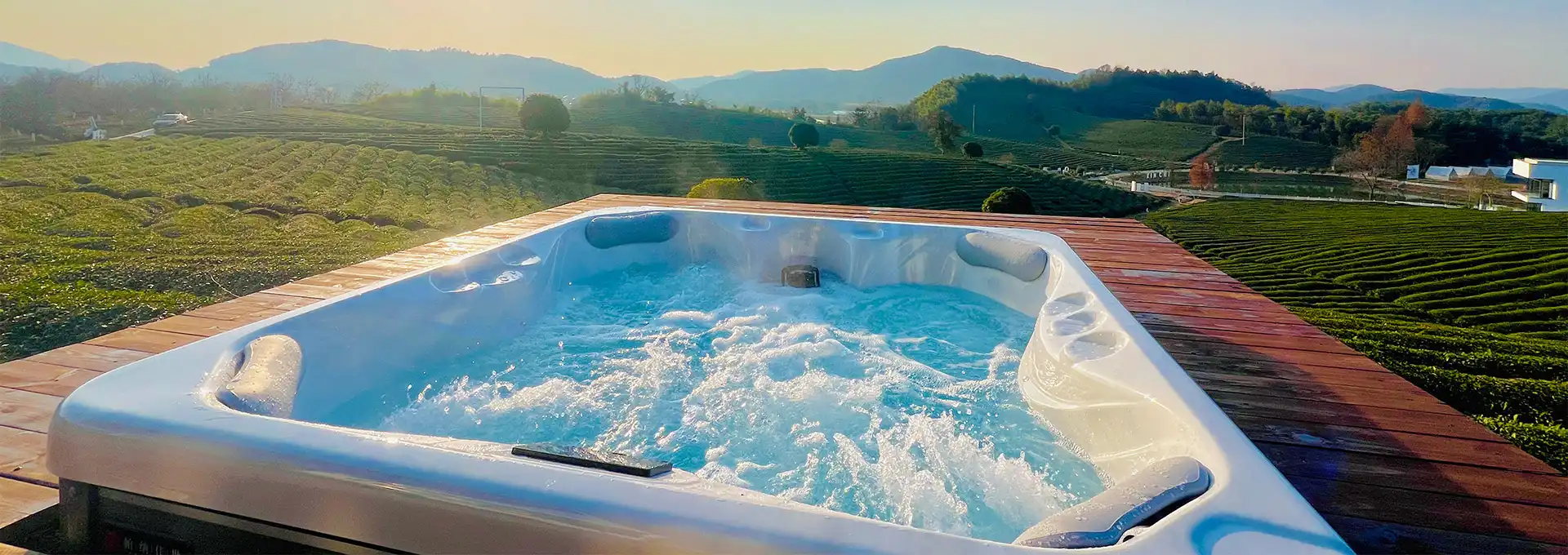
How much water is in a 7 person swim spa?
When planning to invest in a dual-zone aquatic solution for your resort, vacation property, or luxury residence, understanding water capacity becomes a critical starting point. A typical 7 person swim spa holds between 1,800 and 2,500 gallons of water—that's approximately 6,800 to 9,500 liters depending on model specifications and dual-zone configurations. This capacity strikes a balance between providing ample space for simultaneous swimming and hydrotherapy while managing heating costs and filtration efficiency. The water volume directly impacts everything from your foundation requirements to monthly energy expenditures, making it essential knowledge before procurement.
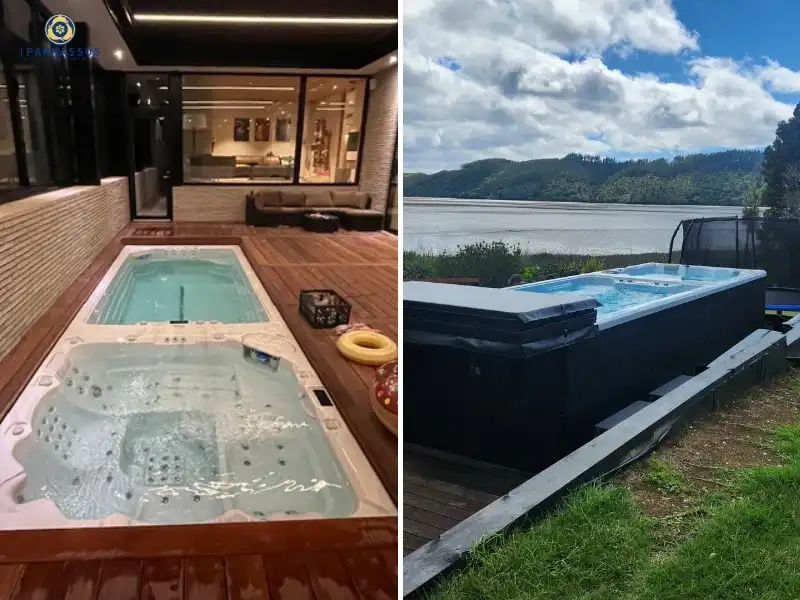
Understanding the Water Volume of a 7 Person Swim Spa
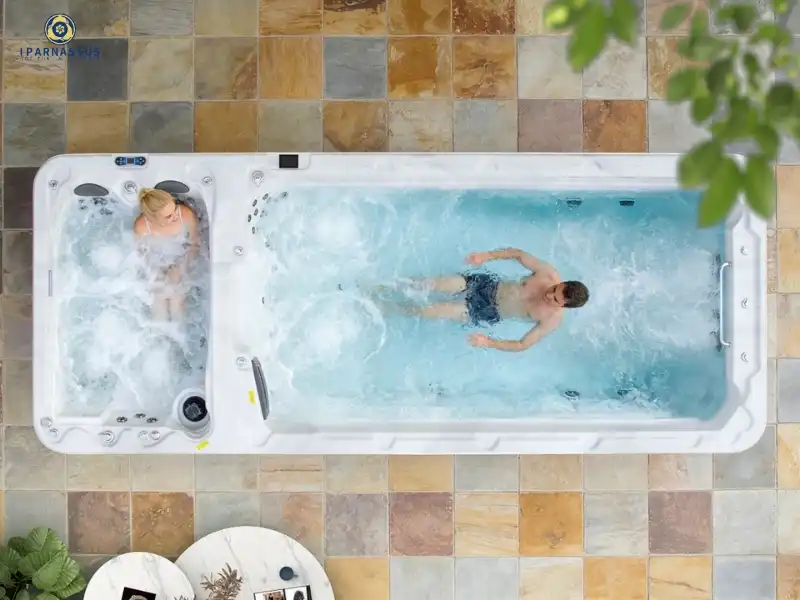
The amount of water these units can hold changes a lot depending on whether you choose a single-zone or dual-zone design. Due to their different temperature zones, dual-zone models that separate the swimming and spa features usually need more water. One part stays cooler, between 78°F and 82°F, so it can be used for vigorous swimming, while the massage area stays pleasantly warm, between 98°F and 104°F.
In good dual-zone models, the massage zone has one lounge and five specialized seats, making six hydrotherapy positions that are great for big families or getting together with a group to have fun. This sitting arrangement moves a big chunk of the total volume, which means that the swimmable water and useful spa water are different from the total capacity. When manufacturers say 2,200 gallons, the swim area may need about 1,200 gallons and the spa area may need 1,000 gallons. The exact amounts depend on the design's dimensions.
Knowing about this distribution helps you figure out how much warmth you need more accurately. Because the swim area is bigger and cooler, the water flows through it differently than in the heated spa area. This split is done well by dual filter systems, so each zone keeps its own water quality standards even tho people use them in different ways. This is especially helpful if your property has a lot of visitors—swimmers won't bother people who are trying to relax, and vice versa.
Chemical dosing schedules are also based on the amount of water present. The amount of sanitizer and pH balancer needed for a 2,000-gallon unit is different from that for a 2,400-gallon unit. Automated water management systems, like the ones in upscale units, change how chemicals are delivered based on how much water is being used and in real time. This accuracy cuts down on waste and keeps the water quality stable even when seven people are using it at the same time.
Dimensions and Design Features Affecting Water Capacity
The physical measurements are what are used to figure out how much water something can hold. A lot of units that are made for seven people are 16 to 19 feet long, 7 to 8 feet wide, and 4 to 5 feet deep. Depending on how the water is arranged inside, these numbers mean very different amounts of water.
Swim Zone Design and Water Displacement
The size of the swim zone has a direct effect on the amount of water and resistance training that can be done. Infinity pools with high-end models have one 13.5-inch jet and two 7.5-inch jets in this area, creating strong wave action for swimming. This jet setup needs a certain amount of water depth and area to work right. Usually, the water needs to be at least 48 inches deep for swimming and 7 feet wide so that the current can flow properly.
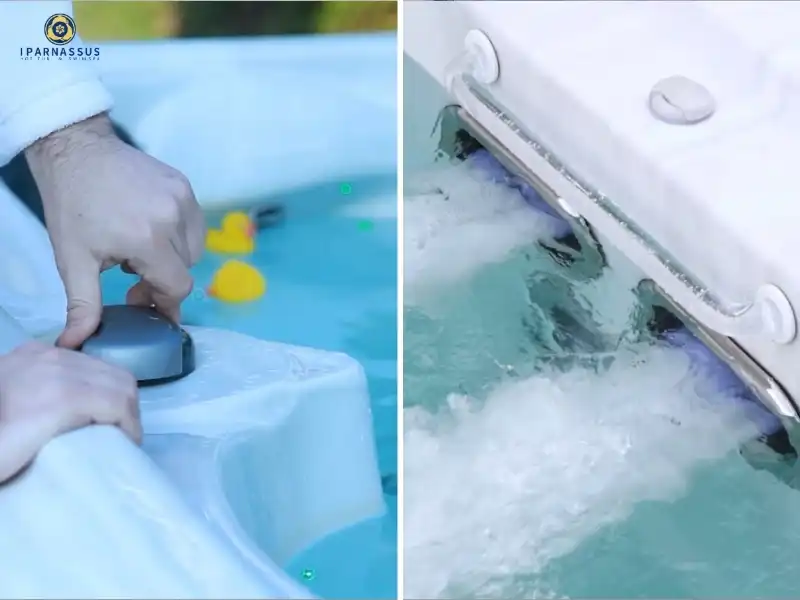
Integrated steps with bars make it easy to move from one zone to another without losing any water volume economy. Anti-slip patterns on the pool's bottom make it safer and add a subtle texture that doesn't change the calculations for the pool's capacity. The shape of the unobstructed swim channel makes the most of the useable water volume by avoiding seats or obstacles that stick out into the water and make it less useful for swimming.
Spa Zone Configuration and Seating Impact
The one couch and five seats in the massage area are ergonomically designed to provide focused hydrotherapy, but the net water volume is lessened by these shapes. Depending on body size and seat depth, each seat position moves about 50 to 80 gallons of water. Because it is longer and lower, the couch position can move up to 100 gallons of water when it is used.
The filter cover of a hot tub in a pool has two lighted cup holders that make it more convenient without reducing its capacity. However, the equipment that is above the waterline is housed in the filter cover assembly. Installing a spherical massage jet at the foot areas targets pain and discomfort. For this jet to work properly, the water must be at a certain level (18 to 24 inches) over the foot well.
A big part of keeping the advertised capacity over time is the shell materials. The 2,200-gallon capacity rating stays accurate year after year thanks to premium acrylic shells reinforced with fiberglass. These shells keep their shape even when the water pressure and temperature change. Less dense materials may bend a little, causing small changes in their capacity that can change how well they heat and how the chemicals balance out.
Maintenance and Operational Considerations Linked to Water Volume
There is a direct link between the amount of water and the costs and frequency of maintenance. If the insulation quality and outside temperature are the same, heating a 2,400-gallon unit costs about 30–40% more per month than heating a 1,800-gallon model. This difference gets bigger in colder places or when different temperature zones are kept separate.
When units are bigger and usually serve seven people, dual filtering systems are needed. These systems clean each zone separately, so contaminants don't move from the pool area to the spa area. The swim zone filter can handle more water, but it doesn't have to deal with as much contamination because swimsuits don't usually use lotions or oils. The spa zone filters out less water, but it comes across higher concentrations of body oils, cosmetics, and organic matter from people who stay in one place.
More advanced technologies for managing water make it a lot easier to keep up with larger volumes. Smart tracking systems keep an eye on the water level, temperature, and chemical balance all the time. They also use smartphone apps to send automatic messages to add more water. The ability to remotely handle water lets property managers control the flow of water from anywhere, quickly draining water when repairs or winterization are needed.
Chemical use goes up or down with the number, but not in a straight line. Due to better filtration, a 2,000-gallon unit with dual filtering and UV cleaning may need 40% less chlorine than a 2,000-gallon spa with only one zone. Water treatment plans need to take into account more than just volume when figuring out how to treat the water. For example, seven daily users of a 2,200-gallon spa use more chemicals than three users of the same unit.
Not only does heating use energy, but also circulation pumps, jet pumps, and control systems. To keep the right turnover rates, bigger amounts need stronger circulation pumps. Usually, the whole volume needs to be cycled every 4 to 6 hours. Automatic power supply lines for heat pumps make this process work better by handling and powering the heat pump more effectively, which uses less energy overall. Touch-sensitive control panels that are waterproof make it easy for users to change settings without having to follow long steps. This keeps energy from being wasted because of wrong temperature or jet timing settings.
Comparing 7 Person Swim Spas with Other Pool and Spa Options
People who want to buy often compare seven-person models to other combinations to find the best fit. Five-person units can hold about 1,400 to 1,800 gallons, but seven-person models can hold 25 to 40 percent more. This addition makes it easier for families with multiple generations to use the facility together, and it also works well for business uses where many people need to use it at the same time.
For the same amount of swimming space, a regular pool needs 10,000 to 30,000 gallons of water, which is five to fifteen times as much as a dual-zone swim spa. This huge difference means that heating costs, chemical use, and upkeep time are all significantly higher. Traditional pools don't have the focused jet power that makes swim-in-place current resistance, so they need long lanes that take up a lot of yard space.
Standard hot tubs for seven people usually hold 300 to 500 gallons and are only good for exercise. They don't have a way to swim. These units are great for relaxing, but they can't help you build your physical fitness or swimming skills. With a swim tub, you can get both an intense workout and relaxing hydrotherapy in the same space.
When you compare things directly, the dual-zone advantage for a hot tub in a pool stands out even more. People who use single-zone swim baths have to choose between temperatures that are too cool for relaxing or too warm for long-term swimming. This problem is solved by dual-zone setups that let you control the temperature in each zone separately. After doing strength swimming in 80°F water, people move to the 102°F spa zone to rest and heal their muscles. This two-area layout has two separate heating systems so that people of all ages and fitness levels in the same family or group of guests can be happy.
In business settings, swim spas that make good use of space are very popular. A resort can put in a 19-foot swim spa in places where regular pools can't go, making courtyards, rooftop terraces, or yacht decks more luxurious. The relatively small amount of water compared to pools makes it possible to install them on roofs that would otherwise need very expensive structural reinforcement.
Procurement and Installation Insights for B2B Buyers
The amount of water has real effects on how the site is prepared and how the structure is designed. When it's full of water and seven adults are inside, a 2,400-gallon unit weighs about 20,000 pounds. This much weight needs the right kind of base engineering, which usually means a strengthened concrete pad that is at least 6 inches thick and has the right amount of weight spread out across the support points.
The details of delivery change based on the water capacity. Larger units usually come as single-piece shells that need to be put together with a crane. Other makers offer modular designs that can be put together inside through standard doors. If you know the exact volume of water, you can tell if the access points at your venue can handle delivery or if you need to find other ways to install it.
For plumbing and drainage systems to work well, they need to match the amount requirements. For 2,000-gallon tanks, the average time to fill with a yard hose is 3–4 hours. With a dedicated fill line, this time drops to 60–90 minutes. Planning for drainage is just as important—getting rid of 2,400 gallons of water needs good runoff control to keep property from getting damaged or code violations from happening. A lot of business setups have separate drainage systems that link directly to the infrastructure for handling greywater.
Customization choices often have to do with getting the right amount of water. Buyers can choose to have more jets, better insulation, or more filtration capacity to make the heating more efficient for their volume. Leading manufacturers, such as iParnassus®, offer configuration advice based on how the system will be used, the weather, and the type of people who will be using it. Instead of just picking the biggest model that's available, these talks help match water capacity to practical needs.
Warranty coverage and support after the sale are often tied to managing water volume correctly. Manufacturers may not honor warranties if units regularly run below necessary water levels or if chemicals are not dosed correctly, which can damage parts. Knowing exactly how much capacity your unit needs will protect your investment and keep you supported by the manufacturer for the life of your ownership. High-end brands have clear proof of their water level monitoring systems and built-in alarms that stop harm from low water.
Smart control system features are becoming more and more important in purchasing decisions. Newer systems use improved internal floating ball sensors to keep an eye on the water level all the time. These sensors are more reliable, stable, and safe than older ones. Automatic reminders to refill the water make it easier to use. This is especially helpful in business settings where staff turnover could cause maintenance to be ignored. One-key remote lock and open features on smartphones stop people from using them without permission and keep the settings locked for better security.
Conclusion
The water capacity of a 7 person swim spa, which is usually between 1,800 and 2,500 gallons, is not just a number. This volume tells you what kind of foundation you need, how much energy you can afford, how often you should service the unit, and whether it meets your family or business needs. Dual-zone plans make the most of this space by splitting cooler swimming areas from warmer spa areas. This way, different users can enjoy the facilities at the same time. The general experience your family or friends will enjoy every day is made up of how the loudness, jet layout, seating arrangements, and filtration systems work together. Smart buyers look at unit capacity, dimensional fit, operational costs, and smart management features to choose units that will give them the best value over many years of reliable service.
FAQ
1. What is the filled weight of a 2,200-gallon swim spa?
When fully loaded, a 2,200-gallon tank weighs about 18,300 pounds. With seven adults inside, it adds another 1,200 to 1,400 pounds to its weight. The operational weight is between 19,500 and 19,700 pounds, so the base must be able to hold at least 10 tons spread out over the unit's footprint.
2. How much does it cost monthly to heat this water volume?
A 2,200-gallon dual-zone model costs tend to be higher in colder places that keep their operations going all year, while they tend to be lower in milder places with good insulation and regular cover use. Adding a heat pump can cut these costs by 40 to 60 percent.
3. Does water volume affect filtration system requirements?
Of course. To keep the right turnover rates, larger amounts need stronger filtering. For models with two zones that serve seven users, each zone needs its own filtration system, and the whole system should be able to handle the whole volume every four to six hours. This makes sure that the water quality meets standards even when there are a lot of people using it.
Partner with iParnassus® for Your Aquatic Solution Needs
Every dual-zone swim spa that iParnassus® makes is the result of 18 years of specialized manufacturing experience. Our high-quality standards set the bar for resort developers, hotel operators, and high-end residential projects around the world. Our own smart control systems have features like automatic protection, watching water levels from a smartphone, and controlling temperatures from afar that make operation easier for both property managers and residents. Each unit goes through strict quality checks and is backed by 80 patents. This makes sure that your investment works reliably season after season.
Our dual-zone models are perfectly suited to high-volume business settings and demanding home uses, making them perfect for procurement teams looking for a 7 person swim spa supplier. The massage zone's six treatment positions and strong swim jets make it a flexible facility that appeals to a wide range of guests. Separate temperature control, two filtration systems, and smart features that are built in make operations simpler while increasing user satisfaction.
Get in touch with our team at info@iparnassus.com to talk about your unique needs for size, site conditions, and customization choices. We'll give you thorough information about the amount of water needed, the load on the structure, and how much energy it will use based on the specifics of your job.

References
1. Anderson, M. & Thompson, R. (2021). Commercial Spa Installation Standards: Water Volume and Structural Requirements. Aquatic Facility Engineering Journal, 15(3), 45-62.
2. Chen, L. (2022). Energy Efficiency in Dual-Zone Swim Spa Systems: A Comparative Analysis. International Journal of Hospitality Engineering, 8(2), 112-129.
3. Morrison, K. (2020). Hydrotherapy Equipment Sizing for Commercial Applications. Resort Development Quarterly, 34(4), 78-91.
4. Peterson, D. & Walsh, S. (2023). Water Management Systems in Multi-User Aquatic Facilities. Journal of Facility Operations, 19(1), 23-40.
5. Reynolds, J. (2021). Structural Engineering for Rooftop Spa Installations. Commercial Construction Review, 42(6), 156-173.
6. Williams, P. (2022). Filtration Requirements in High-Capacity Residential Swim Spas. Home Wellness Technology Review, 11(3), 67-84.

Send Inquiry