How to Fit a Swim Spa Training Pool Into a Resort Spa Plan
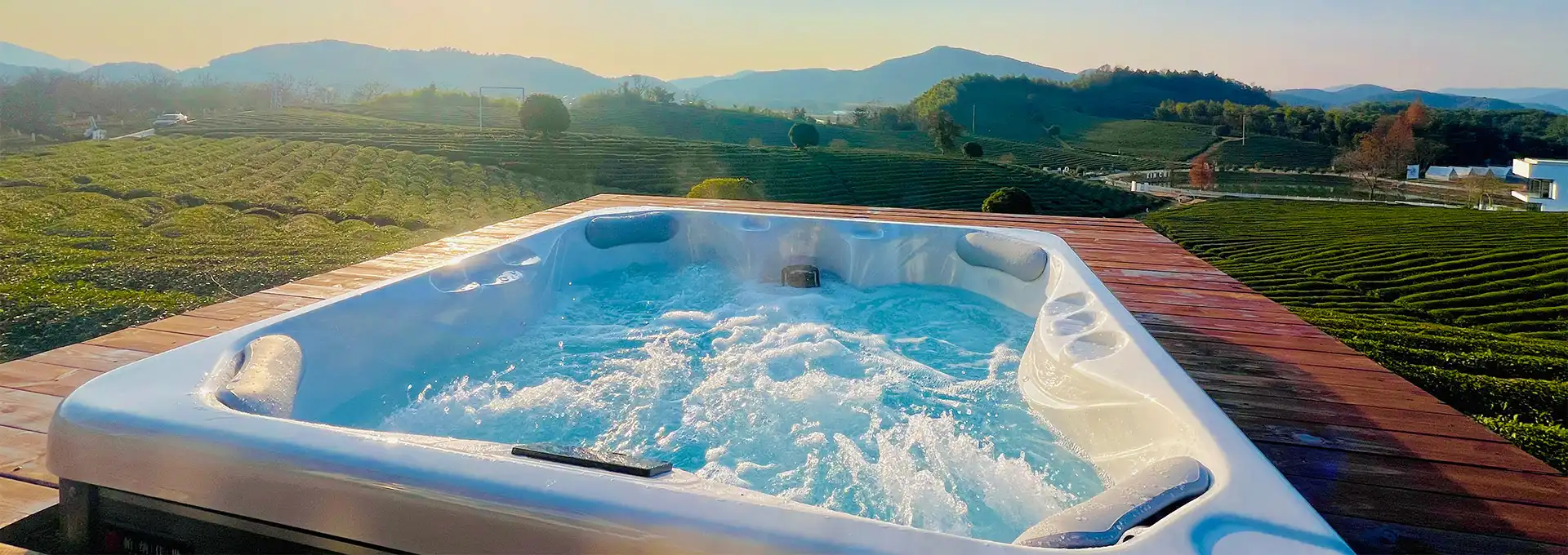
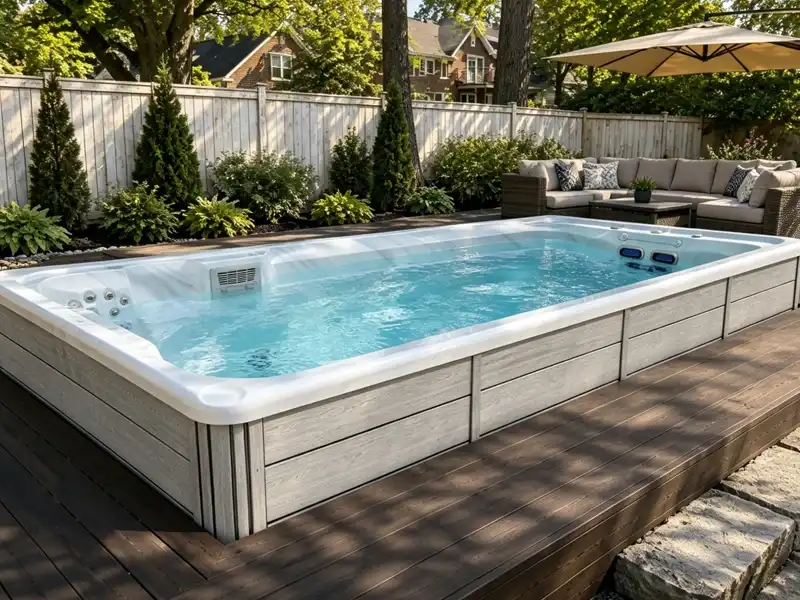
A resort spa plan should be more than just a beautiful place to unwind. Wellness centers that provide guests with a combination of exercise, healing, seclusion, and unforgettable experiences are increasingly being sought. A swim spa training pool may help resorts satisfy these requirements without the space commitment of a typical lap pool. Shenzhen iParnassus Intelligent Spas Co., LTD presents an Acrylic Infinity Swim Spa built on a swimming lane of 4.75 meters. It is equipped with three strong 13.5 inches swim jets and an effective swimming distance of up to 95%. The right-angle shape and the basic interior also enable the architect to more easily see how the unit will fit within a specified wellness zone. The secret is to design the product as part of the whole resort experience, visitor flow, technical services, water treatment, and maintenance access.
Decide Where the Swim Spa Fits in the Resort Wellness Concept
Give the Training Pool a Clear Role in the Guest Journey
Before picking an installation site, resort planners should consider what visitors will be expected to do with the facility. A swim spa training pool may be used for swimming practice, low-impact aquatic exercise, personal fitness training, and recreational usage. The location of the swim spa training pool inside the resort should be in keeping with the overall wellness concept of the property. A wellness resort may situate it next to the gym and workout studio, while a luxury retreat could combine it into a more serene hydrotherapy area. The contrast is an important one, because guests who use the pool for fitness may want ready access to changing facilities and showers, whilst those who want to rest may prefer a quieter setting. Defining the planned usage early on allows architects to integrate the pool with the surrounding facilities instead of considering it a standalone equipment buy.
Choose Between a Dedicated Training Zone and a Shared Wellness Area
There are two viable methods to implement a swim spa training pool in a resort. The first is to provide a specific space for water training with exercise equipment, a place to store towels, and a clear path to the changing facilities. This is a great choice for properties that wish to encourage scheduled swim sessions or personal training. The second is to locate the pool in a larger wellness zone with treatment rooms, relaxing areas and other aquatic services. This might be appropriate for boutique resorts when the floor space available is restricted, and numerous wellness activities need to share the same setting. In any scenario, the pool should be visually separated sufficiently from loud social rooms to keep the mood anticipated in a luxury spa. The final configuration should be appropriate for the resort’s visitor profile, service model, and hours of operation.
Use Existing Resort Facilities as a Planning Reference
The Nautilux Rethymno by Mage Hotels in Crete is an example of a resort that can provide a variety of aquatic and health activities under one roof. Its advertised amenities list includes two outdoor pools, an indoor heated pool, a hot tub, a 450-square-meter Coral Wellness Spa and Gym, and direct beach access. This is a great point of reference for planners contemplating how a swim spa training pool may enhance an existing pool portfolio. A training spa might be a more concentrated activity for customers wanting to work out against a stream, rather than a replacement for the main swimming pool. A resort with various water amenities might designate each for a certain purpose: sociable swimming, calm relaxation, exercise, or private-use experiences. This makes it simpler for visitors to comprehend and apply the whole wellness program.
Match the Pool to the Resort's Target Guests
For example, a fitness resort may provide swimming lessons to its patrons, but a family resort would promote water fun for everyone to enjoy together. A luxury resort may want exclusive or planned sessions that provide a more personalized experience. A swim spa training pool is flexible enough to allow for a broad range of positioning methods, but the operation plan should determine the key users before the design is finished. You need to consider the usage of the pool, e.g., solo visitors, couples, small groups, fitness instructors, or hotel members. Think about whether children will be allowed, whether there will be supervised sessions, and if reservations will be needed during peak times. These considerations affect signage, access control, personnel, and the location of neighboring facilities. So the facility has a defined guest-use plan so that it can provide a consistent experience, instead of being an underutilized function.
Plan the Space Around the Product, Not Just Its Footprint
Make the 4.75-Meter Swim Lane the Starting Point
The 4.75-meter swim lane is the signature feature of the iParnassus® Acrylic Infinity Swim Spa. The device is intended for an effective swimming distance of up to 95 percent, enabling customers to make practical use of almost the whole lane. This is crucial as it pertains to putting a swim spa training pool into a resort layout since the usable swimming space is more vital than the outward dimensions of the product alone. Architects should place the unit so that swimmers have enough space to enter, depart, and maneuver about the pool securely. It would also need room around it for a cover, service access, and other necessary safety obstacles. The advertised lane length of the product does not include the whole footprint of the installation; thus, purchasers should consult a hot tub distributor supplier for dimensioned technical drawings before completing the architectural plan.
Use the Right-Angle Design to Simplify Spatial Coordination
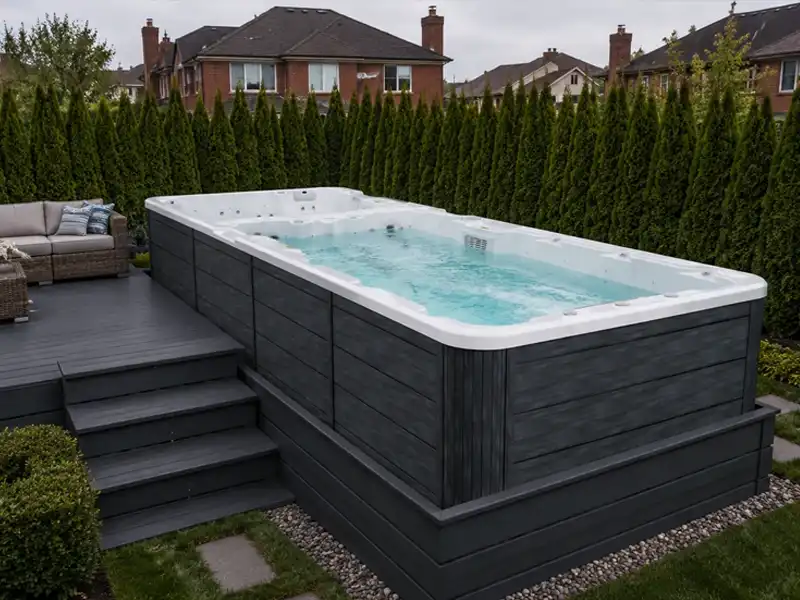
The Acrylic Infinity Swim Spa has a distinctive right-angle exterior and a basic interior design. This geometry may help to integrate the swim spa training pool with straight architectural lines, tiled platforms, decking, and neighboring wellness facilities. A neat rectangular layout may be especially effective for a resort environment, if the pool is next to a gym, a purpose-built indoor aquatic room, or a manicured outdoor patio. The simple interior also maintains the swimming lane visually uncluttered, complementing the product’s core training purpose. Designers should still take into account the surrounding finish materials, drainage slopes, access panels, and maintenance clearances. A good integration in architecture must not obscure important service points or make technical examination difficult.
Separate Guest Movement from Service and Maintenance Routes
In a resort, a spa needs to be quiet, even if the staff is busy behind the scenes. The Global Wellness Institute’s guidelines on developing hydrothermal facilities stress the necessity of space allocation and distinct circulation for guests and workers, including sufficient space for plant equipment and support services. Planners should give a straight visitor path from reception or changing facilities to the swim spa training pool and maintenance access in a quiet location. Staff may need to transport cleaning equipment, new filters, and technical supplies into the area; thus, service paths should not cross the main leisure zone needlessly. Also, separate equipment access points might allow for maintenance without bothering any visitors. These elements are best settled during the architectural design phase while walls, doors, storage rooms and plant-room locations are still fluid.
Allocate Space for Entry, Exit, and Resting
The iParnassus® Acrylic Infinity Swim Spa has incorporated stairs with railings. These stairs make getting in and out of the water easy and may also be used as resting places between swim sessions. It’s a handy dual-purpose element for a swim spa training pool since users require an easy method to get out of the water or halt during interval training. The resort should nevertheless still arrange for proper clearing around the site and verify that the approach is appropriate for the anticipated visitors. Consider non-slip flooring, enough lighting, location of handrails, and apparent depth or use information in line with local laws. If the pool is to be used by visitors with diverse mobility demands, the design team has to consider accessibility from the beginning of the planning, rather than as an add-on to the building.
Preliminary Space-Planning Checklist
| Planning element | What the resort design team should confirm |
|---|---|
| Product location | Indoor spa, fitness zone, private terrace, or outdoor wellness area |
| Swimming clearance | Unobstructed access along the usable swim lane |
| Entry and exit | Space around integrated steps and handrails |
| Service access | Reachable panels, pipework, and maintenance components |
| Guest circulation | Convenient route from changing rooms and showers |
| Staff circulation | Discreet access for cleaning and technical work |
| Floor and drainage | Suitable support, waterproofing, and drainage design |
Coordinate the Equipment, Water Systems, and Building Services
Understand the Three-Jet Infinity Current System
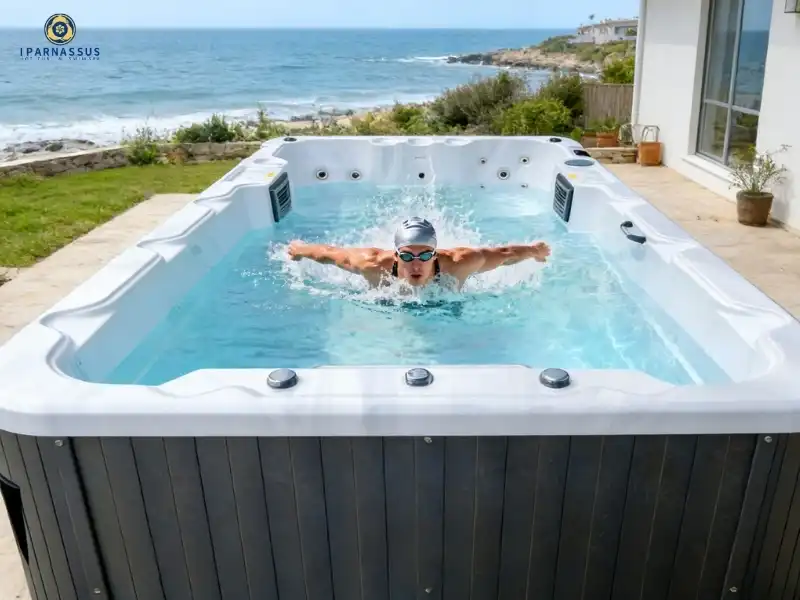
The quality and constancy of the water current determines the sensation of swimming. The iParnassus® Acrylic Infinity Swim Spa has 3 x 13.5-inch swim jets to create a forceful current along its 4.75-meter path. For a swim spa training pool, this setup is at the heart of the product’s function: customers swim against the stream rather than depend on repeated turns at the end of a traditional pool. Its wide swimming lane and high effective swimming distance are appropriate for continuous swimming practice in a more compact installation. When building the facility, resort operators should consider the expected level of training, the experience of the users, and the procedures for monitoring. They should also ask the manufacturer for technical information on how to configure the unit, the controls, and suggested usage, so that staff can appropriately explain the system to visitors.
Provide the Correct Pump and Electrical Infrastructure
The Acrylic Infinity Swim Spa comes with two 4HP pumps and one 3HP pump to power the three huge swim jets. These factors must be addressed throughout the mechanical and electrical design phase, not after the pool has been delivered. For the construction of a swim spa training pool, local electrical supply, circuit protection, isolation provisions, cable routing, and manufacturer’s required operating conditions must be confirmed. Equipment noise and vibration should also be considered by the project team, particularly if the pool is next to guest rooms or quiet treatment spaces. The supplier’s technical drawings and electrical paperwork should be sent to the resort’s competent electrical contractor prior to installation. That kind of collaboration decreases the danger of last-minute modifications and helps guarantee that the equipment can be handled and repaired properly.
Design Water Treatment and Plant Access from the Beginning
Water treatment is part of the architect’s and engineer’s brief, not an extra item to be added after the pool is completed. The UK Health and Safety Executive’s guideline on managing spa pools recommends that water treatment design should include bathing load, circulation, turnover, filtration, disinfection, drainage, and maintenance access. These concepts are essential for designing a swim spa training pool for commercial hospitality usage, while the specific requirements will depend on the product configuration and local legislation. The resort should verify the needed filtration and disinfection arrangement with the manufacturer, a trained pool treatment professional, and a reliable hot tub distributor supplier. It should also provide enough room for accompanying equipment, chemical storage when needed, and safe access for maintenance. Good plant planning provides for easier everyday operations and protects the visitor experience.
Coordinate Heating, Ventilation, and Indoor Humidity
The floor design of the space is not the only thing impacted by an indoor swim spa training pool. Warm water may add moisture to the surrounding air; therefore, the building services team needs to take into account ventilation, humidity management, avoidance of condensation, and longevity of adjacent surfaces. The solution needed will depend on the room capacity, water temperature, operation schedule, and if the space is totally enclosed. Other factors for outdoor installations include exposure to weather, wind, solar gain, and seasonal operating conditions. The resort should check with the supplier about the heating arrangement and any heat-pump compatibility, rather than presuming all models come with the same equipment. Early coordination of these systems helps minimize condensation issues, unpleasant interior conditions, and unneeded interruption once the building is operational.
Technical Information to Request Before Construction
| Technical area | Information to obtain from the supplier |
|---|---|
| Swimming system | Three 13.5-inch swim jets and current-control details |
| Pump arrangement | Two 4HP pumps and one 3HP pump |
| Swimming area | 4.75 m lane and stated effective swimming distance of up to 95% |
| Electrical planning | Voltage, frequency, current, protection, and connection requirements |
| Water treatment | Filtration, circulation, disinfection, and maintenance guidance |
| Installation | Product drawings, access clearances, support requirements |
| After-sales | Warranty terms, service process, and spare-parts availability |
Turn the Installation into a Reliable Resort Wellness Service
Create Different Programs for Different Guest Needs
Once constructed, a swim spa training pool may accommodate more than one form of visitor activity. Resorts may provide beginner swimming lessons, individual fitness practice, organized aqua workouts, or private usage times. The current-based system enables visitors to swim constantly without the need for a lengthy traditional lane, while the incorporated stairs give a handy spot to stop between swimming sessions. The fitness professionals may guide visitors through the present and set up suitable session routines, according to their experience and comfort. The resort should not attempt to market the pool as a substitute for other swimming facilities. Its best usage is for concentrated swimming and aquatic fitness. Clear explanations on the resort website and in-room literature may assist visitors in grasping what is unusual about the experience.
Build a Simple Operating and Maintenance Routine
A commercial aquatic facility must have defined operational duties. The resort will assign skilled workers to monitor water quality, examine circulation and filtration systems, clean the surrounding area, and document maintenance actions. A swim spa training pool should have a written timetable for opening inspections, regular water testing, routine filter service, cleaning, and fault reporting. The CDC's Model Aquatic Health Code is a valuable reference for public aquatic facility management, but it is model guidelines and should be reviewed alongside the rules approved in the jurisdiction where the resort is located. Staff must also be aware of when to limit access and who to call if readings are outside the operating range or device performance changes. Standard operating procedures assist in safeguarding visitors and encourage dependable day-to-day service.
Use Sustainability Goals to Guide Operating Decisions
Resorts are increasingly required to consider energy, water, waste, and local environmental factors when building wellness facilities. For example, Nautilux Rethymno refers to measures that include solar energy, recycling, composting of food waste, reduction of plastic usage, and using locally produced food when possible. A resort that’s building a swim spa training pool may take a similar whole-property strategy, looking at its insulation, operational temperatures, cover use, heating schedules and water-management procedures. These solutions should be chosen on the basis of the technical features of the product and the climate of the property and not on the basis of unsubstantiated promises of energy reduction. Buyers should ask suppliers for real operational data and suggested settings. Incorporating the pool as part of the overall sustainability strategy of the resort may also assist to ensure that its wellness positioning is aligned with the environmental commitments of the property.
Work with a Supplier That Understands Project Requirements
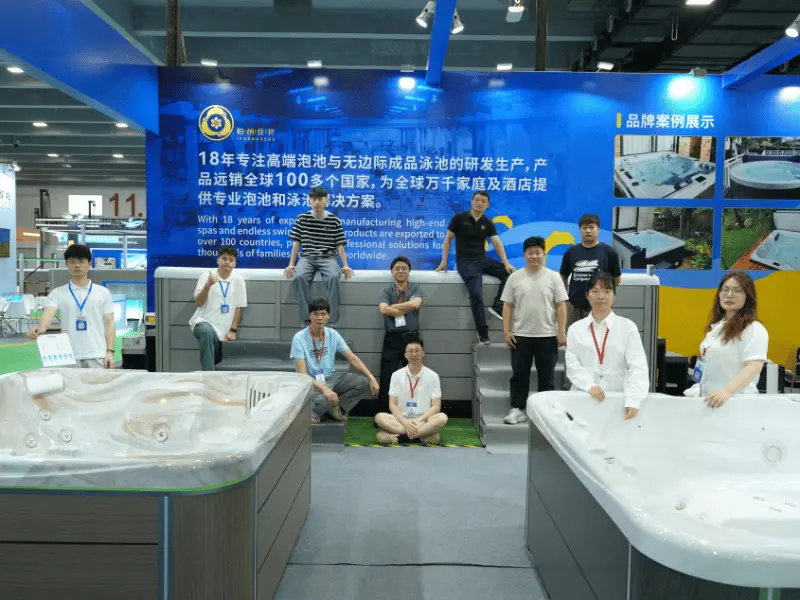
The provider should be more than just a source of equipment. Developers of resorts may require product drawings, technical clarification, installation coordination, personnel advice, warranty information, and after-sales support. Shenzhen Iparnassus Intelligent Spas Co., LTD is a company that specializes in hot tubs, swim spas, and cold plunge products and has teams dedicated to design, R&D, manufacturing, sales, and after-sales support. The firm has 18 years of spa expertise and operates internationally in Europe, Australia, the Middle East, and North America. For a swim spa training pool project, purchasers should provide the resort’s plan, anticipated guest usage, installation environment, and local technical requirements to the supplier before placing the order. Good technical communication, whether direct or via a hot tub distributor provider, keeps the product, construction crew, and operation strategy on the same page.
Conclusion
There's more to putting a swim spa training pool into a resort spa layout than just finding a place for the equipment. The proposal must combine the swimming experience with visitor circulation, changing rooms, technical services, water treatment, and long-term maintenance. The iParnassus® Acrylic Infinity Swim Spa has a 4.75-meter lane, 3 13.5-inch swim jets, and two 4HP and one 3HP pumps to provide a concentrated continuous swim experience in a limited footprint. The right-angle shape and built-in stairs are also useful aspects for architects to consider when designing a plan. Early cooperation between resort, designer, contractor, and supplier may help make the installation a valuable and unique aspect of the property’s wellness offering.
FAQ
1. What is the swim lane length of the iParnassus® Acrylic Infinity Swim Spa?
The published swim lane length is 4.75 meters, with an effective swimming distance of up to 95%.
2. How many swim jets does the product have?
It features three 13.5-inch swim jets designed to generate the swimming current.
3. What pump configuration does the swim spa use?
The system uses two 4HP pumps and one 3HP pump.
4. Can the integrated steps be used for resting?
Yes. The steps with handrails support entry and exit and can also serve as resting spots between swimming sessions.
5. What should a resort prepare before installation?
The project team should confirm the installation footprint, access clearance, structural support, electrical supply, water treatment, drainage, ventilation where applicable, and maintenance access.
Plan Your Resort Aquatic Facility with iParnassus®
A well-planned aquatic facility gives resort guests another reason to stay active, relax, and enjoy their time on the property. The iParnassus® Acrylic Infinity Swim Spa combines a 4.75-meter swimming lane, three powerful 13.5-inch swim spa training pool jets, and an integrated step-and-handrail design to create a focused training experience in a compact format. Shenzhen Iparnassus Intelligent Spas Co., LTD supports projects with professional design, R&D, manufacturing, sales, and after-sales teams. If you are developing a resort spa, upgrading a hotel fitness area, or planning a private wellness facility, contact the iParnassus® team at info@iparnassus.com. Share your architectural layout, project location, and intended guest activities to discuss product suitability, technical documentation, and a quotation for your project.
References
1. Nautilux Rethymno by Mage Hotels. Facilities & Services; Pools & Beach; Coral Wellness Spa. Official Hotel Information.
2. Global Wellness Institute. Hydrothermal Guide 2024: Space and People in Commercial Spas. 2024.
3. UK Health and Safety Executive. The Management of Spa Pools: Controlling the Risk of Infection. HSG282.
4. U.S. Centers for Disease Control and Prevention. Model Aquatic Health Code. 2024 Edition.
5. Nautilux Rethymno by Mage Hotels. Sustainability and Environmental Initiatives. Official Hotel Information.
6. iParnassus®. Acrylic Infinity Swim Spa: Product Design and Technical Features. Official Product Information.

Send Inquiry