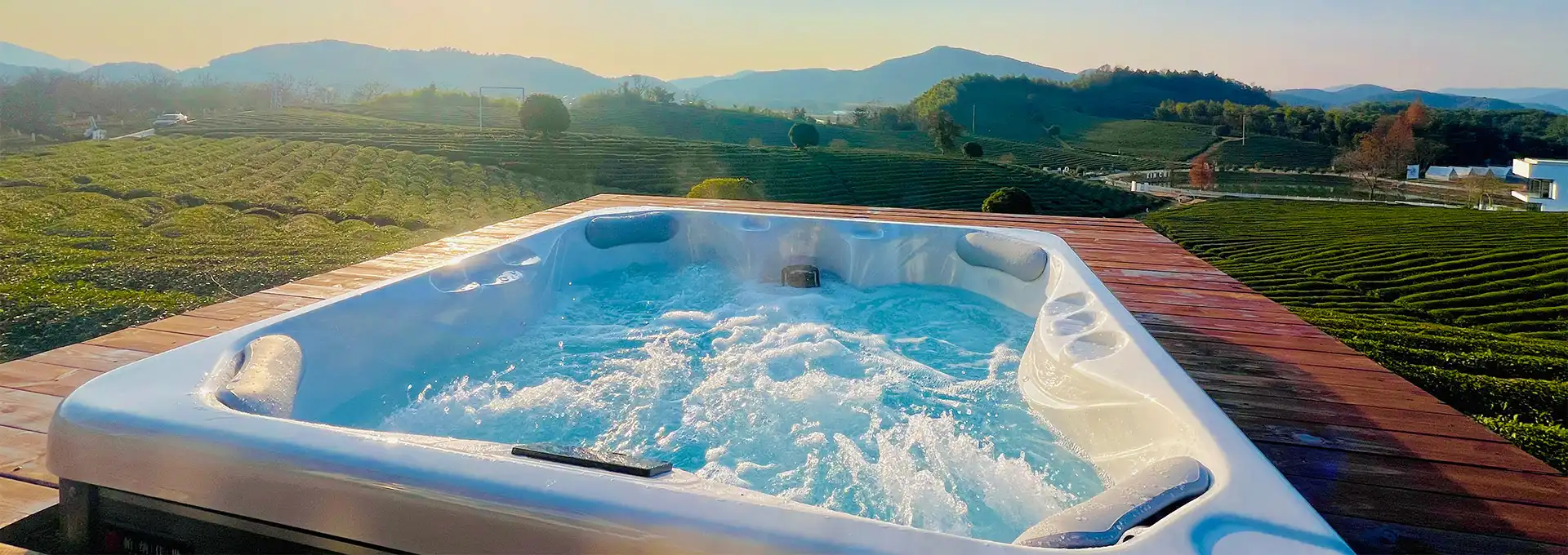
How to Maintain a 4 Person Hot Tub Efficiently
Keeping a 4 person hot tub in top condition requires a clear routine covering water chemistry, filter care, and equipment checks. Whether you manage a resort property or host gatherings at a private villa, consistent maintenance prevents costly repairs and keeps every soak safe and comfortable. From testing pH levels weekly to scheduling full water changes every three to four months, the right habits protect both the tub's mechanical systems and the health of everyone using it. This guide walks through the key steps so you can maintain your spa with confidence.
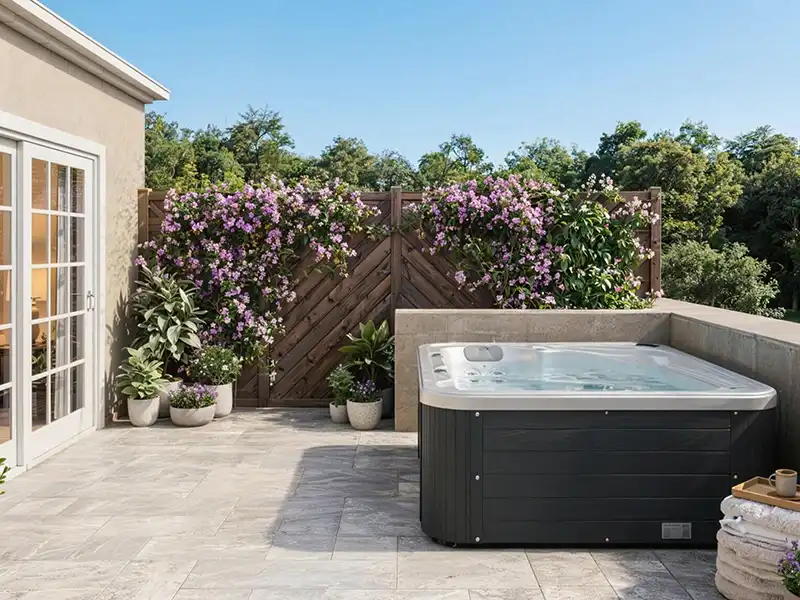
Understanding Common Maintenance Challenges of 4 Person Hot Tubs
The water in a four-person spa changes more often and goes out faster because it is used for more activities than a one-person tub. Trouble can be stopped before it costs a lot of money if you know where it starts.
Wear from High-Frequency Use
Every day, people use hot tubs in ways that they weren't meant to be used in places like resorts and rental villas. Jet blades, seals, and pump parts wear out faster when this much weight is put on them. Jet checks should happen every two weeks instead of once a month. This change makes sense and finds mechanical stress early on, before it gets worse.
Water Chemistry Imbalances
What changes pH and sanitizer levels at different speeds are things like the number of bathers, the temperature, and the time spent in the sun. A 2019 study in the Water Quality & Treatment Journal found that changes in pH outside of the range of 7.2 to 7.8 make metal parts rust faster and shell surfaces get damaged. Tests should be done on any tub that is shared at least twice a week.
Environmental and Climate Factors
Outside hot tub covers, cabinet panels, and glass shells that are near the coast or in places with a lot of UV light wear out more quickly. If you don't protect your pipes properly, they can freeze and break in cold places. No, you can't go without getting the right padding and cover. They will save you money in the long run.

Key Principles for Efficiently Maintaining a 4 Person Hot Tub
For maintenance to work well, you need to control the temperature, the chemistry of the water, and the filtering. It takes longer and costs more to fix things after the fact than to do them right the first time.
Maintaining Correct Water Chemistry
Alkalinity should be 80 to 120 parts per million, pH should be 7.4 to 7.6, and chlorine should be 3 to 5 parts per million. If you want to clean a spa that is inside, you can use bromine instead of chlorine. To check every day, test strips are quick and easy to use. To check once a week, liquid test kits give more accurate results. Once a week, shock the water with an oxidizer to get rid of organic contaminants that sanitizers can't get rid of on their own.
Filter Care and Replacement Cycles
If you have a garden hose, you should rinse cartridge filters once a week. Once a month, you should soak them in a chemical filter cleaner. For normal home use, most manufacturers say that a full cartridge should be replaced every 12 months. In commercial settings with a lot of bathers, they say that it should be replaced every six months. If the filter gets clogged, water can't get to the pumps. This makes them work harder and wear out faster.
Temperature Control and Energy Efficiency
It is safe and comfortable for water to be kept at 37°C–40°C (98°F–104°F). It saves a lot of money for business owners to set the four man hot tub to a fixed temperature of 35°C during off-peak hours. With modern control systems, like the smartphone-linked platform in iParnassus® spas, you can set the temperature of the tub from afar. That way, it's always ready for guests when they get there, and it doesn't have to run all night.
Step-by-Step Maintenance Procedures for Long-Term Hot Tub Health
It is easier to train people who work in hospitality when they have a set schedule and don't forget to do things. This split up by frequency is helpful.
Weekly Maintenance Tasks
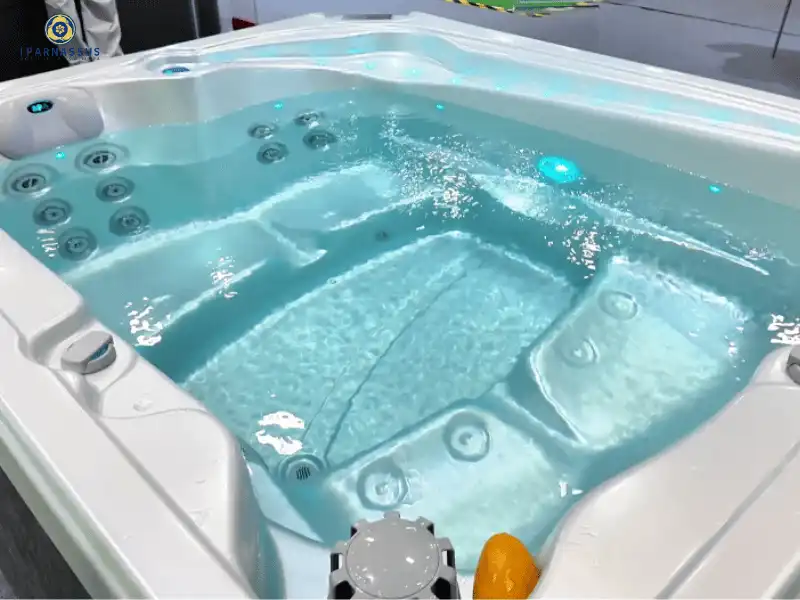
A week, you should check and change the water chemicals and rinse and clean the filter. A spa surface cleaner that doesn't scratch should be used to clean the lines. Make sure that nothing is in the way of the jets moving. The iParnassus® P640 has 46 blades of different sizes that are spread out. They should all be able to turn easily. Massages don't work as well when jets are blocked, which is an early sign of flow problems that need to be solved before they get worse.
Monthly Deep-Cleaning Procedures
Take the filter cartridges out and soak them in water once a month. Then, look for cracks or water damage in the cover. Finally, use the cleaner that the manufacturer suggests to clean the inside shell. Use a pipe-flush product to get rid of the gunk that forms inside the pipes before you drain. Standard PVC lines are more likely to get biofilm on them than the food-grade piping in the P640. However, any tub that is shared should still be flushed.
Quarterly Water Changes
If the total dissolved solids are more than 1,500 ppm, drain and fill the four man hot tub with water more often than every three to four months. Before you put gas back in it, clean the footwell seats and wipe down all the inside surfaces. Also, check the pump case for early signs of rust. The links between the P640's two 3HP water pumps are quickly checked every time it drains to make sure they are tight. It only takes ten minutes to do this, and it keeps the pumps from breaking down when you least expect it.

Case Studies: Effective Maintenance Strategies in B2B Hot Tub Procurement
Return on investment (ROI) is directly related to how well maintenance plans are followed in commercial spas.
Resort Property: Reducing Downtime with Scheduled Maintenance
A medium-sized resort in Europe switched from fixing things as they broke to making a service plan for each of its four-person spa units every week and every month. The average unit lived two years longer, and the number of unexpected service calls dropped by 40% over 18 months. The property said that a big part of the change was because the pH and filters were being cared for regularly, which wasn't the case before.
OEM Distributor: Warranty Compliance Through Documented Care
One OEM dealer bought spas with four seats to sell and put a care guide in each one. Customers who stuck to the written schedule made fewer warranty claims, and the distributor had a lower return rate than usual for the business. As part of the buying process, having upkeep records that met the manufacturer's needs, like using food-grade pipe systems, became a key selling point.
Conclusion
No matter how many people use it, a four-seat spa will work well all year long as long as the chemicals, filters, and temperature control are kept up to date. The steps in this guide are simple: test it once a week, clean it well once a month, and change the water every three months. These steps can be adjusted to fit the needs of any fleet size.
Also, make sure that the way you clean the 4 person hot tub works with the way it was made. This is because a spa with food-grade piping, large-format jets, and a responsive control system is made with fewer common failure spots from the start. This means that it needs less reactive upkeep than a normal unit. The best way for a procurement manager or hotel provider to do their job is to plan ahead and keep up with maintenance.
FAQ
1. How often should I change the water in a 4-person hot tub?
Around the house, the water should be changed every three to four months. A two-month cycle works better in places like hotels where a lot of people bathe every day. You should always check the total dissolved solids before making a choice. No matter what time of year it is, if the number is above 1,500 ppm, it's time for a full change.
2. What is the ideal operating temperature for a four-seat spa?
Most people and health rules agree that it should be between 37°C and 40°C (98°F and 104°F). You can save energy and time by setting the temperature to 35°C during off-peak hours. When you need the tub again, you won't have to go through a full warming procedure.
3. What is the difference between maintaining an inflatable and a hard-shell spa?
Hard-shell pools like the iParnassus® P640 have fixed wiring, jet systems that don't change, and stronger insulation. These features need to be maintained more often, but they're better for both personal and business use. Chemicals are easier to use to clean inflatable models, but UV light makes them more likely to get holes and break down, and they can't handle high-power jet systems.
4. Why does jet size matter for maintenance?
Water moves faster through bigger jets, like the 5-inch CMP jets on the P640. This changes how fast the water flows, how hard it hits the filter, and how the pump wears. To check and clean large-format jets, you need a few different tools than for smaller nozzles. To save time, ask your provider about the jet size before you buy repair tools.
Source Your Next 4 Person Hot Tub Supplier Through iParnassus®
The spas that iParnassus® makes are made to last a long time with little care. It has 46 jets, two 3HP pumps, food-grade piping, and 8 foreign approvals, such as RoHS and KC. It can fit four people. A lot of people can't afford to have their spas break down, so the P640 was made for them, offering a reliable solution for a 4 person hot tub. iParnassus® has 80 patents and has been making things for 18 years. From specs to service after the sale, it helps procurement teams with everything. Feel free to email us at info@iparnassus.com to get bulk prices.

References
1. Water Quality & Treatment: A Handbook on Drinking Water — American Water Works Association, 2019.
2. APSP/ICC-5 Standard for Residential In-ground Swimming Pools — Association of Pool & Spa Professionals, 2021.
3. Residential and Commercial Pool & Spa Water Treatment Guide — Pool & Hot Tub Alliance (PHTA), 2022.
4. NSF/ANSI 50: Equipment for Swimming Pools, Spas, Hot Tubs and Other Recreational Water Facilities — NSF International, 2021.
5. Energy Efficiency in Residential Spas and Hot Tubs — California Energy Commission Technical Report, 2020.
6. Biofilm Control in Recreational Water Systems — Journal of Environmental Health, Volume 84, 2022.

Send Inquiry