_1768872582663.webp)
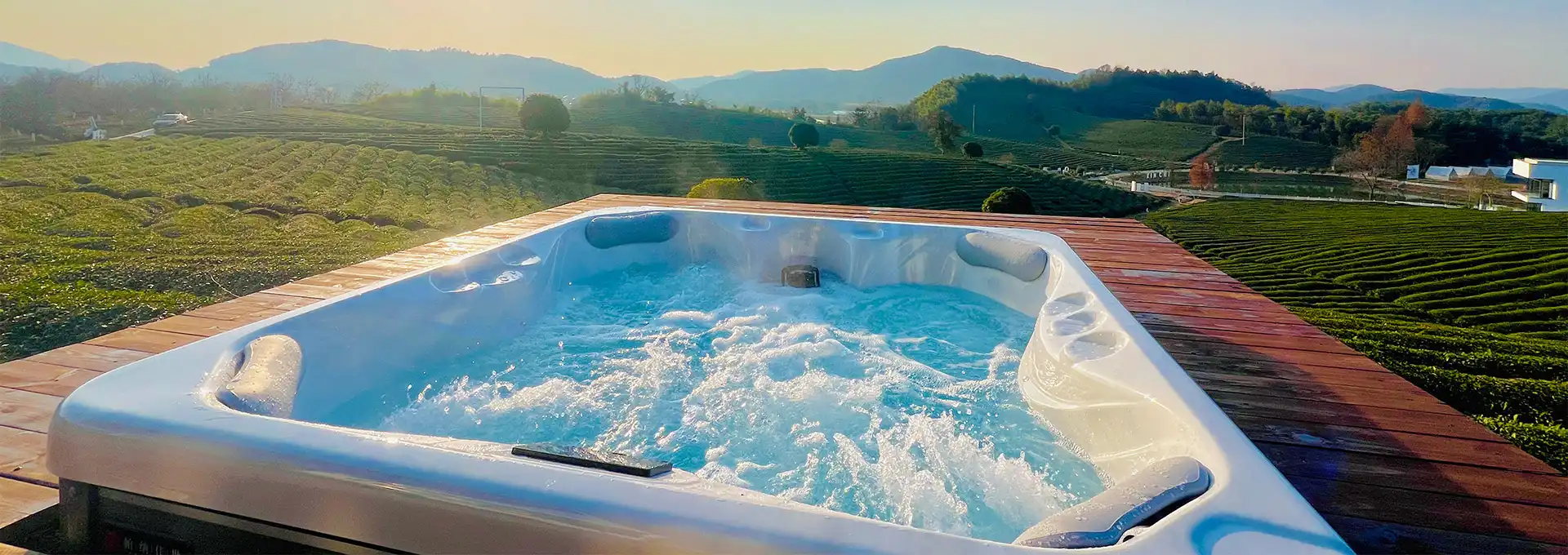
Round Stainless steel hot tub vs. Acrylic: Which Is Better?
When it comes to selecting the right hot tub for a coastal resort, boutique hotel, or luxury villa, material choice shapes every downstream decision—from installation costs to long-term hygiene management. A round stainless steel hot tub outperforms acrylic in commercial and coastal environments where corrosion resistance, structural integrity, and low maintenance matter most. Built from 304 stainless steel, it withstands saltwater exposure, chlorine, and high-traffic use without degrading. Acrylic offers design flexibility at a lower entry price, but its lifecycle costs and vulnerability to surface damage make it a less compelling investment for serious B2B buyers.
Material Overview and Key Characteristics
Stainless Steel: Built for Demanding Environments
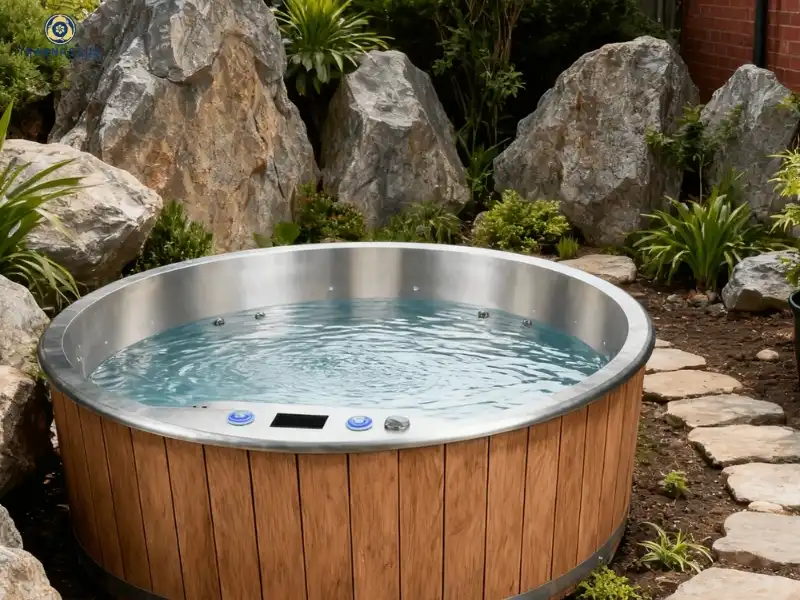
A 304 stainless steel shell doesn't rust, break down when exposed to chemicals, or get damaged by UV light. These are very important qualities in marine, seaside, and business spa settings. The surface doesn't have pores, so it doesn't hold bacteria or take in minerals from hot spring water or chlorine pools. Because its dry weight is 330 kg, the frame is stable enough for both long-term business installs and high-traffic hospitality settings. The even makeup of stainless steel also removes the chance of delamination or underground cracking, which is a known weakness in stacked polymer shells.
Acrylic: Design Versatility With Trade-Offs
Acrylic shells are vacuum-formed over fiberglass backing, which lets them come in many colors, forms, and comfortable curves. Wellness designers who want to create unique looks will like this freedom. Acrylic, on the other hand, is microscopically porous, soaks up chemical residue over time, and turns yellow and cracks when exposed to UV light. The International Journal of Environmental Research and Public Health found that porous spa surfaces had much higher rates of bacterial colonization than smooth metallic surfaces. This is something that should be considered in both commercial and healthcare spa settings.
Performance and Maintenance Comparison
In the marine and hotel businesses, buying choices depend on how well a product works under long-term stress. At this point, stainless steel and plastic are very different.
Here are the core performance and maintenance distinctions worth examining:
- Corrosion resistance: A stainless steel spa with a body made of 304 stainless steel will never rust in saltwater, chlorine, or ozone-treated water. This makes it the best material for yachts, beach resorts, and outdoor commercial spas. Long-term chemical contact changes the color and strength of acrylic, so the surface usually needs to be refinished every 5–8 years.
- Cleaning cycle: The smooth, uniform stainless steel inside wipes clean with little effort, which cuts down on cleaning work in places with a lot of people coming and going. Acrylic surfaces are easy to scratch, and the tiny holes they leave behind collect germs and chemical scale.
- Structural lifespan: According to data from the industry, commercially used stainless steel hot tubs will last 15–25 years, while plastic models will only last 8–12 years before it becomes cost-effective to repair the shell.
These differences are not trivial. For a boutique hotel or resort developer with more than 300 booked nights a year, the difference in maintenance costs between these two types of materials affects both the cost of labor and the quality of the guest experience. Because it needs less upkeep, stainless steel is a better long-term investment for business uses that are used a lot.
Operational and Health Benefits
Hydrotherapy Performance in Commercial Settings
The iParnassus® round stainless steel spa has 15 jets that are placed in an ergonomic way to target the shoulders, back, waist, and abdomen. This is done so that the whole body can get hydrotherapy instead of just a superficial massage. The system has a low-noise output and an adjustable flow strength, which is important in hotel settings where guest pleasure goes beyond the tub itself. It is powered by a 2-speed 2.0 HP pump that is CE/TUV approved.
Hygiene and Water Purity
The P78B138 purification system actively stops the growth of bacteria, keeping the water clear between cleaning cycles. This is a huge benefit in commercial spas where the frequency of water turnover is limited. The non-porous stainless steel surface makes this benefit even better because it doesn't give bacteria the tiny anchor points that polymer surfaces give them by accident.
Thermal Efficiency and Heating
A 3.0kW heater that is allowed by CE/UL can quickly hit the temperature you want and keep it there with little energy use. The unit works with normal 220–240V/50Hz and can handle up to 15.6A. It meets the electricity standards in North America, Europe, and Australia without any changes. Because acrylic tubs have less thermal mass, they usually use foam insulation to make up for it. Stainless steel, on the other hand, has higher thermal conductivity, so it stays at set temperatures more consistently.

Cost Analysis and Procurement Considerations
More money is needed to buy a stainless steel hot tub. Commercial-grade models usually cost more than $12,000. Acrylic choices usually come in at a cheaper price, but that difference gets much smaller when you look at how much they will cost over their whole life.
Key procurement considerations include:
- Total cost of ownership: Stainless steel lasts longer and needs fewer repairs to its surface, so it costs less to maintain over a 10-year deployment window than acrylic, which may need a shell re-gelcoating or replacement within the same time frame.
- Certification compliance: The iParnassus® stainless steel spa has CB and UKCA certifications, as well as CE/TUV pump and CE/UL heater approvals. This means it meets the standards for import and installation in major countries like the EU, the UK, and North America.
- Supplier reliability: Buying from a well-known round stainless steel hot tub company that has quality control checks like PMI testing, weld NDT, and passivation verification keeps purchase contracts safe from expensive failures on-site.
Reputable suppliers with ISO-aligned manufacturing standards and documented after-sales programs reduce procurement risk substantially. iParnassus®, with 18 years of spa manufacturing experience and 80 registered patents, represents that category of verified industrial partner.
Decision-Making Guide for B2B Buyers
The right choice depends on your deployment context. Here's a practical framework for aligning material selection with project requirements:
- Stainless steel is the better choice when your project involves coastal or marine exposure, high daily occupancy, rigorous sanitation protocols, or markets requiring specific safety standards. The round shape — 183.5 cm in diameter and 102 cm high — fits perfectly on yacht decks, rooftop patios, and boutique spa floors where space is limited but guest capacity (up to 4 adults) must remain viable.
- Acrylic remains relevant for indoor domestic setups that don't get a lot of use, have low budgets, and are only concerned with how the room looks. Corrosion and bacterial load are not the main concerns here.
Commercial buyers developing resort amenities, club facilities, or high-end vacation rentals will consistently find the stainless steel investment more defensible when presented to ownership stakeholders measuring ROI over a 10-year period. Purchasing teams that care about the environment also like stainless steel because it can be recycled and doesn't give off any chemicals. These are qualities that are in line with green building and ESG reporting frameworks that are becoming more common in institutional hospitality procurement.
Conclusion
Choosing a material isn't just about how it looks; it's also about how it works. In industrial and marine settings, a round stainless steel hot tub offers corrosion resistance, structural strength, cleanliness compliance, and certification compliance that acrylic simply cannot match. With 18 years of experience making spas and safety certifications that are known around the world, the iParnassus® stainless steel spa is a good investment for the long run. Acrylic has its place, but steel is always the better choice for high-demand, high-expectation operations.
FAQ
1. How long does a stainless steel hot tub last compared to an acrylic?
Most commercial stainless steel hot tubs last between 15 and 25 years, depending on how well they are taken care of and where they are used. Within 8–12 years, acrylic models usually need to have their surfaces refinished or their shells replaced. The gap is biggest near the coast and in areas with a lot of foot traffic, where chemicals and UV light speed up the breakdown of acrylic.
2. Is a round stainless steel hot tub suitable for saltwater environments?
Yes, 304 stainless steel is much better than acrylic or fiberglass at resisting corrosion from saltwater and salty air. Because of this, it is the best material for hotels, yachts, and oceanfront villas that are likely to fail from exposure to the elements.
3. Can the iParnassus® stainless steel spa meet international electrical standards?
The unit works on 220–240V/50Hz and can draw up to 15.6A. The heater and pump are approved by CE/UL and CE/TUV, respectively. It meets safety standards in North America, Europe, and Australia without having to be rewired.
4. How many people does the round design accommodate?
The round shape comfortably seats up to four adults and is perfect for small hotel suites, private club terraces, or yacht decks where space is limited but social closeness is desired.
Partner With iParnassus®—Your Trusted Round Stainless Steel Hot Tub Supplier
iParnassus® has spent 18 years engineering spa solutions for the world's most demanding commercial environments. Our round stainless steel hot tub combines a 304 stainless steel body, a 15-jet hydrotherapy system, and globally certified components into one compact, high-performance unit. Whether you're sourcing for a resort development, yacht fit-out, or premium villa project, our team is ready to support you from specification through delivery. Reach us directly at info@iparnassus.com to request a quote today.

References
1. Kusnetsov, J., et al. (2020). "Bacterial Contamination of Spa and Hot Tub Water." International Journal of Environmental Research and Public Health, 17(4), 1116.
2. Pool & Spa News. (2022). "Acrylic vs. Alternative Materials in Commercial Spa Construction." Pool & Spa News.
3. APSP (Association of Pool & Spa Professionals). (2021). Commercial Aquatic Facility Design and Operations Manual.
4. U.S. Green Building Council. (2023). "Material Health and Indoor Environmental Quality in LEED-Certified Facilities." USGBC Resources.
5. NSF International. (2022). "Hydrotherapy Equipment Sanitation and Surface Material Standards." NSF Technical Report.
6. ASTM International. (2021). Standard Specification for Stainless Steel Bars and Shapes (ASTM A276/A276M).

Send Inquiry