_1768872582663.webp)
5 Seater Hot Tub Installation: Space and Setup Guide
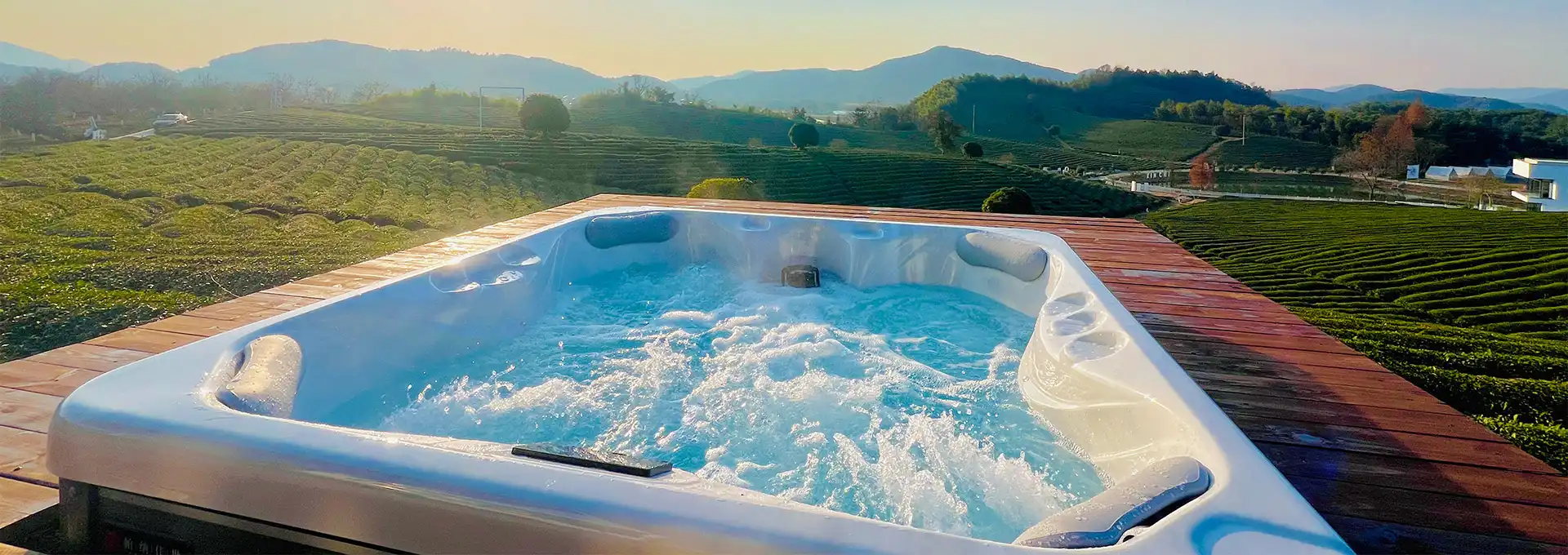
Planning a 5 seater hot tub installation requires more than picking a model you like. Whether you manage a resort, own a private estate, or source spa equipment for hospitality clients, getting the setup right from day one protects your investment and guest experience. This guide walks you through everything—dimensions, site prep, plumbing, energy costs, and maintenance—so you can move from planning to operation with confidence. We'll also highlight how the iParnassus® 5R51 addresses the specific demands of commercial and residential buyers in today's market.


Understanding Space Requirements for 5-Seater Hot Tubs
Typical Dimensions and Clearances
Industry measurement guides say that most medium-sized spas that can fit five to six people are between 6'6" and 7'9" on each side. This is where the iParnassus® 5R51 stands out: its 200 cm size fits within that normal range while still providing full seating for five people, including two full-length lounge seats. That small-to-large size ratio is really uncommon in acrylic hot tub design.
Leave at least 36 inches of space on all sides. This space allows for safe movement for users, access for technicians to service the filter, and compliance with local safety codes. Narrower clearances might look better, but they cause real problems during regular maintenance cycles.
Indoor vs. Outdoor Placement
Putting the unit outside makes drainage and airflow easier, but it also exposes it to UV damage and freeze-thaw cycles. For indoor installation, you need mechanical ventilation that can handle high humidity, a strong floor that can hold the weight of a full unit, and a floor drain that can be reached from the cabinet. According to NEC Article 680 standards in the US, both places need a separate 240V/50A circuit with a GFCI and an IP65-rated disconnect that can be seen from the unit.
5 Seater Hot Tub Installation Process: Step-by-Step Guide
Site Preparation and Foundation
It is necessary to have a level, load-bearing base. For business settings, the most durable option is a reinforced concrete slab that is at least 4 inches thick. Composite decking that is made for wet areas can be used in home areas as long as the structural frames can handle the load. Before you start building, make sure you have the right local building permits. In many places in the U.S., fixed 5-seater hot tub setups need a permit.
Once the base is solid, here is a useful order to follow:
- Confirm utility routing — Draw out the paths of the electrical conduit and water supply lines so they don't cross any drainage channels or load-bearing walls. Check the circuit's ability before you order any tools.
- Unpack and stage methodically — Leave the 5R51 hot tub 5 person on its delivery pallet until you get to where it will go. Do not drag the cabinet across the edges of concrete, as this can damage the base frame. Instead, use furniture dollies on flat surfaces.
- Lower and level the unit — On all four cabinet edges, use a precision level. A difference of more than ¼ inch along the length can put stress on the shell over time and make it hard for the jets to line up.
- Connect plumbing and electrical — All wiring must be done by a professional electrician. Fill the tub up through the filter to get rid of any air in the jet pipes. Then, run the machine through a full cycle to look for leaks around all of the fittings.
After you're done with these steps, give the heating system a full warm-up cycle and make sure the temperature sensor works correctly before letting people use it. Most problems with commissioning are caught in this last step of validation before they get worse.

Choosing the Right 5-Seater Hot Tub for Your Needs
Matching Product Features to Commercial Demands
There is a big difference between the specs for home hot tubs and commercial hot tubs. Places with a lot of foot traffic, like hotel pool decks, wellness centres at resorts, and boat berths, need shells that last, plumbing plans that are easy to use, and controls that can be locked. The iParnassus® 5R51 directly meets these needs.
It's unusual for a mid-size tub to have two loungers and separate jets for the back, legs, and feet. Most acrylic spas with 5-seater hot tub capacity offer either one lounger or none at all. The 5R51 also has a barrier-free sitting setup for the last three seats, which lets you move around freely in the tub. This is helpful in guest-facing areas where people have different mobility needs. Slip-and-fall risks are even lower with the combined entry step. This is something that hotel risk managers are concerned about.
Here are the core procurement advantages that distinguish this model:
- 47 jets powered by a single 3.0 HP pump — giving each seat about 9.4 jets, which is much more than the standard 5–6 jets per seat.
- Triple lock system — lets staff keep operational settings safe in commercial deployments where they are not being watched.
- Compact 200 cm footprint — can fit five seats where many four-seat competitors can only fit four.
- iParnassus® smart control system — tracking from a smartphone, controlling water from afar, automatic self-defence, and one-key lock/unlock via app.
These advantages collectively reduce liability exposure, lower staffing demands, and extend service intervals for a hot tub 5 person, all of which matter when procurement decisions involve multi-unit deployments.

Maintenance and Safety Guidelines for a 5-Seater Hot Tub
Routine Protocols for High-Usage Settings
The chemistry of the water in business spas changes more quickly than in private spas. Free chlorine should be between 3 and 10 parts per million, and pH should be between 7.2 and 7.8 in 5-seater hot tubs. During the busy season, test the water at least twice a day. When bathers use it, change the filters every 3–6 months and deep-clean the shell every three months.
Seasonal upkeep is just as important. If you live in a cold area, you should winterise your plumbing lines before the first hard freeze to keep them from breaking. In hot places, check UV-exposed covers every six months for separation that makes them less insulating.
Every time you do an inspection, make sure that the anti-slip surfaces on the entry step work, that the emergency shut-off is easy to reach, and that the temperature is controlled by the thermostat display. The 5R51 has a self-protection programme that turns on immediately when water levels drop below safe levels. This lowers the risk of heater harm when the house is not being used.
Energy Efficiency and Cost Considerations in Installation
Reducing Operational Overhead
One of the highest ongoing costs for business spas is the energy they use. In a mild environment, a 5-seater hot tub that isn't well sealed can use 7–10 kWh of electricity every day. When full-foam insulation and a high-density thermal cover are used together, they greatly reduce the loss of idle heat.
It was planned for the 5R51 to only have one 3.0HP pump. This is because having fewer pump motors means it uses less electricity when it's running than dual-pump systems with the same jet output. Putting things in a way that keeps them away from wind paths helps keep heat in.
The iParnassus® smart control technology also helps keep costs down. Its automatic heat pump power supply port makes the most of heating cycles, and remote water management stops heating that isn't needed during off-peak hours. These small improvements add up to big savings on utility bills over the course of a year.
Conclusion
An accurate space plan, a solid foundation, licensed electrical work, and a product specification that fits your needs are all important for a successful hot tub installation. The iParnassus® 5R51 is a 5 seater hot tub with two loungers and five seats built into a 200 cm footprint. This directly solves the space-versus-capacity problem that resort developers and estate owners face. That, along with 47 jets, a smart control system, and a triple lock mechanism, makes this unit designed to make guests happy and run smoothly.

FAQ
1. What foundation type is best for a commercial hot tub installation?
In business settings, the most stable and long-lasting choice is a strengthened concrete slab that is at least 4 inches thick. It spreads the weight evenly, keeps water out, and supports the structure's long-term stability without moving.
2. How much clearance space does a 5-seater hot tub require?
Leave at least 36 inches of space on all sides that can be reached. This makes it safe for users to enter and leave, for technicians to service the filters and plumbing, and for most local building and safety codes to be followed.
3. Are there special requirements for indoor hot tub installations?
Yes. For indoor installs, you need mechanical ventilation to control the humidity, a floor that is strong enough to hold the weight of the unit when it's full, a floor drain close by, and a GFCI-protected 240V/50A dedicated electrical connection. Before you do anything, talk to a licensed contractor.
4. How many jets should a quality 5-person hot tub have?
As a general rule, the industry recommends at least 5–6 jets per seat. The iParnassus® 5R51 has 47 jets spread out over five seats, or about 9.4 jets per seat. It is driven by a single 3.0 HP pump and has consistent massage strength.
Elevate Your Property With iParnassus® — 5-Seater Hot Tub Supplier
Every spa that iParnassus® makes is backed by our 18 years of experience and 80 patents. For resort developers, hotel owners, and real estate agents who expect performance without leaving a big footprint, we built the 5 seater hot tub, the 5R51 5-seater model available for sale through our B2B channel. You can email our team at info@iparnassus.com to get a design sheet, bulk price, or a technical consultation that is specifically made for your project.

References
1. The English Spa Centre. (2023). What Are the Typical Hot Tub Dimensions?
2. Pool & Spa News. (2022). Indoor Spa Installation: Structural and Ventilation Requirements.
3. National Spa and Pool Institute (APSP/PHTA). (2023). American National Standard for Residential In-Ground Swimming Pools – ANSI/PHTA-5.
4. Centres for Disease Control and Prevention. (2024). Healthy Swimming: Hot Tub / Spa Water Quality.
5. Swim University. (2023). How Many Jets Does a Hot Tub Need?
6. U.S. Department of Energy. (2023). Energy Efficiency of Portable Spas.

Send Inquiry