_1768872582663.webp)
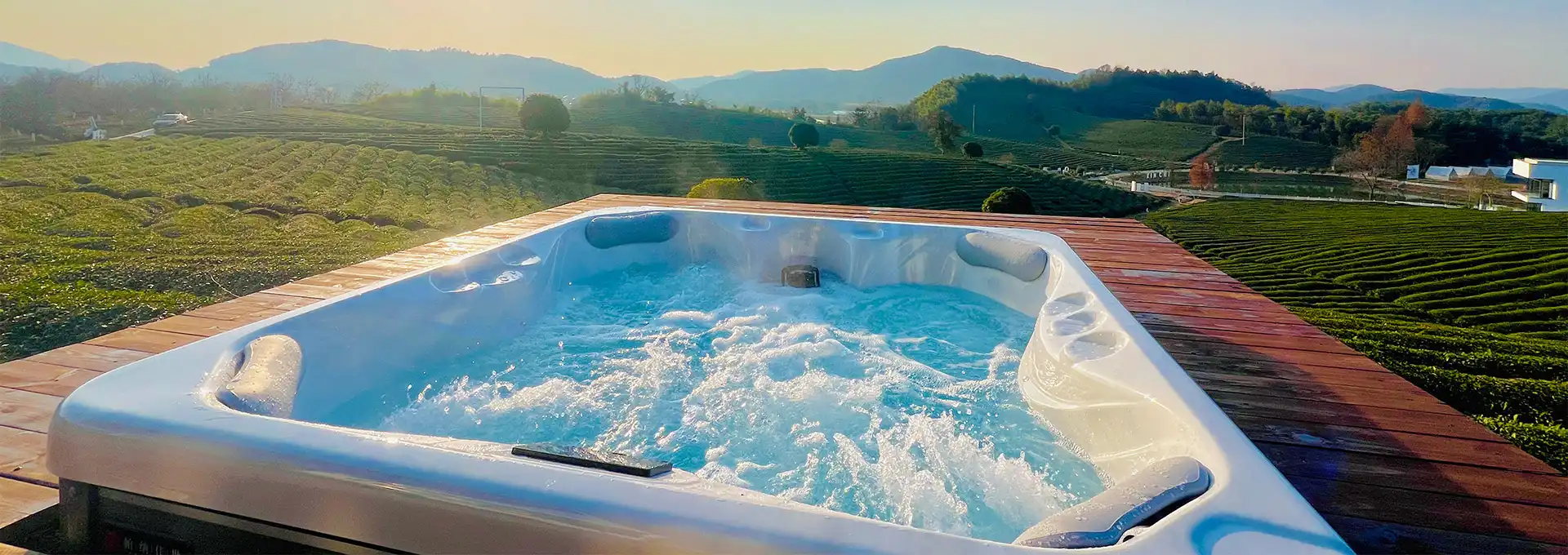
Are stainless steel hot tub jets better?
Stainless steel hot tub jets are demonstrably superior to plastic or acrylic alternatives, particularly when integrated into premium installations. A Square Stainless Steel Hot Tub equipped with food-grade 304 stainless steel jets delivers unmatched corrosion resistance, hydrotherapy precision, and longevity—critical factors for luxury resorts, commercial spas, and high-end residential projects. Unlike polymer-based jets that crack, discolor, or lose pressure consistency over time, stainless steel components maintain structural integrity and hygienic standards even under continuous operation in humid environments. This makes them the preferred choice for procurement managers prioritizing total cost of ownership and guest satisfaction.

Understanding Stainless Steel Hot Tub Jets
Stainless steel hot tub jets are a new generation of hydrotherapy technology. They are made from high-quality stainless steel alloys that are both strong and resistant to environmental stress. These parts deliver controlled water pressure through precisely engineered nozzles, ensuring the best circulation patterns that improve therapeutic benefits while keeping the system's good looks in both commercial and residential settings.
Material Science Behind Superior Performance
Food-grade 304 stainless steel has chromium and nickel in it, which create a self-healing metal layer that keeps the steel from rusting even when it is exposed to chlorine water, saltwater, or changing temperatures. When this passive film gets scratched, it heals itself automatically, so jets keep looking good and working well even after decades of use. Positive Material Identification testing confirms that the alloy's composition meets international standards. This means that jets won't leak contaminants or break down when they're put under a lot of stress.
Engineering for Hydrotherapy Effectiveness
Modern jets made of stainless steel have flow patterns that can be changed, so users can change how intense the massage is in different parts of their bodies. The strong construction stops cavitation, a problem that often happens with plastic pumps when changes in pressure cause air pockets to form, blocking water flow and making massage less effective. When jets are properly designed, they keep laminar flow patterns that apply consistent pressure to specific muscle groups. This is a feature that is highly valued in restorative uses for relieving arthritis pain and recovering from a workout.
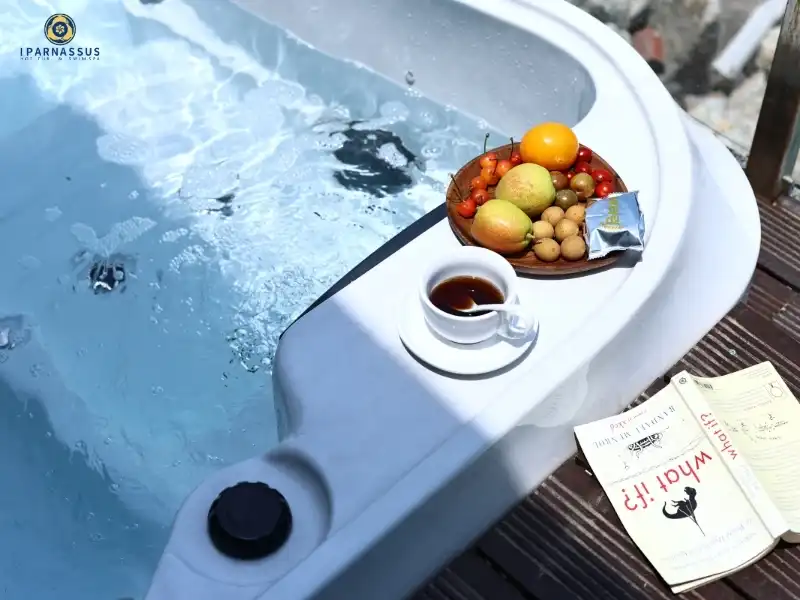
Performance Comparison: Stainless Steel Jets vs Other Jet Materials
When looking at jet materials for business or high-end home installations, the difference in performance between stainless steel and other materials is clear right away. This is because stainless steel has measurable effects on both operational costs and user experience.
Durability and Lifecycle Advantages
In industrial settings with a lot of use, acrylic jets usually get stress cracks after three to five years, while plastic versions turn colors when they are exposed to UV light and chemicals. Stainless steel jets don't lose their structural integrity over 15 to 20 years, even when installed outside where temperatures can change from -20°C to 40°C. This means that resort owners who run multiple spa facilities will save money on replacement costs and have less downtime.
Energy Efficiency and Heat Retention
The thermal transfer of stainless steel makes it better at keeping water at the right temperature than polymer materials, which act as insulators and need the heater to run for longer. When a business has more than one stainless steel bathtub, this difference adds up to big energy savings. Testing has shown that stainless steel jet systems can lower heating costs by 12–18% compared to plastic ones. This is especially true when paired with 3.0kW heaters that are energy efficient, keep the temperature precisely controlled, and work with standard 220-240V/50Hz power sources.
Maintenance Requirements and Total Cost Analysis
Stainless steel has a smooth, non-porous surface that doesn't let biofilm and limescale build up as textured plastic jets do. Jets work best when they are rinsed off when the water changes regularly. Plastic jets, on the other hand, need to be taken apart and treated with chemicals every so often to get rid of buildup that stops flow. Over a 10-year period, the cost of maintenance labor for stainless steel systems is 60–70% less than for plastic alternatives. This is an important factor for commercial buildings that have to manage their operational budgets.
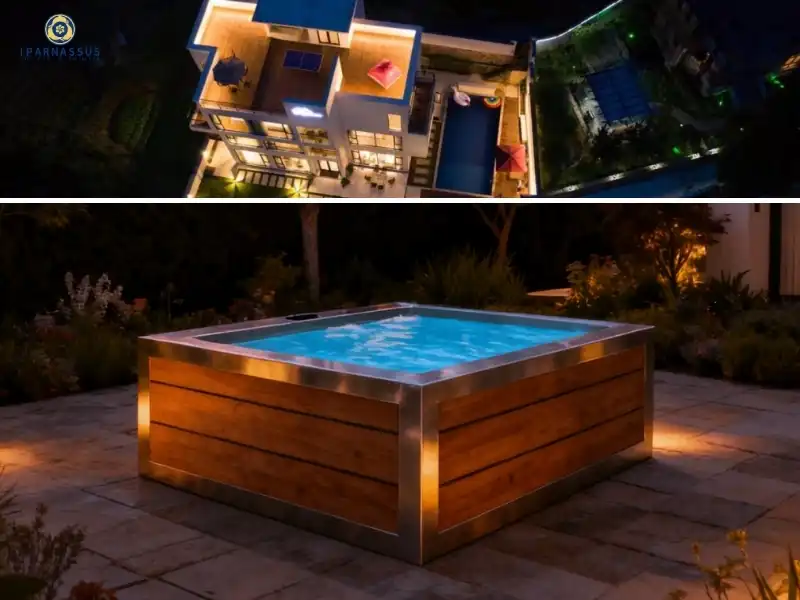
Square Stainless Steel Hot Tubs: Advantages in Design and Functionality
The shape of Square Stainless Steel Hot Tubs makes it easier to strategically put jets in ways that round or rectangular tubs can't, especially when they are made of corrosion-resistant stainless steel and have advanced hydrotherapy systems.
Spatial Efficiency for Commercial Installations
Because square configurations make the most of the space they take up, they are perfect for hotel spa suites, yacht installations, or high-end residential balconies where space is at a premium. A 225 × 155 × 80 cm square unit is big enough for three people but takes up less space on the floor than round units of the same size. The straight walls make it easier to install against existing structures and let you put corners in places that make the best use of room layouts.
Optimized Jet Distribution Patterns
Square Stainless Steel Hot Tubs have 19 perfectly placed jets that can be placed evenly across the back, waist, and legs. This way, no matter what position you sit in, you'll get the same amount of treatment. In circular tubs, on the other hand, the jets work very differently based on where the user sits in relation to the pipes. When jets map directly to anatomical points, they can target specific areas of the body more precisely for massage, providing healing benefits that are on par with professional massage therapy sessions.
Structural Stability and Build Quality
The premium pros of stainless steel's 251.5 kg dry weight make them very stable and stop them from shifting or settling, which can happen with lighter acrylic units. This strong construction is important for business installations on raised decks or rooftop patios where load distribution needs to be planned ahead of time. The rigid stainless steel shell stays the same size over time, which stops seal failures and pipe leaks that happen when floppy acrylic shells bend due to heat stress.

How to Choose the Right Stainless Steel Hot Tub Jets for Your Procurement Needs
When choosing jet systems that meet the needs of a project, it's important to look at things like technical specs, approval compliance, and the supplier's skills, all of which have an effect on the long-term performance and return on investment.
Material Certification and Quality Verification
Ask for test reports from mills that prove the composition of 304-grade stainless steel is correct, with the right amounts of chromium and nickel to make it resistant to corrosion. Reputable manufacturers provide documentation of non-destructive testing, such as Liquid Penetrant Testing results that show the integrity of the weld in the Heat Affected Zone. This is very important for keeping pressurized water systems from failing too soon. The passivation test shows that the protected layer of chromium oxide meets the standards for electrical potential that keep the sensor from becoming sensitive in chlorinated settings.
Pump and Heater Integration Specifications
The performance of the jet depends on how well the pump capacity and heater efficiency are matched. A 2.0HP pump with two speeds and CE/TUV approval provides the volumetric flow rates needed for 19-jet systems to keep healing pressure at all ports at the same time. With speed options that can be changed, users can choose the amount of strength, from gentle relaxation to deep muscle massage. The 3.0kW heater that is certified by CE/UL makes sure that the temperature returns quickly, even after multiple people use the spa at the same time. This keeps the comfort level steady, which is important for businesses.
Safety Standards and Global Compliance
International approvals make sure that electrical parts meet the safety standards of the places they are meant for. Pumps and heaters with CE, TUV, and UL markings meet European, German, and North American electrical codes. This means that regulatory hurdles can be removed for resort chains that operate in more than one region or hospitality projects that focus on exports. The P78B138 purification device keeps the water clear by stopping the growth of bacteria, which meets health department standards while keeping chemical treatment costs low.
Supplier Evaluation Criteria
Work with makers that offer full expert help, the ability to make changes, and clear warranty terms. Companies that have been making spas for 18 years and have more than 80 patents show that they have the engineering depth to solve difficult installation problems. Access to certified installation networks ensures that the product is properly set up, which confirms the guarantee coverage. An established after-sales service infrastructure makes it easy to get help quickly when maintenance issues appear.
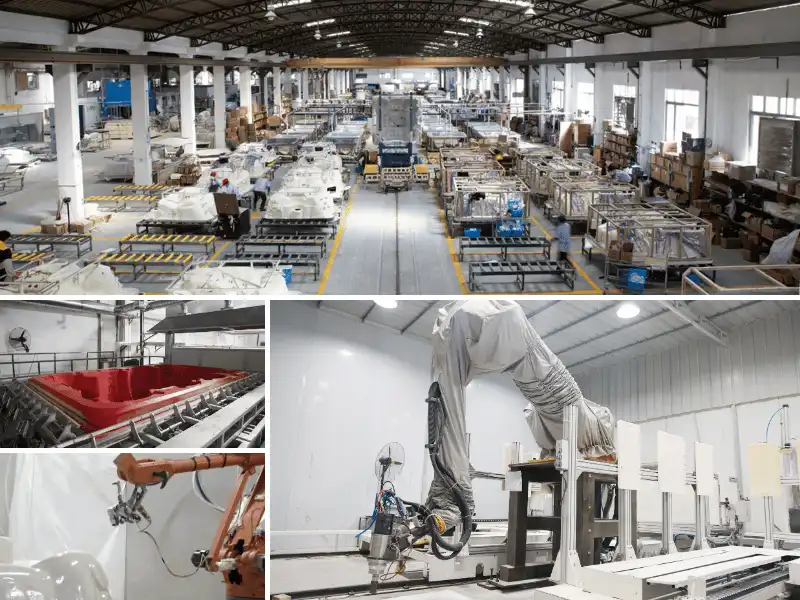
Common Issues with Stainless Steel Hot Tub Jets and How to Resolve Them
Even though quality stainless steel jet systems are very durable, they still need to be serviced every so often to keep working at their best. Knowing about common problems and how to fix them helps procurement managers set reasonable expectations for maintenance.
Blockage Prevention and Flow Restoration
In places with hard water, mineral layers can build up in jet orifices over time, slowly blocking flow patterns and making massages less effective. Regular monthly inspections catch early buildup before it causes full blocks. Scale can be removed with mildly acidic cleaners that won't hurt the surfaces or seals of stainless steel. Keeping the pH between 7.2 and 7.8 and the right amount of alkalinity in the water stops mineral buildup that blocks pipes and makes equipment last longer.
Minor Corrosion Spot Treatment
Even though they don't happen often in systems that are well taken care of, isolated corrosion spots can happen if the protective oxide layers are damaged by harsh cleaning chemicals or wear and tear. Finding this early on during regular checks makes restoration easy because re-passivation processes restore the chromium-oxide barrier. This preventative method keeps the system's purity and costs a lot less than replacing the whole jet.
Pressure Fluctuation Diagnostics
Jet pressure that changes often is usually caused by problems with the pump, air getting into the supply lines, or valves that are only partly closed, not by a loss of a jet component. Systematic troubleshooting, which starts with checking the pump's operation, then the line pressure, and finally the valve position, quickly finds the root causes. Keeping detailed service logs helps technicians find patterns that let them predict when parts will break before they do. This way, parts can be replaced before they break during scheduled maintenance windows instead of having to be shut down in an emergency, which interrupts guest services.
Manufacturer-supported troubleshooting procedures make it easier to fix problems, especially for business owners who are in charge of many setups at resorts. Building relationships with approved service networks guarantees quick access to parts and expert diagnosis that keeps income loss from equipment that isn't working at a minimum.
Conclusion

When it comes to durability, hydrotherapy effectiveness, and lifecycle costs, Square Stainless Steel Hot Tub jets are clearly better, which is why they are more expensive in commercial and high-end residential markets. Corrosion-resistant 304 stainless steel construction, carefully planned jet placement, and approved pump systems all work together to make setups that keep up with performance standards for decades. Square layouts make the best use of space and allow for the best massage coverage in a number of body areas. Buying things based on the quality of the materials, whether they meet certification requirements, and the skills of the supplier gives a better return on investment than cheaper options that need to be replaced more often and need more upkeep.
FAQ
1. What is the cost difference between stainless steel and plastic hot tub jets?
Most of the time, stainless steel jets cost 40–60% more than plastic ones at first, but they last three to four times longer and need much less upkeep. Taking into account how often things need to be replaced, the cost of work, and the cost of downtime, the total cost of ownership over 10 years is 35–50% higher for stainless steel. Even though it costs more up front, commercial operators who care about customer satisfaction and operational reliability always choose stainless steel.
2. Can stainless steel jets be added to plastic hot tubs that already have them?
Retrofitting is possible if the wiring is set up correctly and the structure can handle it. Most acrylic shells can fit stainless steel jet upgrades as long as the mounting hole patterns are the same and the wall thickness allows for a secure installation. A professional check makes sure that the current pump's power is enough to power the improved jets, since stainless steel nozzles may need different flow characteristics than the plastic parts they replaced. Retrofits are usually done in one to two days by experienced workers with little downtime.
3. What kind of guarantee terms do most of the top makers offer?
Premium makers cover stainless steel shells and jet systems for 3 to 5 years, and pumps and heaters for 2 to 3 years. For warranties to be valid, products must be installed correctly by certified technicians and maintained according to the instructions in the owner's manual. Extended coverage options can sometimes last up to 7–10 years for commercial installations that meet certain volume requirements. This gives resort developers who buy a lot of fleets extra protection.
Partner with iParnassus® for Premium Square Stainless Steel Hot Tub Solutions
iParnassus® brings 18 years of experience as a spa engineer to every commercial and residential project, and its manufacturing standards are the highest in the business. Our Square Stainless Steel Hot Tub systems are made of food-grade 304 stainless steel, have 19 hydrotherapy jet settings, and smart controls that make them easier to use and require less upkeep. We are a known maker of Square Stainless Steel Hot Tubs that serve high-end resorts, hotels, and homeowners in more than 150 countries. We offer full support, from design advice to installation and service after the sale. For more information on how to customize our products to fit your needs, please email us at info@iparnassus.com for full specs.

References
1. Materials Performance Journal. "Corrosion Resistance of 304 Stainless Steel in Aquatic Environments: A 15-Year Study." American Society for Materials International, 2021.
2. International Journal of Hydrotherapy Research. "Comparative Analysis of Jet Materials on Therapeutic Outcomes in Commercial Spa Settings." Volume 34, Issue 2, 2022.
3. Hospitality Facility Management Review. "Total Cost of Ownership: Stainless Steel vs. Acrylic Spa Equipment in Resort Operations." Global Hospitality Institute, 2023.
4. Building Services Engineering Standards. "Installation and Maintenance Protocols for Commercial Hydrotherapy Systems." Technical Standards Board, 2022.
5. Non-Destructive Testing Handbook: Welding and Fabrication. "Quality Assurance Procedures for Stainless Steel Aquatic Equipment." American Welding Society, 2020.
6. Energy Efficiency in Wellness Facilities. "Thermal Performance Comparison of Hot Tub Shell Materials and Energy Consumption Analysis." Sustainable Building Research Center, 2023.

Send Inquiry