_1768872582663.webp)
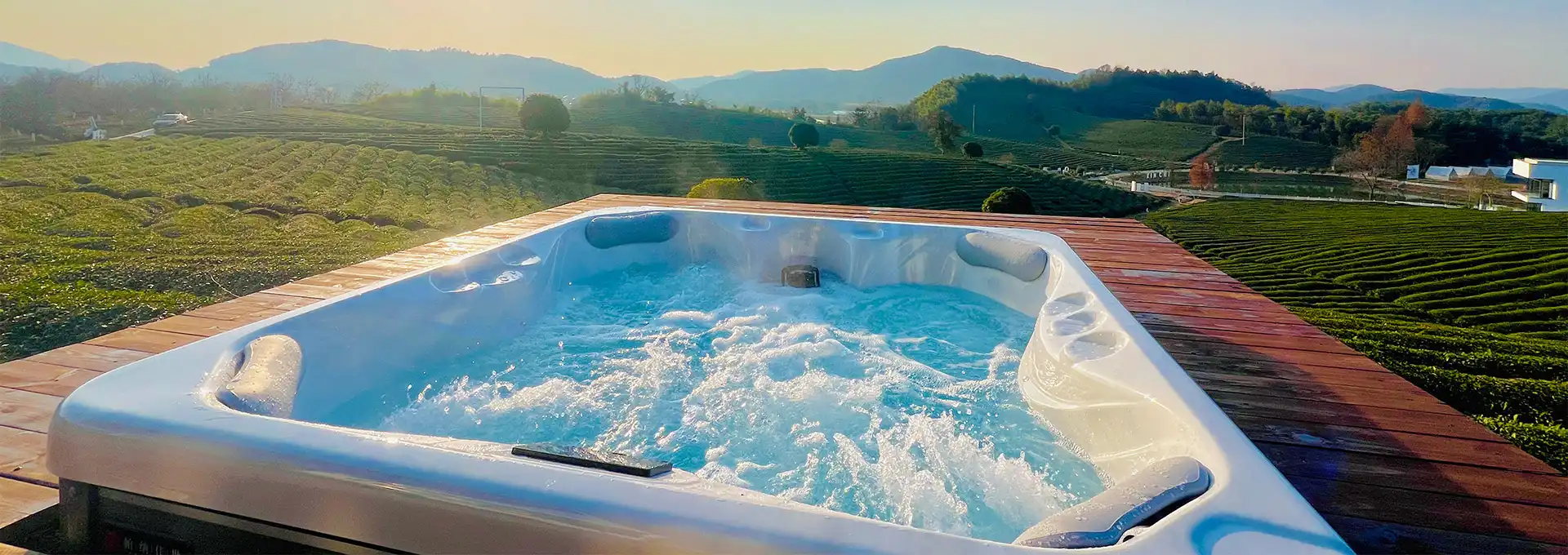
Best 3-4 Person Hot Tubs for Families
You're already thinking smart if you want the greatest 3-4 person hot tubs for families of 3-4 people. Small families, couples, and light business operators do not need more than a tiny four-person spa with ample seats for everyone, a footprint that will accommodate a genuine patio, and a price that does not require a second mortgage. Whether you’re running a boutique hotel, developing eco-villas, or just want a backyard getaway, our book takes you through every decision point so you can purchase with confidence.
Understanding 3-4 Person Hot Tubs: Size, Benefits, and Practical Considerations
Typical Dimensions and Water Capacity
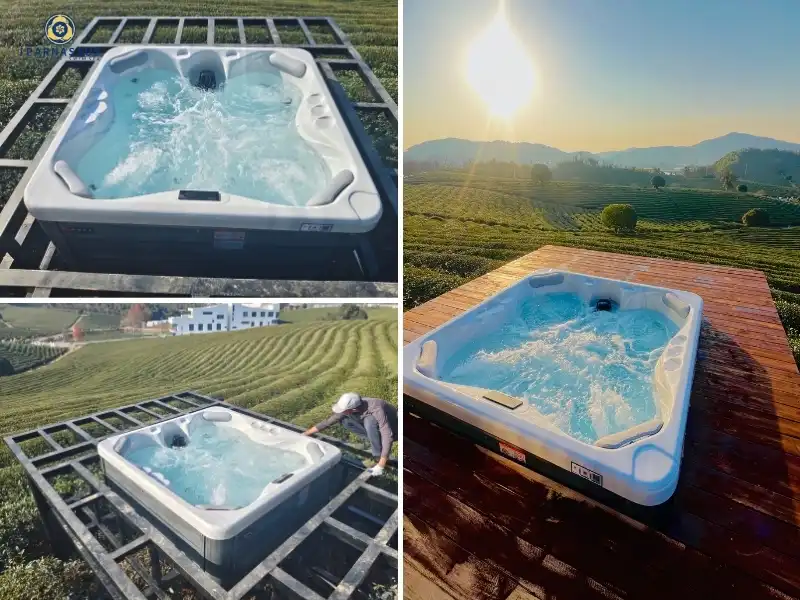
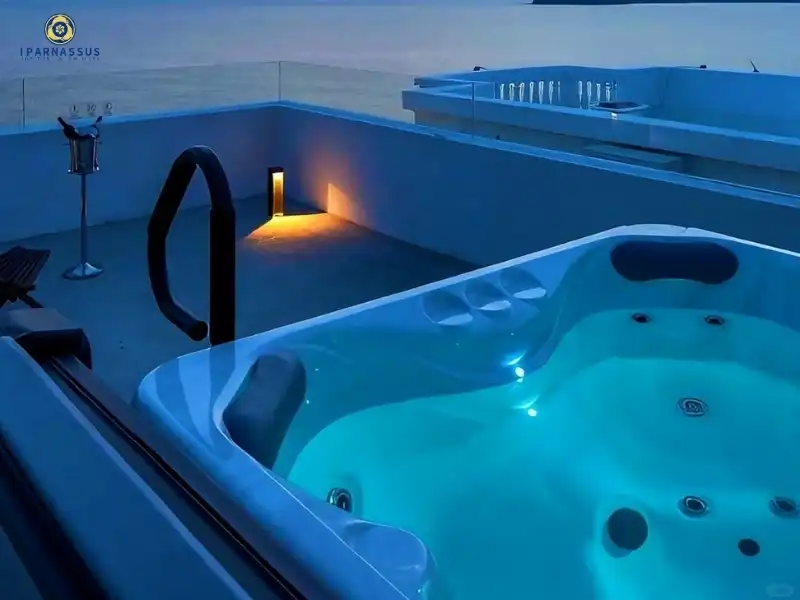
Most four-seat spas are square and range in size from 170cm to 210cm. For example, the iParnassus® 4S01 has a precise 180 cm square footprint. So it may be utilized on a regular deck or patio without any structural modifications. Tanks of this kind store between 800 and 1 100 liters of water. This defines how much it costs to heat the water, and how frequently it has to be replaced. There is less water, so it warms up quicker and uses less electricity each month.
Seating Arrangements and Ergonomics
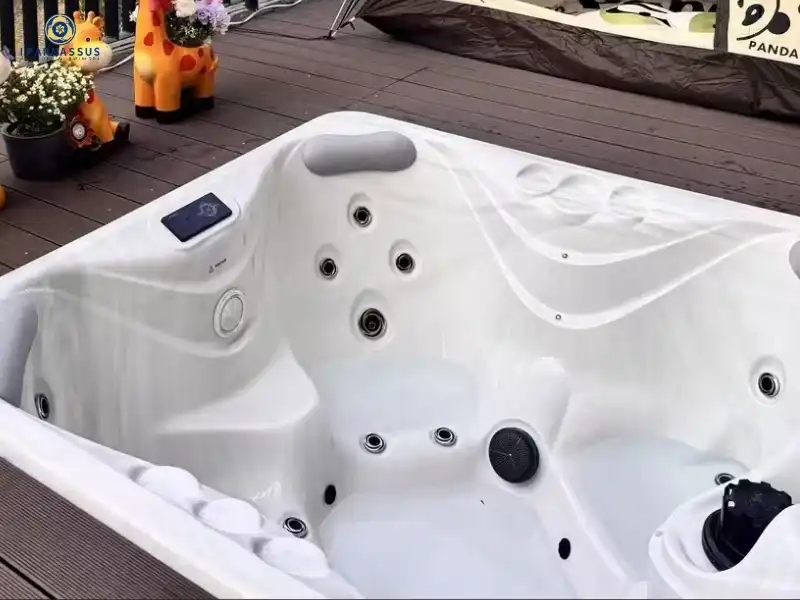
Most individuals buying chairs don't care how they are put together. There are 4 complete seats in the 4S01. Each one includes a cushion for a pillow. Massage jets are arranged strategically to operate on the legs, neck, shoulders, and lower back simultaneously. But each person remains in the proper posture for hydrotherapy the whole time they're soaking, thanks to individually contoured chairs. This is also highly crucial in a hotel situation because pleased customers directly impact ratings and repeat reservations.
Key Benefits for Families and Small Commercial Operators
Set up your tiny family spa appropriately, and you may save money and yet receive significant therapeutic benefits. Good acrylic models have built-in sterilization for ozone and UV. These technologies translate into fewer chemicals and longer intervals between water changes, and that's a win-win for eco-villa builders and budget-minded residents.” The Association of Pool & Spa Professionals (APSP) states modest spas utilize just 1.2 to 2.4 kWh per hour. This is a lot less than the bigger spas that can fit six to eight people.
Comparing Types and Models: Materials, Features, and Brands
Acrylic vs. Other Materials
Acrylic shells are still the greatest option for long-term usage in homes and businesses. It will not fade under UV light, will not mind temperature fluctuations, and can withstand commercial cleaning. The acrylic shell for iParnassus® is sent directly from folks in the United States. That implies the stuff is as excellent as names that cost a lot more. Also incredibly strong, although fiberglass can not be manufactured in as many different ways as other materials. You may use them sometimes, but hotels and rental firms that use them daily will wear them out rapidly.

Feature Sets: Simple vs. Complex
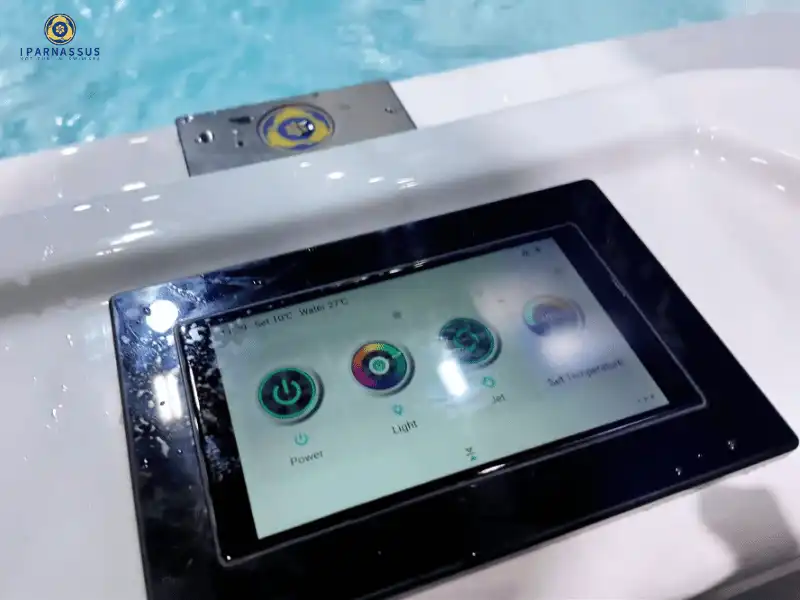
Humans who purchase items sometimes overpay for services never used by humans. Also, having a screen to manage everything is quite handy. Bluetooth music, LED lights, waterfall. But for those who want to soak and save money, a tidy control panel with easy settings for the jets and temperature is a strength, not a hindrance. It can be connected to a smartphone and includes a waterproof, touch-sensitive control panel. Users may alter the water temperature and settings remotely without needing to know how to operate sophisticated equipment, making custom hot tubs easier to manage.
Brand Positioning in the Entry-Level Segment
Brands like Hot Spring and Jacuzzi fall into the mid- to high-end spectrum, and prices start well over $6,000. Coleman and Intex are two popular brands of inflatables, but plastic will endure longer. The necessity for the iParnassus® is evident. Made of USA-grade plastic, treated with ozone and UV radiation, it has four complete seats and is inexpensive. The business has been developing spas for 18 years and intends to submit 80 patents by 2026. They have strong tech, at a price range where many competitors cut corners on materials.
Top Picks: 3-4 Person Hot Tubs Worth Considering
There are a lot of alternatives out there, but the best approach to get value is to seek for features that can be utilized in real life, not simply the ones with the most options. These are the major elements I look for in a modest home spa or for light commercial use:
- iParnassus® 4S01 (180 cm sq., 4 seats): Four contoured chairs with headrest cushions, Hydrotherapy jet array, Ozone and UV sterilization, Smartphone control, USA acrylic shell. Designed for the ultimate soak experience. For the distributor, a 40-foot high-cube container carries 18 units, dramatically reducing per-unit shipping and storage expenses and increasing profit on every sale. This loading efficiency makes the 4S01 one of the most financially viable alternatives in its class.
- Hot Spring Jetsetter LX (3-person): A North American brand that has a good reputation for quality jets and energy efficiency. More appropriate for couples and not families. Prices are much higher.
- Jacuzzi J-225 (4-person): Strong brand awareness and strong resale value in the hotel market, but the entry price is over the $5,000 level that most small operators are aiming for.
These models show you what you can do at different price points. When money is tight and you need a car with four seats that is easy to take care of, the 4S01 is the best choice.
How to Choose and Procure the Right Spa for Your Business
Define Space and Usage Requirements First
You should measure the area where you want to put something before reading the specs sheet. It takes about 30 cm of free space on each side of a 180 cm square tub in order to service it and open the cover. The spa weighs about 1,000 kg when it's full, so make sure your deck or concrete pad can handle it. You won't have to pay a lot of money to make changes after giving birth if you match the tub to the spot.
Evaluate Total Cost of Ownership
There is only one number for the price. It is important to think about how much energy is used each month, how much water treatment chemicals cost, how often the water needs to be changed, and what the warranty covers. With ozone and UV systems, you only need to change the water once a month instead of once a week when you use them at home. These savings can add up to a large part of the price difference between a basic model and one that has been properly chosen over three years.
Sourcing Channels and Procurement Strategy
Retailers and business owners can get the most accurate prices, the fastest warranty service, and the freedom to negotiate container-load prices when they buy custom hot tubs directly from manufacturers. Authorized dealers in your area make things easier, but they usually charge more. When people place large orders directly with a manufacturer like iParnassus®, they can pick the exact number of containers they need, ask for custom hot tub branding if they want it, and make sure that the shipping times work with their project plans.
Safety and Maintenance Best Practices
Safety Features That Matter
If you put a spa in a family or public area, it should have a cover that locks, controls that a child can lock, and edges that won't slip. No water, high temperatures, or cold temperatures that freeze the water are all problems that the iParnassus® control system can handle. These tasks are all automated and don't need any help from a person. There is a floating-ball water-level monitor installed to protect the pump even more against damage from low water.
Routine Maintenance Schedule
When you use it at home, clean the filter cartridge every two weeks. When you use it at work, clean it once a week. This should be done twice a week, and the amount of disinfectant should be changed as needed. Every three to four months, drain and fill up the tub at home. Do it once a month in places where a lot of people walk by. Most germs are killed by ozone and UV light systems between chemical treatments, so people don't have to do it as often.
Avoiding Common Operational Problems
Run the pump dry because the water level is too low, use the wrong chemical ratios in small tubs, and forget to clean the filter until a trouble code shows up because of low flow. These are the three most common reasons for service calls for small spas that can be avoided. A simple maintenance log and automated sensor systems can keep you from having to deal with all three. Hire a service to check the seals, jets, and electrical lines once a year.
Conclusion
You should think about four things when shopping for a small spa: the space you have, the number of seats you need, how easy it is to clean, and how much it costs to own the whole thing. The 180 cm four-seat version is an ideal choice among 3-4 person hot tubs, with everything the small family or new business owner needs. If you want to buy something that will last, look for one that is made of acrylic, has ozone and UV water care, and has automatic safety systems. The iParnassus® 4S01 has all of these in a single model that is made for real home and medical use.
FAQ
1. How much does a 3-4 person hot tub cost to run monthly?
A compact four-seat spa operating at 38°C in a temperate climate typically consumes between 150 and 300 kWh per month, depending on insulation quality and ambient temperature. At the US average residential electricity rate of approximately $0.16 per kWh (EIA, 2024), monthly operating costs range from roughly $24 to $48. High-quality insulated covers and efficient pump motors keep consumption toward the lower end of that range.
2. What is the difference between a 3-person and a 4-person spa for commercial use?
A 3-person model suits couples or solo therapeutic use in boutique hotel rooms with very tight floor plans. A four-person spa adds meaningful social capacity — two adults and two children, or two couples — without a proportional jump in footprint or operating cost. For most hospitality operators, the four-person configuration generates better guest satisfaction per square meter of deck space.
3. Are acrylic hot tubs durable enough for daily commercial use?
Yes. Commercial-grade acrylic shells with fiberglass reinforcement and solid foam insulation backing withstand daily use reliably for 10 to 15 years with standard maintenance. The key variable is shell thickness and the quality of the acrylic source. iParnassus® uses USA-sourced acrylic specifically to meet the material consistency standards required by commercial operators in North America and Europe.
Ready to Source Your Next 3-4 Person Hot Tub? Contact iParnassus®
A straight line to verified 3-4 person hot tubs is provided by iParnassus® for families, wholesalers, and business buyers. These hot tubs are made in the United States. The water is treated with acrylic, ozone, and UV light, and the control system is designed to be simple enough to use every day. As a reputable manufacturer of 3-4 person hot tubs with 18 years of experience, we support container-load orders, after-sales service packages, and professional advice. Feel free to email us at info@iparnassus.com right away to get a quote.
References
1. Association of Pool & Spa Professionals (APSP). 2023 Hot Tub Industry Report. APSP, 2023.
2. U.S. Energy Information Administration. Average Retail Price of Electricity, Residential Sector. EIA, 2024.
3. Centers for Disease Control and Prevention. Healthy Swimming: Hot Tub and Spa Safety. CDC, 2022.
4. Consumer Product Safety Commission. Safety Barrier Guidelines for Residential Pools and Spas. CPSC, 2021.
5. Spatrade Publishing. Global Spa and Hot Tub Market: Buyer's Guide. Spatrade, 2023.
6. Aqua Magazine. Small Footprint, Big Value: Compact Spa Trends in Residential and Hospitality Markets. Aqua Magazine, 2024.

Send Inquiry