_1768872582663.webp)
Compact Hot Tub Installation: What Homeowners Need to Know
If you're considering adding a compact hot tub to your home, balcony, rooftop, or small commercial space, installation planning matters more than most people expect. Getting it right the first time saves money, prevents damage, and means you start relaxing sooner. This guide walks you through every stage — from site selection to long-term upkeep — so you can move forward with confidence. Whether you're a condo owner, a B&B operator, or simply short on outdoor space, understanding these fundamentals puts you ahead.
Understanding Compact Hot Tub Installation: A Comprehensive Overview
Prior to making a purchase, you should give some thought to the location of the tub, the means by which it will be connected to water and electricity, and whether or not a permit is required in your region. People tend to omit this step, which is the primary reason why most installations fail.
Site Suitability: Indoor vs. Outdoor
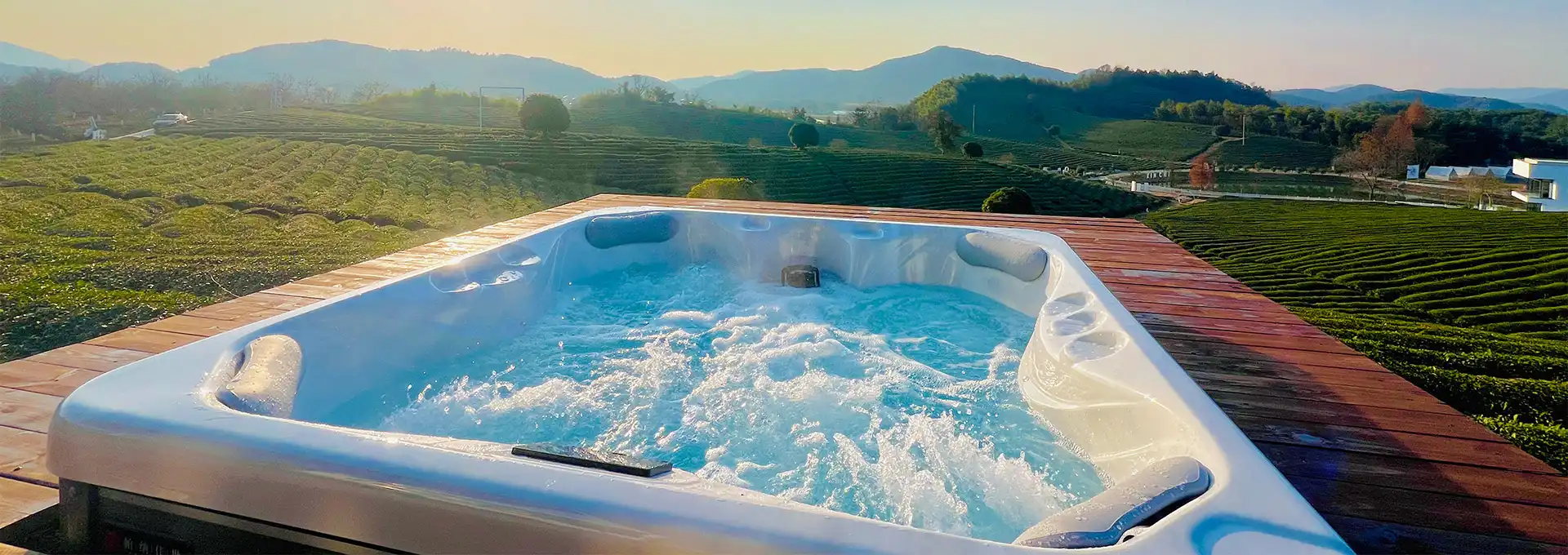
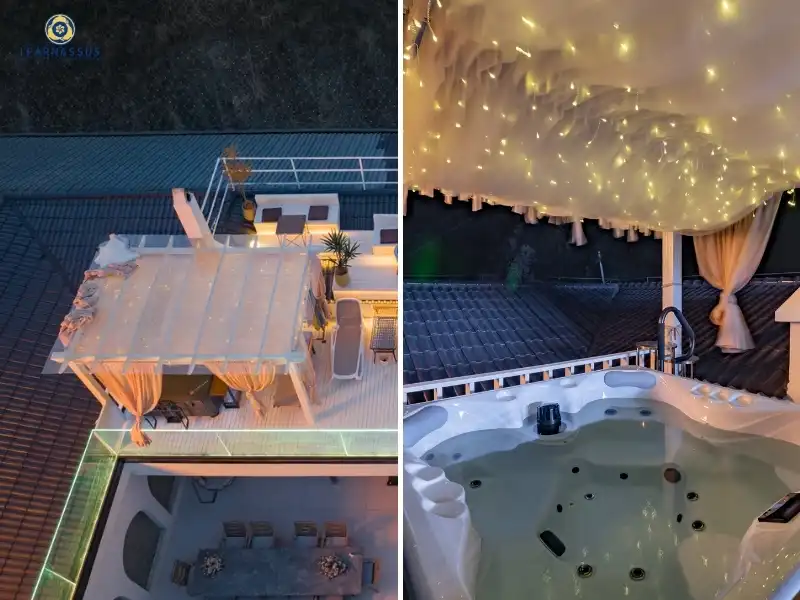
Each location is capable of having a tiny hot tub; however, the configuration of the tubs must be distinct for each location. Outdoor spaces such as patios, parks, and rooftops are all examples of areas that need surfaces that are able to withstand the elements and drain well. It is essential to have ventilation in bathrooms, sunrooms, and rooms that have been transformed within the building in order to maintain a low humidity level and avoid damage to the structure. The iParnassus® 2R01, for example, is just 193 centimetres by 153 centimetres and is tiny enough to fit into a standard lift vehicle. Because of this, it is an excellent choice for apartment buildings and the areas inside them since it does not need a lot of time or effort.
Electrical and Plumbing Infrastructure
Because the National Electrical Code (NEC) says so, most small spas for two to three people must run on a 240V line with GFCI protection. You should always check with the seller first to make sure that the plug-and-play type you want to buy can be put into traditional 120V plugs. You need a place to put water in and a place to drain it out of the pipes. The 2R01 is one of the smallest in its class, as it can only hold 500 liters. In other words, it can be filled up and drained more quickly than bigger units.
Permits and Local Regulations
In many U.S. cities and towns, you need a building permit to put in a hot tub that will stay there. In some places, setback rules say that the tub needs to be at least 5 feet away from the property lines. Check with the building department in your area before you choose a spot. This is very important for places like rooftops and balconies, where you might also need approval for structural load.
Step-by-Step Guide to Installing a Compact Hot Tub
Being well-prepared before the delivery day will help you avoid most problems with installation. It's easy to follow these steps.
Step 1 — Site Preparation and Base Selection
The ground or floor under your compact hot tub needs to be strong and level. It works well with either a regular concrete floor or composite decking that has been strengthened. Since the shell will settle over time, don't use gravel or soft earth that doesn't have a good sub-base. It is important to check with a professional to make sure the structural load number is right before you start putting things on roofs. Even though the 2R01 is small, it can still hold more than 700 kg when full, so it's important that the surface is strong.
Step 2 — Electrical Installation
For this stage, you need to seek the assistance of a qualified electrician if you want to do it. The majority of home spas are equipped with a separate circuit that is 240V, 50A, and designed with GFCI protection. According to the National Electrical Code, the stop box must be at least five feet away from the tub while still being visible to the end user. Some of the functions of iParnassus® smart spas need a power source that is both clean and steady in order to function properly. As an example, you are able to manage the spa from your phone, alter the temperature from a distance, and set up an automated self-protection program that begins when the water level lowers.
Step 3 — Plumbing and Filtration Connection
Establish a connection between the fill line and a pump located outdoors or to a dissimilar supply of water. The 2R01 is equipped with a skimmer filtration system that is capable of effectively removing unwanted particles from the surface. Because of this, it is necessary to do complete water changes less often. It is important to devise a strategy for the water to be directed to a flower bed or floor drain. It is not a good idea to just dump chlorinated water over the field without first diluting it. Perform a 15-minute run of the jets before the first soak in order to remove any dust or debris that may have accumulated after the plant has been filled.

Common Installation Challenges and How to Avoid Them
Problems might arise at any moment, even for homeowners who have a great deal of knowledge in the field. When you are aware of what often goes wrong, you have the ability to prepare for it.
Inadequate Site Preparation
In the event that you place weight on a tub that is situated on a surface that is not level, the tub will rock back and forth. As a result, the shell joints may get stressed, which may result in the acrylic cracking. Before the device arrives, you should always make sure that both axes are vertical. If you want to install the bathtub on the deck, you should discuss the possibility of installing cross-bracing under the boards with a carpenter. The weight will be distributed more evenly if it is done in this manner.
Electrical Wiring Mistakes
Most of the time, problems with the electricity in a hot tub occur when the wiring is too small or when there are no GFCI safety switches present. The Consumer Product Safety Commission (CPSC) has discovered a connection between hot tubs that have poor wiring and fatalities that occur as a result of receiving an excessive amount of energy. There is no happy medium in this situation. In every instance, before turning on the hot tub, it is essential to first get the necessary licenses and then have the circuit verified.
Poor Drainage Planning
Leaving water around the base of a compact 4 person hot tub helps mold grow and speeds up wood rot on nearby decks. Make the ground around the building level so that water can flow away from it. When installed inside, the floor sink needs to be close to the drain for the tub. After a few months, check the drain line to make sure nothing has blocked it.

Comparing Installation Options: DIY vs. Professional Services
It is a judgment that takes into account both the immediate costs and the potential long-term risks. The majority of jurisdictions in the United jurisdictions need a licensed contractor to do electrical work, despite the fact that many individuals possess the skills necessary to undertake site preparation and plumbing hookups on their own.
A comparison of the two methods is presented in the following manner:
- In situations where electrical wiring is already in place, plug-and-play devices are ideal for do-it-yourself installation. You save money on labour, but you are responsible for any faults that may occur. This might result in the manufacturer's warranty being voided and cause liability difficulties in the event that anything goes wrong.
- The cost of professional installation varies depending on the complexity of the project and the site requirements. Licensed electrical work, appropriate GFCI installation, permit coordination, and post-installation inspection may all be included in the installation service. Professional handling substantially reduces the risk of structural and code-related issues, whether the tub is installed on a rooftop or indoors, both of which are common considerations for a tub like the 2R01.
When acquiring several units, bed and breakfast owners or boutique hotel purchasers may take advantage of expert installation packages offered by reputable small hot tub providers. These packages often include bulk pricing on labour and a unified service warranty that applies to all multiple units.
Post-Installation Maintenance Essentials for Longevity and Efficiency
Installing the tub is the beginning, not the end. Consistent upkeep protects your investment and keeps the water safe.
Water Chemistry and Sanitation
Test water pH twice a week and keep it between 7.2 and 7.8. Sanitizer levels — whether chlorine or bromine — should stay within manufacturer guidelines. The 2R01's 500-liter capacity means chemicals work faster and more evenly than in larger tubs, which simplifies this process. Replace water every 3–4 months under regular use.
Energy Efficiency Through Cover and Insulation
A quality thermal cover pays for itself within the first year. According to the U.S. Department of Energy, a well-insulated hot tub cover can cut standby heat loss by up to 95%. Keep the cover on whenever the tub is not in use, and check the foam core annually for waterlogging, which degrades its insulating properties.

Identifying and Resolving Common Mechanical Issues
Jet pressure drops often signal a clogged filter — rinse the cartridge weekly and replace it every 12 months. Heater faults usually trace back to scale buildup from hard water; use a line flush product before each full water change. iParnassus® smart control systems send automatic reminders for water replenishment and include water shortage and high-temperature protection, catching problems before they become costly repairs.
Conclusion
That being said, you can put in a small compact hot tub in a small home or business if you plan ahead. Before the tub arrives, make sure you have a level, load-bearing surface, a dedicated electrical line with GFCI protection, a plan for how the water will drain, and knowledge of the local permit rules. This is exactly why the 193x153 cm iParnassus® 2R01 was made. It can hold 500 liters of water and can be set up as a face-to-face room. To protect your long-term investment, make sure the water is stable, cover it when not in use, and fix any mechanical issues right away.
FAQ
1. What base do I need under a compact hot tub?
The standard floor is one that is constructed out of reinforced concrete and has a thickness of at least four inches. The composite decking is capable of supporting the weight of the filled decking so long as it is braced in the appropriate manner. It is not a good idea to place the bathtub on ground that is not sturdy or on terrain that is soft.
2. Does a small hot tub require a permit?
Yes, in the majority of states in the United States. In order to install anything for an extended period of time, you will need a construction permit as well as an electrical inspection. This is something that you should always verify with your local building authority before doing anything else; however, there are plug-and-play kinds that utilise less than 120V that may not be required to follow these laws.
3. How long does a compact hot tub take to heat up?
When heated with a standard heater, a tub with a capacity of 500 litres, such as the iParnassus® 2R01, heats up by around 1-2 degrees Celsius per hour. It will take between six and ten hours for the temperature of cold tap water to reach between 38 and 40 degrees Celsius. There is a significant amount of time that may be saved by leaving the cover on between uses.
4. Can I install a compact hot tub indoors?
Certainly, provided that there is sufficient circulation in the space, flooring that does not leak, and a drain in close proximity to the area. The size of the 2R01 is such that it may be accommodated via normal entrances and lift cabins at the same time. The fact that it may be put in flats and places that have been modified is a significant advantage.
Ready to Find Your Compact Hot Tub? Contact iParnassus®
iParnassus® has been making spa goods for 18 years and has 80 patents. They are the best compact hot tub on the market. If you want a stable, high-quality hot tub for your home but don't have a lot of space, or if you run a bed and breakfast, the 2R01 is the best choice for you. It stands out because it has two seats, can hold 500 liters, and is the right size for an elevator. You can email our team at info@iparnassus.com right now to find out more about our products, prices, or group orders.

References
1. National Electrical Code (NEC) Article 680 — National Fire Protection Association, 2023.
2. Residential Pools and Spas: A Builder's Guide to Code Compliance — International Code Council, 2021.
3. Energy Efficiency of Residential Hot Tubs and Spas — U.S. Department of Energy, Office of Energy Efficiency & Renewable Energy, 2022.
4. Consumer Product Safety Alert: Electrocution Hazards in Portable Spas and Hot Tubs — U.S. Consumer Product Safety Commission, 2020.
5. Therapeutic Aspects of Hydrotherapy and Balneology — International Journal of Biometeorology, 2021.
6. Residential Construction Performance Guidelines for Professional Builders and Remodelers — National Association of Home Builders, 2022.

Send Inquiry