_1768872582663.webp)
6 Person Hot Tub Installation: What You Need to Know
Installing a 6 person hot tub is a significant decision that touches on structural planning, electrical work, plumbing, and long-term operational costs. Whether you are a hotel developer, villa builder, or a large family upgrading your outdoor space, getting the installation right from day one prevents expensive mistakes down the road. This guide walks you through every phase — from site prep to final water test — so your spa investment delivers reliable performance, safety compliance, and genuine hydrotherapy value for every user.
Understanding the Basics of 6 Person Hot Tub Installation
Having a clear idea of what a six-seat spa needs will save a lot of time and money before you start building or ordering equipment.
Size, Weight, and Space Requirements
Typically, the width and length of a standard 6-person hot tub are between 7 and 9 feet. When filled with water and people, the total weight can hit 4,500 to 5,500 pounds. For service access, you need at least 24 inches of space on all sides. For indoor placements, the floor must be resistant to water, there must be good drainage, and there must be at least 8 feet of ceiling clearance.
Key Installation Components
There are four systems that need to work well together: the electrical supply, the plumbing lines, the support structure, and the safety features. For the most part, hard-shell spas need their own 240V/60A outlet. Before the tub fills up, the plumbing lines need to be checked for pressure. To support the whole load, it is common to use a reinforced concrete pad or a deck that has been checked for structural integrity.
Compliance and Certification Standards
Installing a product in a business or home in the United States needs to follow local building codes and meet UL, CSA, or CE certification standards, based on the product. Always make sure that the spa you choose has the right certification mark. Installations that don't follow the rules can void guarantees and put hotel owners and house builders at risk of liability.
Step-by-Step Installation Guide for 6 Person Hot Tubs
A stepwise method keeps the project on track and cuts down on mistakes. Follow these steps for a professional installation:
Site Preparation and Foundation Setup
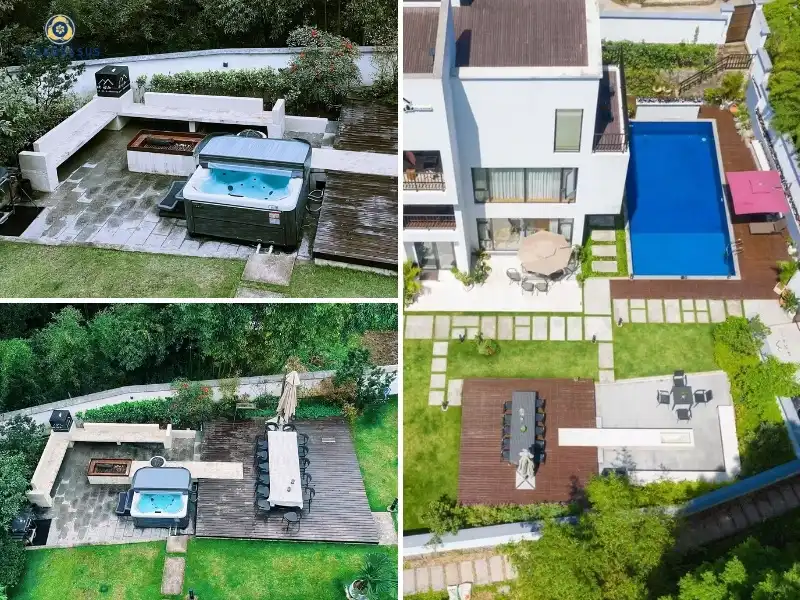
Pour a concrete floor that is at least 4 inches thick, or make sure that an existing deck meets the requirements for load-bearing. It's important that the floor is level—anything less than ¼ inch per 10 feet can put stress on the shell over time. Putting pads that absorb vibrations under the equipment bay will cut down on noise and make the pump last longer.
Electrical and Plumbing Connections
The GFCI circuit for a 6 person hot tub must be wired by a qualified electrician before any water goes into the tub. Connections in plumbing, like supply lines, drain lines, and jet manifolds, should be sealed with fittings allowed by the manufacturer and tested at 1.5× working pressure. At this point, bad links are the main reason why technology fails quickly.
Final Commissioning and Energy Validation
Fill the tub slowly while checking all the fittings for leaks. For 30 minutes, run the pump system at full load and check how the jets work in all areas. Check to see that the temperature controls stay at the right level. Write down how much energy is used at startup and during steady-state operation. This will help you find inefficiencies later.
Maintenance and Safety Considerations for Optimal Performance
A spa that is carefully maintained will continue to function well for fifteen to twenty years. If you do not take care of it, it will not last nearly as long and will need to be operated at a higher expense each month.
Water Treatment and Filter Maintenance
At least twice or three times every week, you should use a dependable test kit to determine the chemistry of the water. For optimal results, maintain a pH and total alkalinity that range from 80 to 120 parts per million. In addition to giving the filter cartridges a thorough cleaning once a month, you should also rinse them every two weeks. In order to prevent sediments from accumulating and ultimately causing damage to the heaters and jets, the whole tub should be drained and replaced every three to four months.
Energy Management Strategies
According to the Association of Pool and Spa Professionals, many kinds of energy-efficient spas may be operated for as low as one dollar per day. Keep an eye out for spas that come equipped with full-foam insulation, thermal coverings that are comfortable to wear, and heating programs that can be customised. By operating the filtration cycle during off-peak hours, you may reduce the amount of money you spend on your monthly energy bills by twenty to thirty percent.
Safety Protocols for Commercial and Residential Use
Install a safety cover that has a lockable mechanism and is rated for maximum resistance to kid use. Tape that prevents slipping or rough wood may be used to wrap the edges. Ensure that there is a switch that can be used to turn off the power in an emergency situation, but that it is not located in the area that is wet. If you are working in a business environment, you should post explicit limits for maximum occupancy and temperature. After taking these precautions, users and operators are protected from being held liable.
Choosing the Right 6 Person Hot Tub for Your Business Needs
Well, not every spa out there is built the same way. To choose the right model, you need to compare the jet's speed, the quality of the build, and the dependability of the provider.
Hard Shell vs. Inflatable Models
For business sites, resorts, and homes that get a lot of use, the only realistic choice is a hard-shell acrylic or rotomolded spa. Inflatable types are cheaper up front, but they don't have the strength, jet power, or protection that professionals need for year-round use. A hard-shell machine with two pumps is what hotel owners and villa builders should look for when buying a 6 people hot tub.
What to Look for in Jet Configuration
Five to six jets per seat and twenty to thirty jets per pump are the standard for real hydrotherapy, according to research that has been done over and over again. This standard is met and surpassed by the iParnassus® P660. It has 53 jets of different sizes that are spread out and driven by two 3.0HP pumps. Ten 5-inch CMP jets massage the back specifically, and separate zones massage the shoulders, legs, hips, and feet. All five standard seats share a foot massage area that is used by everyone. The lounge seat also helps with hip and foot pain at the same time.
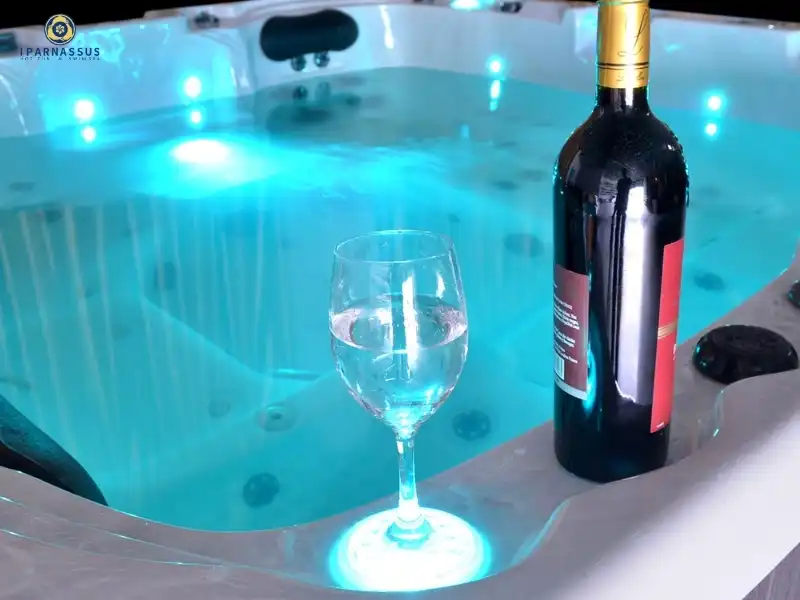
These standards directly lead to higher guest happiness scores for businesses that run hotels and higher resale values for people who buy homes. The P660 has a lit waterfall, four speakers mounted on the corners, a lit cup holder, and an elegantly rippled tub rim. These are all things that count in high-end settings.
Supplier Reliability and After-Sales Support
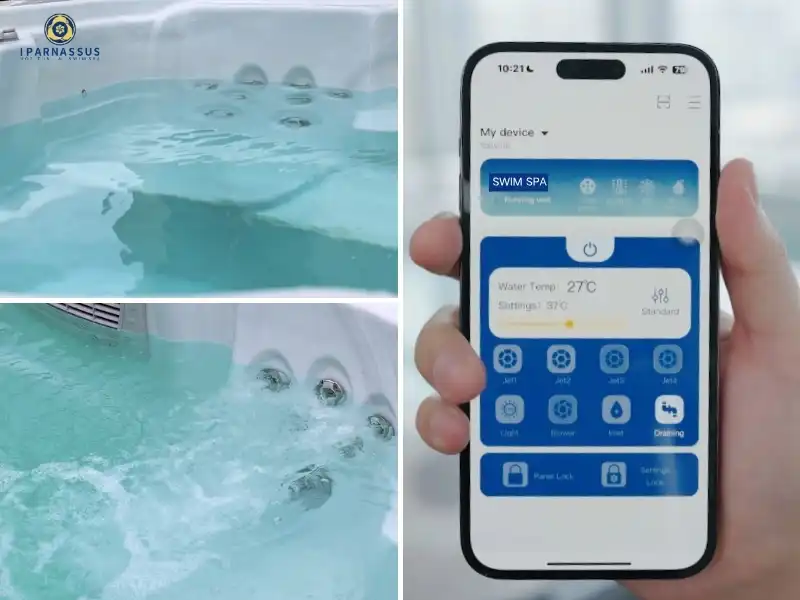
Three things should be taken into consideration when choosing a 6-person hot tub manufacturer: their certification history, their warranty terms, and their support network. At the end of 2026, iParnassus® had 80 patents and had been making spa products for 18 years. The iParnassus® smart control system lets you monitor from your phone, manage water remotely, and set it to protect itself automatically. These features make it easier for staff to do their jobs in hotel and resort settings.
Common Challenges and How to Avoid Installation Pitfalls
When putting in a big spa, even experienced builders make mistakes that could have been avoided. You can plan better if you know where things go wrong.
Base Misalignment and Structural Failure
The most common first mistake is a base that isn't level or isn't the right size. In the first two years of use, it causes shell stress fractures. Before putting in a hard-shell spa that weighs more than 4,000 pounds when full, you should always get a structural engineer's approval.
Electrical Faults and Code Violations
The most common electrical mistakes are wires that are too small or not having enough GFCI protection. They put people at risk of shock and trip breakers when they're fully loaded. Only hire approved electricians who have experience installing spas, and make sure they have all the necessary permits before they start working.
Water Leaks and Jet System Failures
Many leaks start at union or jet fittings that were hand-tightened instead of being torqued to specification. A pressure test before filling will find 90% of these problems. As soon as the system is full, run a full jet cycle and check each fitting while it is under pressure.
Conclusion
Installing a 6 person hot tub correctly will protect your investment, keep people safe, and make sure that the hydrotherapy works the same way for many years. From the foundation work to the final finishing, every step needs skilled workers and close attention to detail. Getting a spa with the right features, like enough jets, two pumps, energy-efficient construction, and smart controls, makes everything else easier. This is exactly what the iParnassus® P660 was designed to do in residential, hospitality, and commercial settings.
FAQ
1. How long does a 6-person hot tub installation typically take?
Setting up an expert hard-shell building usually takes two to five days, which includes preparing the spot, doing the electrical work, and turning on the building. It could take one to two weeks for commercial jobs with custom surrounds or setups inside.
2. What permits are required for hot tub installation in the US?
For permanent spa installations, most places in the US need an electrical permit and, in many cases, a building permit. Some states also need licenses for barriers or fences. Before you start any work, you should always check with the building department in your area.
3. Can a 6-person hot tub be installed indoors?
Yes, but for indoor installations, you need waterproof flooring, a floor drain, mechanical ventilation to keep the humidity down, and a structural assessment to make sure the floor can hold the weight. Compared to outdoor setups, these needs add cost and planning time.
4. What is the average monthly energy cost for a 6-person spa?
Modern models that use less energy usually cost between $20 and $50 a month in power, though this can change based on the temperature, how often they are used, and the quality of the insulation.
Source Your Next 6 Person Hot Tub from iParnassus®
Hotels, resorts, villa builders, and distributors in North America, Europe, Australia, and the Middle East all receive premium 6 person hot tubs from iParnassus®. We have been making things for 18 years, have 80 patents, and have a full network of service providers after the sale. This gives procurement teams the expert help and high-quality products they need for big projects. To get a personalized sourcing proposal, email our team at info@iparnassus.com right now.

References
1. Association of Pool & Spa Professionals (APSP). ANSI/APSP/ICC-1 American National Standard for Residential In-ground Swimming Pools. APSP, 2014.
2. Consumer Product Safety Commission. Safety Barrier Guidelines for Home Pools and Spas. CPSC Publication No. 362, 2018.
3. National Electrical Code (NEC). Article 680: Swimming Pools, Fountains, and Similar Installations. National Fire Protection Association, 2023.
4. California Energy Commission. Appliance Efficiency Regulations: Spa and Pool Pump Standards. CEC, 2021.
5. International Association of Plumbing and Mechanical Officials (IAPMO). Uniform Swimming Pool, Spa and Hot Tub Code. IAPMO, 2021.
6. American Society of Heating, Refrigerating and Air-Conditioning Engineers (ASHRAE). ASHRAE Handbook — HVAC Applications: Natatoriums and Aquatic Facilities. ASHRAE, 2019.

Send Inquiry