_1768872582663.webp)
8 Person Hot Tub vs 6 Person: Which Size Is Best?
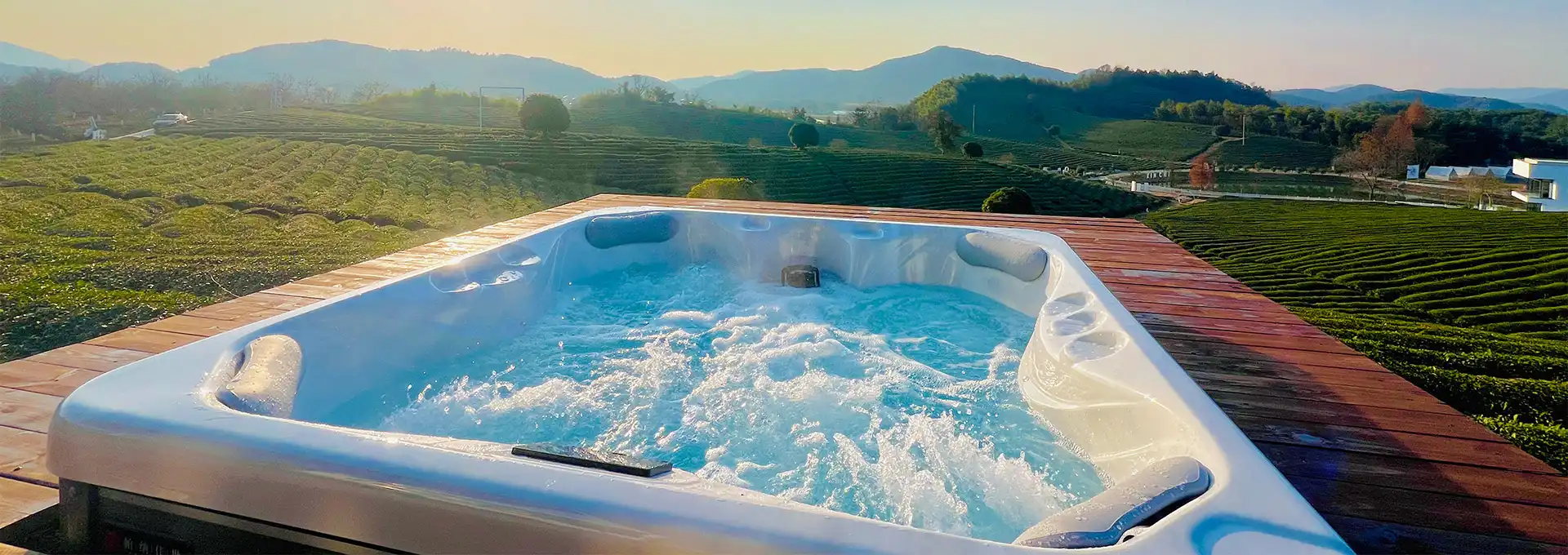
If you're weighing an 8 person hot tub against a 6-person model for a commercial property or large residential setting, the short answer depends on three things: how many guests you regularly host, how much space you have, and what level of hydrotherapy performance you expect. A large-capacity spa — like iParnassus® 8R10, which seats 8 and delivers 113 massage jets powered by three 3HP pumps — offers a measurably different experience than a standard 6-seat model. This guide walks through the key differences so you can match the right size to your specific operation.
Understanding the Core Differences Between 8 Person and 6 Person Hot Tubs
Dimensions and Water Volume
Between 475 and 650 gallons of water can be held in an 8-person hot tub, which usually has a width of about 259 cm (102 inches). Most models for six people are between 198 and 235 cm long and can hold between 350 and 450 gallons. The difference in water amount has a direct effect on the time it takes to heat up, the balance of chemicals, and the cost of running the system. Since an 8-seat spa can weigh up to 6,500 pounds when full, its bigger footprint also needs a stronger base, like a 4-inch concrete slab or something similar.
Seating Layout and Space Utilization
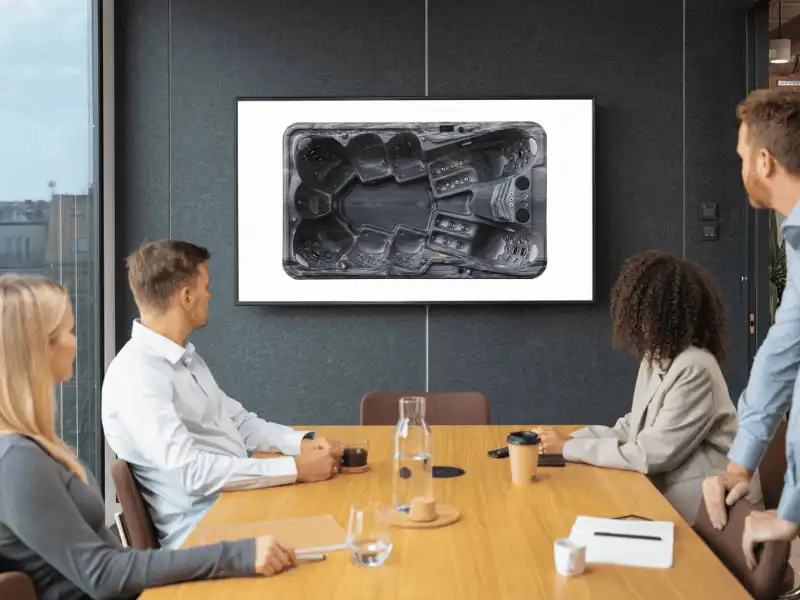
Six-seat spas usually have two or three seating arrangements, but eight-seat layouts give you a lot more choices. The iParnassus® 8R10 has two main seats, two love seats, and one full-length lounge seat. Each of the main seats has shoulder massage jets. This type allows for both social events and one-on-one therapy lessons to happen in the same room. With eight seats, an 8-seat spa can be used for more activities without sacrificing comfort, making it a better choice for resort decks, wellness pavilions, or big backyards.
Jet Count, Power, and Hydrotherapy Output
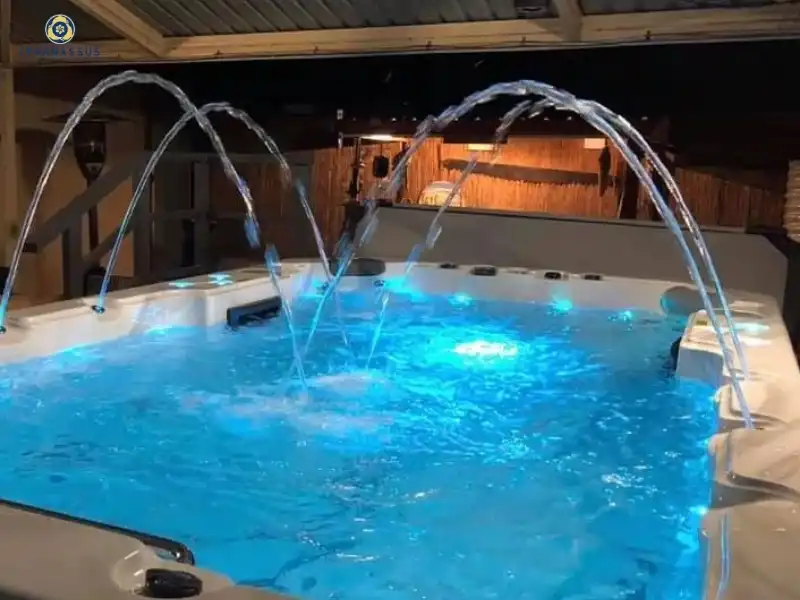
A mid-range hot tub for six people usually has between 50 and 80 jets. The iParnassus® 8R10 has 113 massage jets that are powered by three separate 3HP water pumps. This pump-to-jet ratio makes sure that every seat has the same level of pressure at the same time. This is something that single-pump or dual-pump systems on 6-seat models can't do reliably when all six seats are occupied. This difference is very important for people who work in hospitality where every guest expects the same level of hydrotherapy.
Evaluating Your Business Needs: Which Size Aligns Best with Different Procurement Scenarios?
Hospitality Venues and Resorts
Eight-seat pools work best at resorts and small hotels, where guests come and go quickly and groups often book the pool. A mountain hotel with a pool for six people will often seat guests in shifts, which lowers the happiness scores of its guests. An 8-seat installation lets whole families or small groups soak together, which directly leads to good reviews and repeat bookings.
Residential Developments and Private Estates
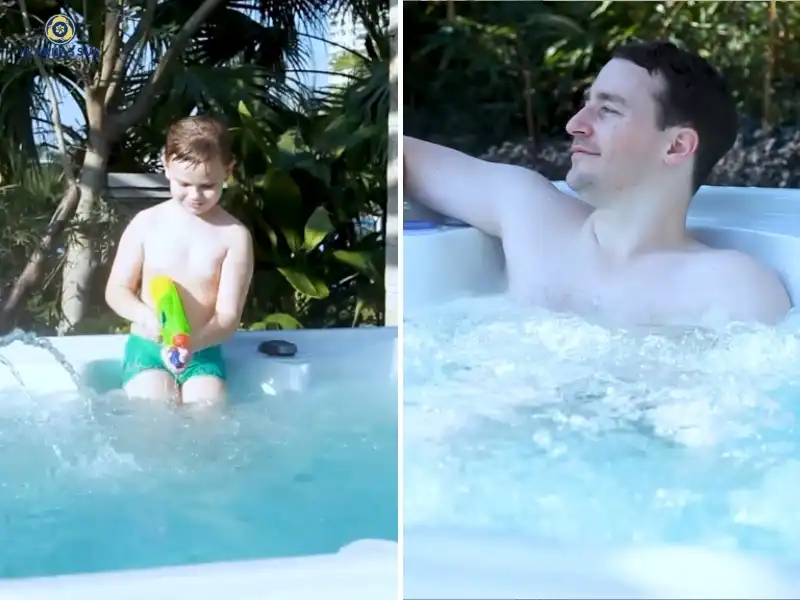
Large families who often have 6 to 8 friends over will really feel confined in a 6-seat spa. The mixed seating in the 8R10 8 man hot tub (lounge, love seat, and standard configurations) is good for homes with people of different ages who like different kinds of physical comfort. If you have enough outdoor space for a 259 cm footprint, the 8-seat option is the better long-term investment for high-end home builds.
Wellness Centers and Commercial Entertainment Venues
An 8-seat spa has more space and more jets, which is good for commercial wellness providers who use throughput-based income models. Higher jet counts mean more focused treatment zones per session, which is why sessions cost more. Procurement managers should look at providers' after-sales assistance, warranty terms (especially for pumps and control systems), and how easy it is to get new parts. These are more important than the purchase price itself when figuring out the real lifecycle cost.
Installation, Energy Efficiency, and Maintenance: Practical Aspects to Compare
Delivery and Installation Logistics
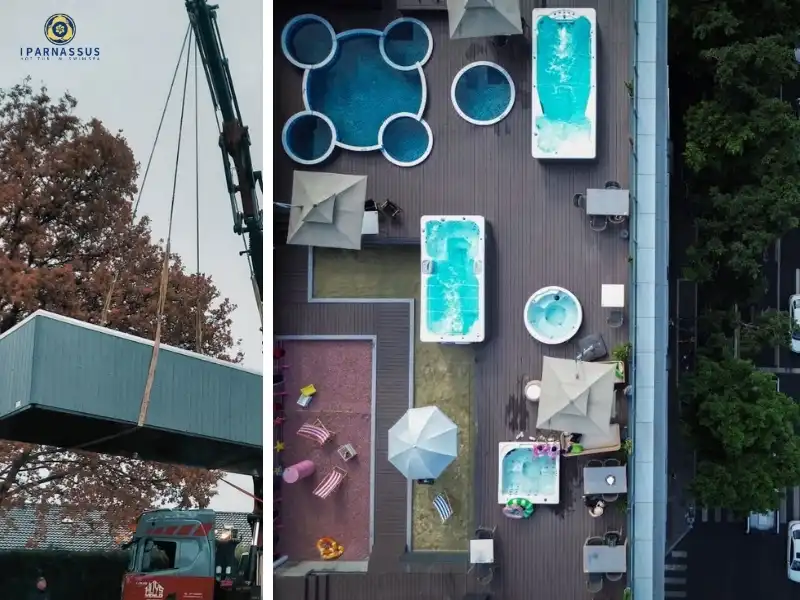
From a six-person spa to an eight-person spa, the change in size has a significant impact on the quality of service provided. To install an eight-seat model, it is often necessary to use a crane or a gate that is rather broad. Additionally, the location must be evaluated before the installation can take place. The power requirements of the 8R10's triple-pump system often necessitate the installation of a separate 240V circuit. It will be possible to avoid making costly adjustments on-site if you design this equipment before it is delivered from the manufacturer.
Energy Consumption and Smart Controls
As the volume of water increases, the amount of energy required to heat it and maintain the same temperature increases as well. On the other hand, this gap is narrowing as a result of improvements in both protection and control technologies. iParnassus® spas are equipped with a control system that is compatible with smartphones and enables users to adjust the temperature, automatically monitor the water level, and install a heat pump that is efficient in terms of energy consumption. It is possible for operators to pre-heat the spa prior to periods of high demand and then reduce the temperature when the spa is not being used. This is a helpful method for reducing the amount of money spent on energy each month for several units.
Ongoing Maintenance and Water Care
If a spa has eight chairs, it will contain more water, which means that it will need more chemical control. The use of structured water care programs, in conjunction with the iParnassus® self-cleaning and security system, makes it simpler to carry out tasks manually. When winterising a larger unit, it takes more time and requires more materials, but the methods involved are the same as when winterising a smaller unit. Sticking to a single size makes it simpler for company owners who operate more than one spa to educate their employees, as well as to keep track of chemicals and replacement equipment.
Making an Informed Decision: Cost, ROI, and Market Trends
Price Range and Budget Planning
Most high-end 8 person hot tub models for six people cost between $9,000 and $18,999. Good models with eight seats cost between $12k and $18k or more, and the most expensive ones are commercial-grade. Most buyers are surprised by how little the price difference is between the sizes. This means that the 8-seat choice is a better buy when a group is going to use it. For projects with more than one installation, buying in bulk from approved makers like iParnassus® can lower the cost per unit.
ROI and Guest Satisfaction Data
A larger spa capacity is always linked to happier guests in hospitality settings, according to industry research. If a resort changes its pool from six seats to eight seats, it can serve 25 to 33 percent more people per session without having to stay open later. Over the course of a year, that increase in throughput leads to real revenue gains. Also, 8-seat hard-shell spas are more likely to sell for more money than smaller models, especially in high-end real estate markets.
Market Trends: Smart Features and Sustainability
The business spa market is moving toward control systems that are connected, motor technology that is quieter, and water treatment that uses fewer chemicals. All three are taken care of by iParnassus®: smartphone control, quieter pump operation, and an intelligent system that cleans itself. As energy standards get stricter in North America, Europe, Australia, and the Middle East, buyers who put these features at the top of their list now will continue to benefit in the long run.
Final Recommendations for B2B Procurement Professionals
F-1 Criteria Screening Approach
Before choosing a size, give your project a score based on four factors: the maximum number of guests, the space available for installation, the monthly energy budget, and the performance of the jets that you need. If there are more than six guests at most, the footprint can be 259 cm, and if jet speed is a concern, the 8-seat group is the best choice. A 6-seat model might be better if room is really limited below 220 cm or if the number of guests is always less than 5.
F-2 Demand Matching Approach
Align the spa's requirements with the person who will be using it. A boutique hotel that caters to couples and small groups might do better with an expensive model with six seats in each room. For example, the 8-seat option should be used on a resort pool deck, a private island facility, or a large residential estate where entertaining groups is part of the plan. With its lounge and love seat layout, the iParnassus® 8R10 is perfect for spaces that need to be used for both social and therapeutic purposes.
Supplier Selection and After-Sales Support
Pick a manufacturer whose scientific depth is well-documented and whose after-sales system is easy to get to. As of 2026, iParnassus® has 80 patents, has been in business for 18 years, and serves businesses in North America, Europe, the Middle East, and Australia. That track record means that parts will always be available, technical support will be quick to respond, and the product will keep running for a long time. These are things that commercial operators care about much more than the initial product specification.
Conclusion
Choosing between an 8-seat and a 6-seat spa comes down to how much space you need and how well you want the 8 person hot tub to work. A 6-seat model doesn't have enough room, jet power, or throughput for big families, hospitality businesses, or public places where groups are common. An 8-seat model, on the other hand, does. The iParnassus® 8R10, which has 113 jets, three 3HP pumps, and a mix of seating options, is pretty much the best that a home or business spa can offer in this category.
Frequently Asked Questions
1. What is the best hot tub size for a medium-scale hospitality project?
When it comes to the most practical choice, a spa with eight chairs is the best option for enterprises that can handle between six and 10 guests during each session. It reduces the length of time that visitors are required to wait, and it encourages group bookings, both of which have an effect on the level of happiness that customers feel and the amount of money that is made.
2. How much more energy does an 8-person spa use compared to a 6-person model?
An eight-seater spa has the capacity to keep more than one hundred to two hundred gallons of water, which results in a little increase in the fees associated with heating the tub. It is common practice to keep the variance in energy use in the real world below 15 to 20 percent over the length of a monthly billing cycle. This is accomplished via the utilisation of intelligent temperature scheduling and effective insulation.
3. Are bulk pricing or volume orders available for commercial buyers?
When it comes to the acquisition of several units, iParnassus® does, in fact, work in direct collaboration with resort developers, commercial venue operators, and distributors of equipment manufacturers.
4. What foundation is required for an 8-person hot tub?
The slab of reinforced concrete that is considered standard has a thickness of four inches. In addition, it is permissible to make use of concrete pavers or a deck that has been structurally reinforced, provided that the load capacity of the deck is between 6,000 and 6,500 pounds when it is completely loaded.
Upgrade Your Property with iParnassus® — 8 Person Hot Tub Supplier
With 80 patents and 18 years of engineering knowledge, iParnassus® provides 8 person hot tub solutions for business use. The 8R10 model has 113 jets, three 3HP pumps, and controls that can be accessed from a smartphone. It is a commercially proven package. Our team is ready to help you with your project from the initial planning stages to the final delivery, whether you are furnishing a single farm or shopping for a number of vacation properties. Today, email info@iparnassus.com.

References
1. APSP Industry Consumer Survey Report — Association of Pool & Spa Professionals, 2022
2. Spa and Hot Tub Market: Global Industry Analysis and Forecast — Persistence Market Research, 2023
3. Energy Efficiency in Residential Pool and Spa Equipment — U.S. Department of Energy, 2021
4. Hydrotherapy and Balneology: A Review of Randomized Controlled Trials — Journal of Alternative and Complementary Medicine, 2018
5. Commercial Hospitality Equipment Procurement Guide — Hospitality Technology Magazine, 2023
6. Hot Tub and Swim Spa Buyer's Guide — Aqua Magazine, 2022

Send Inquiry