_1768872582663.webp)
Compact Hot Tub vs Standard Hot Tub: Which Is Better?
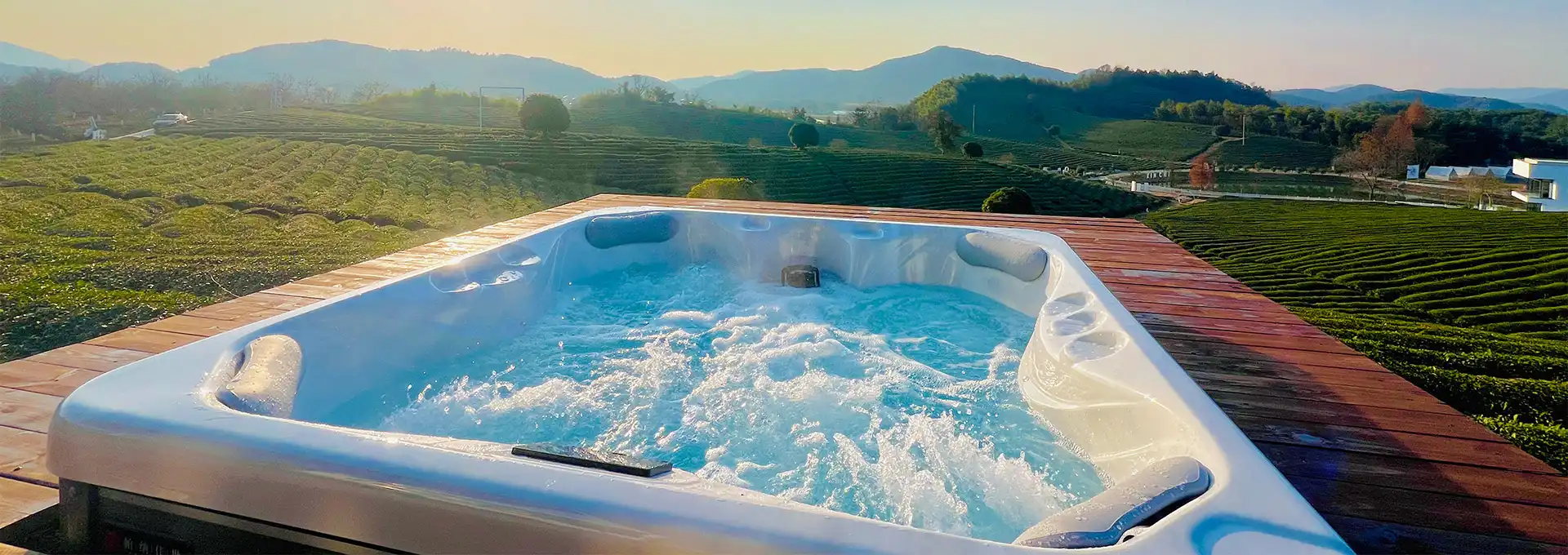
When you're considering a compact hot tub over a full-size one, the truth is, it comes down to your space, budget, and how you want to use it. If you live in an apartment, run a B&B, or work with a limited space, a tiny spa offers real hydrotherapy and the luxury amenities of a full-size spa without the overhead. Standard hot tubs are better for bigger parties, especially resort-size installations. This guide helps you easily grasp the main distinctions to confidently make a choice on the procurement that fits your real demands.
Understanding Compact Hot Tubs and Standard Hot Tubs
Before comparing the two, it's good to realise what each area really covers and where each actually excels.
What Defines a Compact Hot Tub?
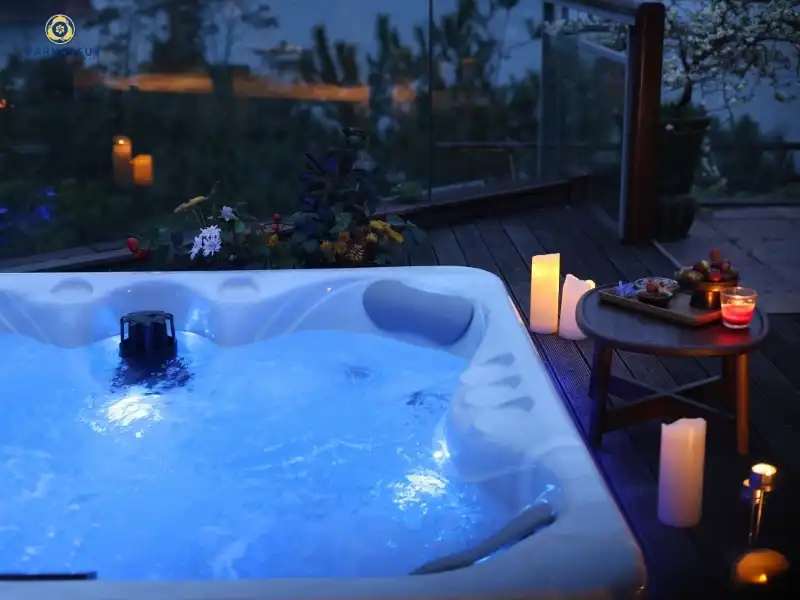
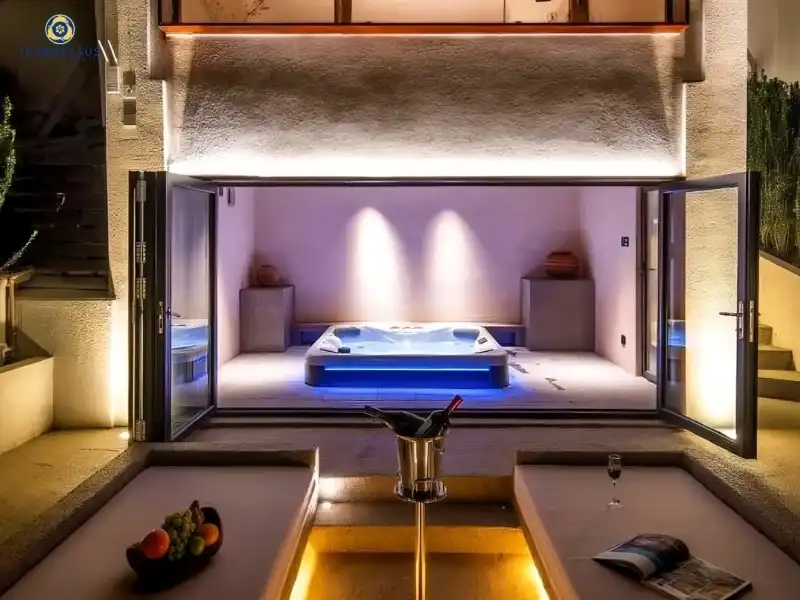
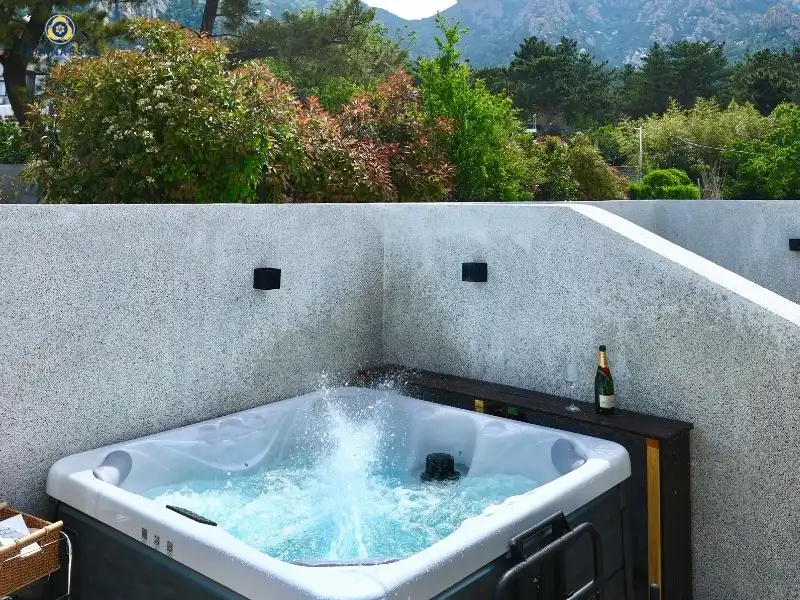
A tiny hot tub is built for one to three people, and fits into a smaller area, which makes it ideal for locations with less room. For instance, the iParnassus® 2R01 is 193 cm x 153 cm and can accommodate 500 litres of water. It is the smallest of the iParnassus® variants. It’s smaller but includes a two-way lounge seat so you can chat face-to-face with someone as you’re receiving a massage, large ergonomic seats, and a skimmer filtration system that works effectively. Its suitability for frequent lifts makes an indoor installation a genuine option for households and small companies.
What Defines a Standard Hot Tub?
Standard hot tubs are built for larger parties and can seat five to eight people. Models like eight-seater spas designed for resorts have 77+ stainless steel jets, pop-up entertainment systems, and plenty of LED lighting. They need more floor area, more water, and more energy to maintain the temperature. They have partnerships with holiday spas, family resorts, and corporate health facilities that have to be able to handle huge groups.
Key Comparison Factors: Compact vs Standard Hot Tub
You will want to examine a number of essential purchase aspects to make the decision between the two. These are the most important variables whether you are purchasing a house or a company.
- Installation and Footprint: Smaller units take up much less floor space. The 2R01’s 193×153 cm shape fits well on balconies, roofs, garden corners, and inside places where a regular tub just can’t reach. A single shipping container may carry up to 22 units, which reduces the logistics cost per unit greatly.
- Water Capacity and Running Costs: The 2R01 holds 500 litres of water, warms quicker, and uses less energy each session than regular versions that carry 1,200–1,500 litres. According to a 2020 study by the Association of Pool & Spa Professionals, water volume is the biggest driver of operating energy cost in residential spa systems.
- Jet Performance and Hydrotherapy Quality: Quality compact models maintain complete therapeutic capabilities. A study published in the International Journal of Aquatic Research and Education on hydrotherapy showed that the size of the tub has no bearing on the effectiveness of the focused jet massage in reducing muscular tension, when the positioning of the jets is adjusted to be ergonomic to the user.
- Maintenance Complexity: Lower water volume in a compact 4 person hot tub implies fewer chemicals, easier filtering cycles, and less maintenance work. This is a major benefit during the multi-year ownership term, especially for B&B operators with many properties.
- Head count: Standard tubs win. Seating Capacity: A smaller model, in contrast, won’t solve a use case of groups of 5 or more. The tiny shape is perfectly enough for couples and trios, or for small-scale hospitality scenarios.
These parallels suggest there is no one group that is always superior to the other. Your practical demands determine the choice, not any rating of excellence.
Benefits of Choosing a Compact Hot Tub for B2B Clients
The most apparent advantage is that it saves space, but that’s not the only one. Small spas have certain characteristics that make them particularly suitable for areas with limited space, such as residences and companies.
There is a lot of proof that swimming is excellent for you. In warm water immersion, the effective body weight is reduced by about 90%. This reduces joint pressure and spinal stress, which is particularly good for people who have to sit for lengthy periods of time. A peer-reviewed study on therapeutic hydrotherapy, published in 2021, indicated that frequent users had superior circulation, muscular recovery, and sleep quality.
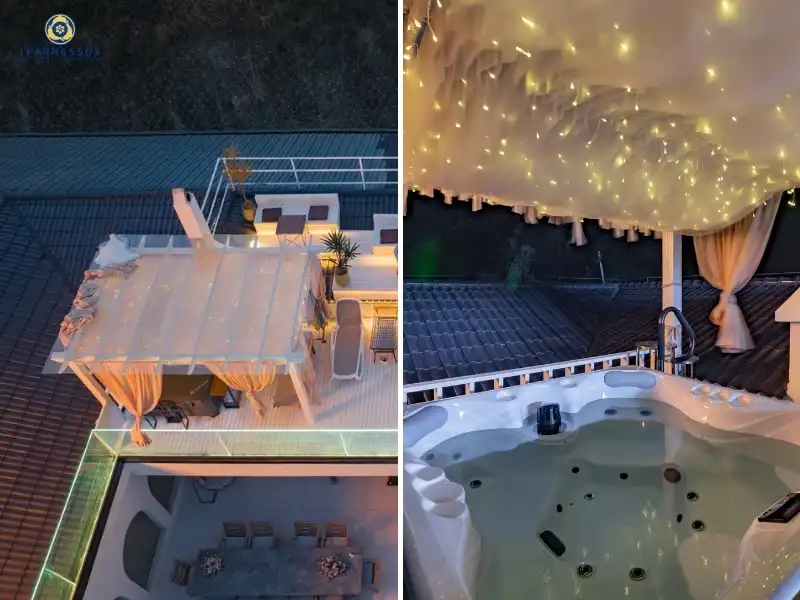
They’re not only excellent for your health, but the design flexibility allows you to arrange them in places that standard tubs simply can’t. Living spaces may be rooftop patios, boat decks, residences with lifts, and boutique hotel rooms. The 2R01 fits in normal lifts, which eliminates the logistical challenge that slows down many hot tub installation jobs.
Reduced operating expenses and reduced expenditures to acquire each unit combine to immediately provide a superior return on investment to the business-to-business buyer. By adding a private spa to a guest bedroom, a bed and breakfast owner may charge more for a room without having to pay for the electricity and care of a full-size system.
Addressing Common Concerns and Safety Tips for Compact Hot Tubs
People who want to buy something often ask about how hard it is to install, how clean the water is, and how long it will last outside. These worries are real and should be talked about frankly.
Installation and Infrastructure
It is designed so that the 2R01 is easy to install. Because it's built to withstand the weather and has measurements that work with elevators, it can be used indoors and outdoors without needing any special infrastructure changes. Before installing, you should always make sure that the surface of your floor or deck can support the weight of a full unit.
Water Care and Hygiene Standards
Water care must be done regularly to keep things clean and to make sure equipment lasts as long as possible. For a compact 4 person hot tub, check the water chemistry at least twice a week, replace the filters as directed by the manufacturer, and drain and fill the tub every three to four months if it is used often. The 2R01's skimmer filtration system helps clean the water and uses fewer chemicals than open-surface designs.
Safety and Compliance
For adult use, set the water temperature between 37°C and 40°C. Continuous soak sessions should last no more than 15 to 20 minutes, especially for first-time users or people who already have heart problems. Before putting any unit to use in a business setting, check to see what the local rules are about installing electricity and water features outside.
Making the Right Purchase Decision: Procurement and Supplier Guidance
Picking a dependable seller is just as important as picking the right model. If you're looking for a small hot tub, it's best to stick with makers that have clear quality control records, warranties that can be checked, and easy-to-reach support networks after the sale.
As of 2026, iParnassus® has 80 patents and has eighteen years of experience making spa products. The brand's smart control system can be used on a smartphone and has features that make it easier for building managers to run their businesses, like real-time tracking of water levels, remote water management, and automatic self-protection measures. Products are actively sent to customers in Europe, North America, Australia, and the Middle East, and there is a well-established logistics system that can handle large orders.
Think about the full cost of ownership when setting a price: the purchase price, the amount of energy used, the cost of upkeep, and the number of repair intervals that are expected. A lower-capacity unit that heats quickly and requires minimal chemical treatment often delivers better long-term economics than a discounted large-format tub with higher running costs.
Conclusion
A compact hot tub outperforms a standard model wherever space, efficiency, and accessibility are the governing constraints. For apartment owners, small hotel owners, yacht owners, and people who want to live in a small space, the compact format offers real hydrotherapy, high-end features, and lower running costs in a size that works in real life. Standard hot tubs are still the best choice for bigger groups and resort-sized needs. If you match the standard to the use case, it's easy to make the choice.
FAQ
1. What is the smallest hot tub footprint available from iParnassus®?
The 2R01 is the iParnassus® model with the smallest size. It can hold 500 liters of water and fit up to three people.
2. How energy-efficient is a compact hot tub compared to a standard model?
Compact units heat up faster and use less energy over time because they only hold 500 liters of water instead of 1,200 to 1,500 liters in normal models. This cuts down on both the time it takes to heat and the amount of money that is spent on electricity each month.
3. Can the 2R01 be installed indoors?
Yes. Because of its small size, the 2R01 can fit inside most building lifts. This means it can be installed inside apartments, boutique hotels, and other small areas.
4. Is a compact spa suitable for year-round outdoor use?
The 2R01 can be used both indoors and outdoors and is immune to weather. Check with your provider to make sure that the insulation meets the requirements for extreme weather.
Source Your Compact Hot Tub Directly from iParnassus®
iParnassus® is a reliable company that makes compact hot tubs. They have been building spas for 18 years and have 80 patents that are filed. The 2R01 has a small footprint, a dual-lounger design, smart control technology, and all-weather durability. It was made for people who don't want to give up quality for convenience. You can email our buying team at info@iparnassus.com to get a price or learn more about how to buy in bulk.

References
1. Association of Pool & Spa Professionals. APSP Industry Research Report: Residential Spa Energy Consumption Benchmarks. APSP, 2020.
2. Becker, Bruce E. "Aquatic Therapy: Scientific Foundations and Clinical Rehabilitation Applications." PM&R: The Journal of Injury, Function, and Rehabilitation, 2009.
3. Cole, Andrew J., and Bruce E. Becker. Comprehensive Aquatic Therapy. 3rd ed., Washington State University Publishing, 2011.
4. Mooventhan, A., and L. Nivethitha. "Scientific Evidence-Based Effects of Hydrotherapy on Various Systems of the Body." North American Journal of Medical Sciences, 2014.
5. National Spa and Pool Institute. Model Aquatic Health Code: Spa and Hot Tub Standards. CDC/NSPI, 2018.
6. Pilch, Wanda, et al. "The Effect of Hydrotherapy on the Physiological and Psychological Responses in Healthy Adults." International Journal of Environmental Research and Public Health, 2022.

Send Inquiry