_1768872582663.webp)
Hot Tub 6 Person Maintenance: A Complete Owner’s Guide
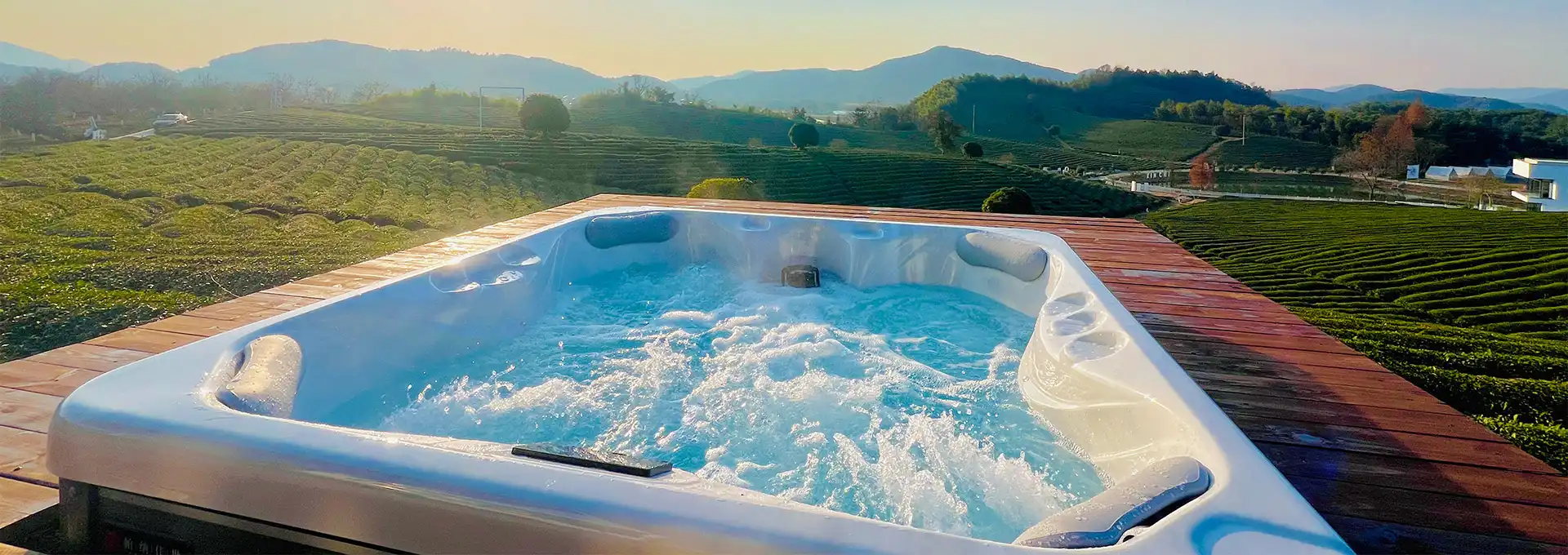
Owning a hot tub 6 person model means managing more water volume, higher bather loads, and greater wear on mechanical components than smaller residential units. Whether you operate a resort, manage vacation villas, or are upgrading a backyard space, a structured maintenance plan keeps your six-person spa running safely and efficiently year-round. This guide walks through key maintenance principles, routine schedules, energy management, installation tips, and brand comparisons—giving procurement managers and facility teams the practical knowledge they need.
Understanding 6 Person Hot Tub Maintenance: Key Principles and Challenges
Why Six-Person Tubs Require a Different Approach
In general, a spa that can accommodate six people may store between 300 and 450 gallons of water, which is around forty percent more than a typical spa that can accommodate four people. In order to handle that quantity, filtering procedures that are correspondingly larger and chemical treatments that occur more often are required. Bathing often accelerates the accumulation of pollutants in commercial settings such as hotels, resorts, and rental villas; hence, daily monitoring is not a choice but rather a must in these kinds of establishments.
Common Issues Facility Operators Face
Clogged filters are the root cause of the majority of issues that arise with six-person units that are often utilised. As a result of the fact that pump motors have to exert more effort to compensate for the flow being stopped by filters, their lifespan is significantly reduced. Changes in water chemistry, particularly fluctuations in pH, cause jet fittings and heater elements to wear out over time. This is especially true for heater elements. When preparing budgets for replacement parts, procurement managers must take into consideration the patterns of wear that have been observed.
Health, Safety, and Compliance
Within the United States of America, those who operate commercial spas are required to adhere to state health regulations. These regulations typically stipulate that the pH level must be between 7.2 and 7.8 and that the free chlorine level must be between 1 and 3 parts per million (ppm). The Middle East and Australia both adhere to the same set of regulations since they are identical. It is beneficial for operators to keep water test records since it saves time during health inspections and demonstrates to guests and insurers that you have done your job correctly.
Step-by-Step Maintenance Routine for 6 Person Hot Tubs
Weekly Water Chemistry Checks
In business units, check the amounts of pH, total alkalinity, and bleach at least twice a week. To keep pH from changing too much, alkalinity should stay between 80 and 120 ppm. Don't use paper tests; instead, use a digital test kit. Change the amount of hand sanitizer after bathers are used a lot, especially on weekends or after events.
Monthly and Quarterly Filter and Shell Care
Every two weeks, rinse cartridge filters with an outdoor hose, and once a month, do a chemical soak. Depending on how often you bathe, change the filters every three to six months. After every change of water, wipe the shell's acrylic surface with a cleaner that doesn't scratch. Do not use harsh solvents because they can damage the shell and cancel the manufacturer's warranty.
Annual Professional Servicing
Hire a certified technician once a year to check the electrical connections, heater elements, jets, and pump seals on each hot tub 6 person. Finding wear on a pump or corrosion on a heater early on saves money on expensive emergency repairs. Block-booking annual service contracts with local spa technicians can cut service costs by 15–25% per unit for places that take care of more than one unit, like resort developers who take care of ten or more tubs.
Energy Efficiency and Cost Management in 6 Person Hot Tub Maintenance
Selecting an Energy-Efficient Model
For the most part, the amount of heat loss is determined by how thoroughly the insulation is placed. As a result of the fact that full-foam insulation models are superior to partial-foam models in terms of their ability to retain heat, the heater does not need to operate for as long. The iParnassus® 6A03 type is a compact spa that is 200 centimetres in length and has the capacity to accommodate six people. The fact that it was constructed with high-quality insulation that helps maintain a consistent temperature is of great assistance to those who reside in regions that are characterised by a higher cost of energy or in regions that are colder.
Smart Controls and Operational Habits
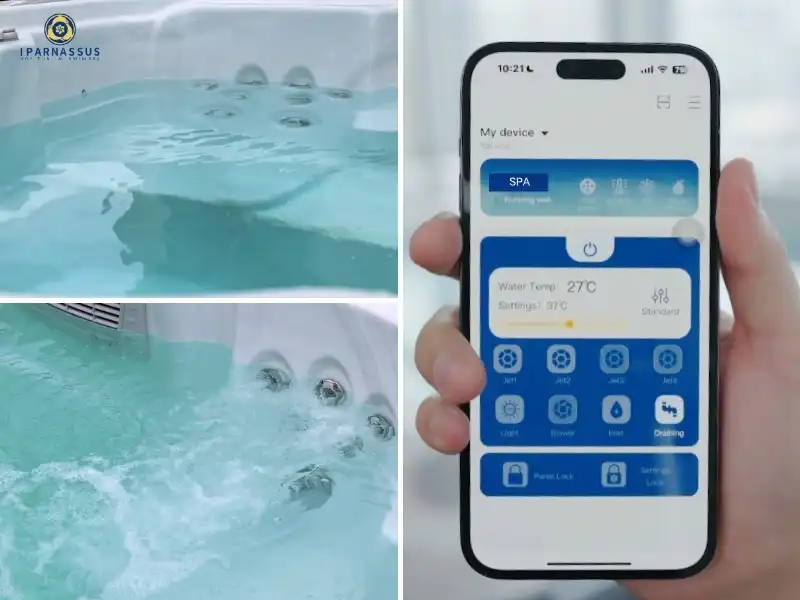
It is possible to drastically reduce monthly energy expenses by scheduling heating cycles to operate during off-peak power hours. Through the use of iParnassus® smart control systems, employees are able to monitor the temperature of the water, establish automatic heating plans, and get notifications when the water level dips, all from their mobile devices at their fingertips. Putting a thermal cover that is properly fitted over the tub while it is not being used may reduce the amount of heat that is lost by as much as sixty percent, according to the United States Department of Energy.
Cost Breakdown for Commercial Operators
What follows is an estimate of the annual cost of operating a business spa that can accommodate six people:
- Energy costs range from $600 to $1,200 annually, depending on the climate and the quality of the insulation.
- At the commercial bather rates, chemicals cost between $300 and $600 per year.
- Replacement filters cost between $100 and $250 annually.
- The yearly appointment for professional service ranges from $150 to $400.
With these data, it is clear that sites that manage numerous units get the most return on their investment thanks to the use of intelligent scheduling and insulation.
Installation and Setup Maintenance Tips for 6 Person Hot Tubs
Site Preparation and Structural Requirements
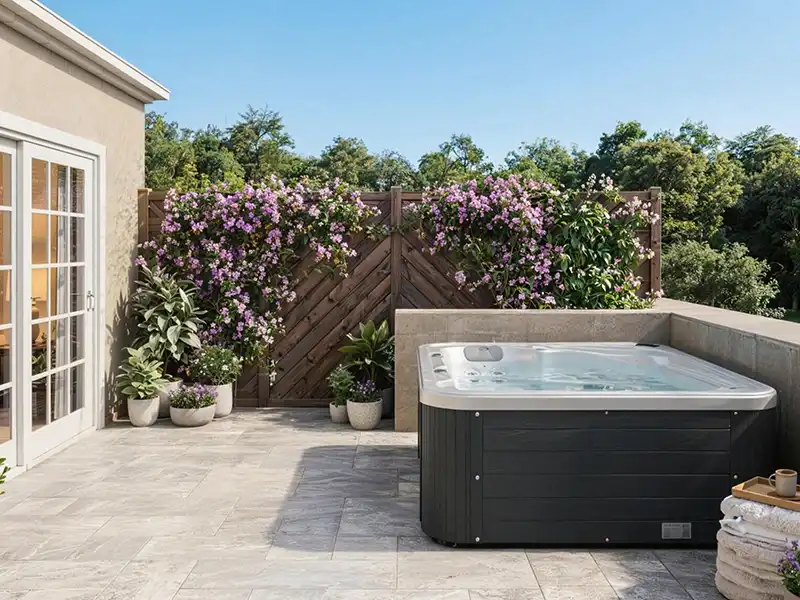
A 6 people hot tub that can fit six people weighs between 3,500 and 5,000 pounds when it's full. It has to be either a strengthened concrete pad or a deck that has been checked for structural integrity. To keep the cabinet and shell from getting stressed, the ground must be level to within ¼ inch. The power supply should be up to code in your area. In the US, this means a dedicated 240V/60A GFCI-protected circuit.
Positioning for Ease of Servicing
Leave at least 24 inches of space around the spa on at least two sides so that you can get to the filter and service the equipment panel. Place the unit near a floor drain or slope the ground around it to keep water away from buildings. Putting drainage pipes in the wrong place is one of the main reasons why cabinets rot and electrical problems happen in outdoor setups.
Warranties, Supplier Support, and Lifecycle Planning
Before deciding to buy something, procurement teams should make sure they have clear proof that the guarantee covers the shell, jets, pumps, and electrical parts. iParnassus® has been making spas for 18 years and has 80 registered patents to back up its after-sales service. When you own more than one unit in a business setting, the operational risk is lower if your suppliers offer dedicated technical support.
Comparing Hot Tub Maintenance Across Popular 6 Person Hot Tub Brands
Hard Shell vs. Inflatable Units
Inflatable spas need more upkeep each turn than hard shell acrylic spas like those made by Jacuzzi, Canadian Spa Company, and iParnassus®. Inflatables need to have their bladders checked more often, are more likely to get punctures in places with a lot of foot traffic, and don't have as many jet options. Over the course of five years, hard shell units have a lower total cost of ownership for long-term business installs.
Filtration and Automation Differences
The ProClear filtration system from Jacuzzi and the multi-stage filters from Canadian Spa Company both require less physical work, but their new parts are more expensive. iParnassus® units have features that clean themselves and provide real-time water monitoring via smartphone. This means that facility staff can respond to changes in water quality even when they are not at the unit. This is especially helpful for resort owners who are in charge of several spas on their property.
The iParnassus® 6A03: Maintenance-Friendly by Design
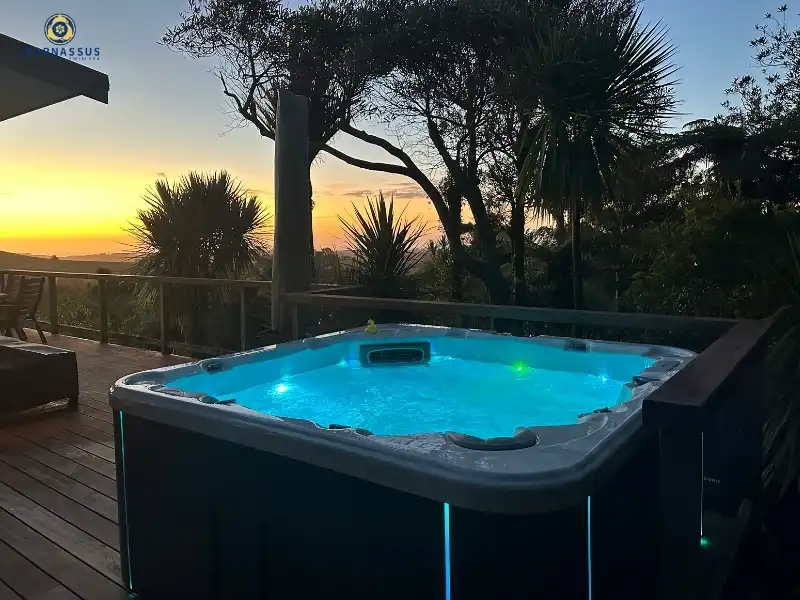
The iParnassus® 6A03 has 43 jets and 33 regular seats in a 200cm footprint. It has one lounge seat and one regular seat. The jets behind each seat are set up in a different way so that they massage your back specifically. Three ponds and a long stream make the area more relaxing without making it harder to take care of. With dedicated foot massage jets and different jet placements, guests can get full-body massages from any sitting position. This makes it a great choice for resorts, houses, and yachts that don't have a lot of room.
Conclusion
If you own or rent a hot tub 6 person, you need to keep an eye on the water chemistry, filtering, energy management, and have a professional service it once a year. Choosing a model with good insulation, smart controls, and easy-to-reach parts lowers both the cost of running it and the time it takes to fix problems. The iParnassus® 6A03 is a sensible mid-range investment that meets the most common buying concerns, such as space efficiency, energy performance, jet coverage, and ease of care. Setting up a regular maintenance plan from the start will protect your asset, keep your guests safe, and make your tools last much longer than the average in the industry.
Frequently Asked Questions
1. How often should water be changed in a six-person commercial spa?
In commercial settings with frequent bather use, water should be drained and refilled every 30 to 60 days. Residential units used moderately can extend this to 90 days. Always test water chemistry after refilling before allowing use.
2. What does winterization involve for a six-person spa?
Winterization requires fully draining the tub, blowing out all jet lines with a shop vacuum, removing and storing filters, and covering all equipment openings. In climates below 20°F, adding non-toxic antifreeze to residual water lines prevents pipe damage.
3. When should a facility hire a professional technician?
Hire a professional when you notice pump noise, heater inefficiency, persistent water cloudiness after chemical adjustment, or any electrical fault. Annual preventive servicing is strongly recommended for all commercial units regardless of visible issues.
4. Is the iParnassus® 6A03 suitable for yacht installation?
Yes. Its 200cm compact footprint and hard shell construction make it compatible with marine deck installations where space and structural weight limits apply. Confirm deck load ratings with a marine engineer before installation.
Partner With iParnassus® for Your Next Six-Person Spa Purchase
iParnassus® has been making hot tub 6 person for 18 years and has 80 registered patents, so you can trust them. The 6A03 type is designed to work in hotels, homes, and on boats because it has a small volume, smart settings, and heating that uses little energy. Our team offers technical support, after-sales service, and a variety of purchasing options, whether you need a single unit or a large commercial order. To get a quote right away, email us at info@iparnassus.com.

References
1. Association of Pool & Spa Professionals (APSP). ANSI/APSP/ICC-2 American National Standard for Residential Portable Electric Spa. APSP, 2019.
2. U.S. Department of Energy. Energy Saver Guide: Tips on Saving Money and Energy at Home. U.S. Department of Energy, 2022.
3. Centers for Disease Control and Prevention (CDC). Healthy Swimming: Hot Tubs and Spas Water Quality Guidelines. CDC, 2021.
4. Pool & Hot Tub Alliance (PHTA). Model Aquatic Health Code: Hot Tub and Spa Sanitation Standards. PHTA, 2023.
5. Recreational Water Quality Committee, World Health Organization. Guidelines for Safe Recreational Water Environments, Volume 2: Swimming Pools and Similar Environments. WHO, 2006.
6. National Electrical Code (NEC). Article 680: Swimming Pools, Fountains, and Similar Installations. National Fire Protection Association, 2023.

Send Inquiry