_1768872582663.webp)
Large Hot Tub Maintenance: A Practical Owner’s Guide
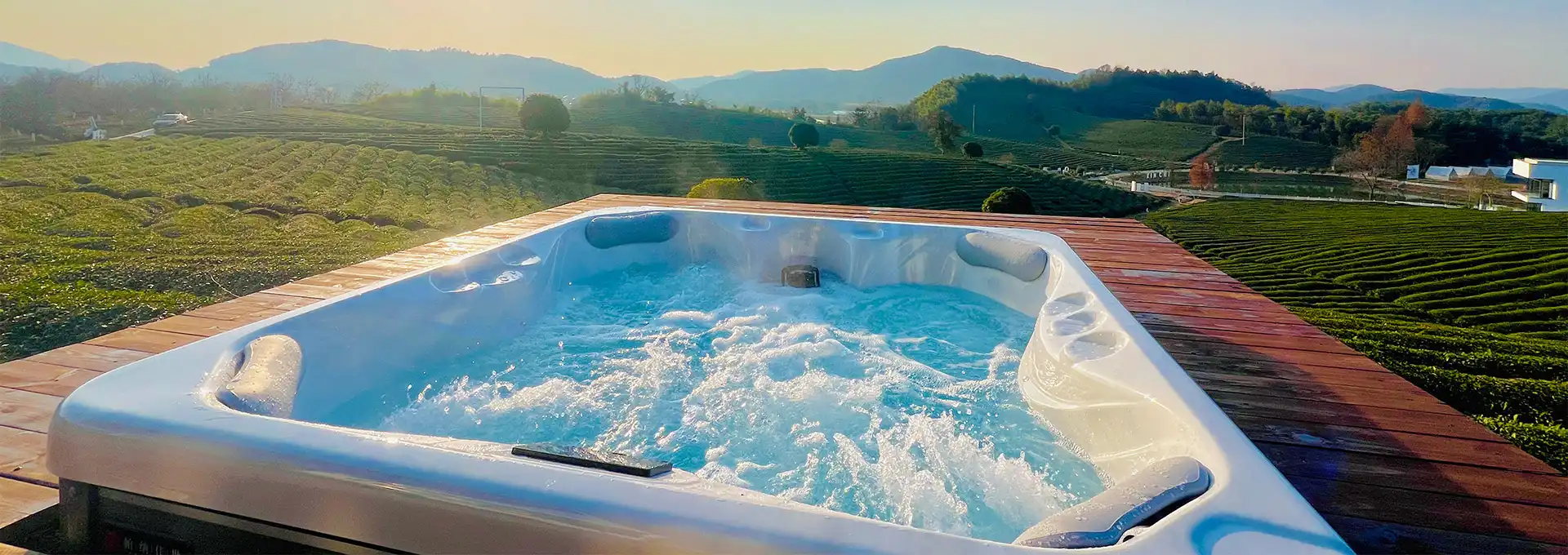
Owning a large hot tub is a significant investment — and keeping it in peak condition protects that investment for years to come. Whether you manage a resort, a private villa, or a commercial spa facility, understanding proper maintenance is non-negotiable. A well-maintained large hot tub delivers consistent hydrotherapy performance, safe water quality, and lower long-term operating costs. This guide walks through everything procurement professionals and operators need to know, from daily upkeep to advanced troubleshooting.
Understanding the Unique Maintenance Challenges of Large Hot Tubs
Higher Water Volume Means Greater Complexity
A normal bathtub for homes can hold about 1,500 liters. The iParnassus® 9R00 Party Spa is a commercial-grade spa that measures 379 × 225 × 88 cm and can hold 2,540 liters of water. That much water needs more accurate chemical dosing, longer filter processes, and water tests more often. If the chemistry of the water in a high-capacity unit changes, the window for correction gets smaller, and it costs more to do nothing.
Equipment Wear Accelerates Under Heavy Use
Equipment is pushed harder in business and resort settings than in private ones. During peak hours, 101 massage jets and three pumps are running, putting a lot of heat and mechanical stress on the parts. The Pool & Hot Tub Alliance says that nearly 40% of unplanned spa downtime is due to broken equipment. Small wear and tear problems don't turn into expensive breakdowns when they are checked on a regular basis.
Energy Inefficiency Quietly Drains Budgets
It takes more energy to heat and keep the warmth of a large pool. If you don't have an organized repair plan, heat loss from old covers, worn seals, or thermostats that aren't set correctly can make your energy bills go up by a lot. If you find these inefficiencies early on, you can keep your operating costs stable and under control.
Essential Large Hot Tub Maintenance Practices
Regular maintenance isn't hard, but you have to be disciplined to do it. Here are the main steps that every operation needs to take.
Here are the most important upkeep tasks that should be done regularly:
- Water chemistry testing (3× per week minimum): Maintain pH between 7.2–7.8, total alkalinity at 80–120 ppm, and free chlorine between 1–3 ppm. Large water volumes amplify the effect of imbalanced chemistry on bathers and equipment alike.
- Filter inspection and cleaning (weekly): Rinse cartridge filters with a garden hose weekly and perform a chemical soak every 4–6 weeks. Replace filters every 12 months under commercial use. Clogged filters reduce jet pressure across all 101 outlets and strain pump motors.
- Shell and surface cleaning (monthly): Use non-abrasive, spa-safe cleaners when draining for a full water change. Avoid household detergents — they foam aggressively in jet-driven water and disrupt chemistry balance.
By following these steps, you can directly lower the chances of biofilm buildup, equipment stress, and expensive water quality problems in a large hot tub. Setting up a written maintenance log also helps procurement teams keep good records for service audits and warranty claims.

Scheduling Preventive Maintenance
Professional checks should be done on the pump seals, heater elements, and electrical connections every three months. A broken jet housing or a seal that doesn't work as well as it should can cause a lot of water loss and wasted energy over time.
Eco-Friendly Cleaning Choices
Many enzyme-based cleaners that are approved by spas cut down on chemical load without losing cleanliness. These products are especially useful for resorts that want to get green certifications because they lower the production of chloramines and keep guests' skin and eyes from getting irritated.
Energy Efficiency and Sustainability in Large Hot Tub Maintenance
Optimal Temperature Settings
Most people find that keeping the water at 38°C (100°F) is comfortable, and it also uses less energy to heat than setting it to the highest temperature of 40°C. If you lower the set point by 2–3 degrees during off-peak hours, you can save up to 10% on heating costs without changing how people use the heat.
Insulated Covers Are Non-Negotiable
Between sessions, heat doesn't escape because of a good thermal cover that fits well. Even small changes that make it easier for heat to stay in an 8-seat spa with 2,540 liters of water can save money every month. Every six months, check the cover hinges and foam cores for water absorption, which makes the insulation less effective.
Smart Controls Reduce Waste
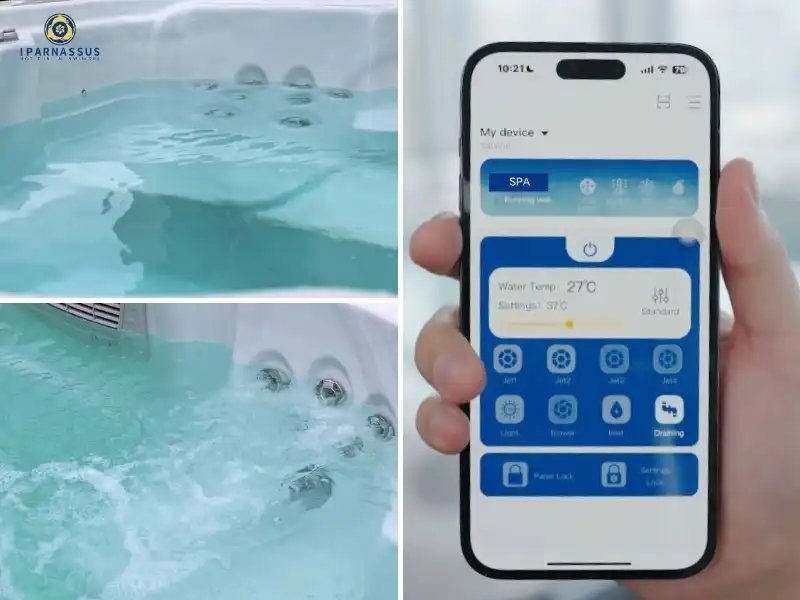
The iParnassus® control system lets you monitor the system from your smartphone, change the temperature from afar, and protect it automatically when it gets too cold. With intelligent replenishment alerts and real-time water level tracking, workers can catch problems before they get worse. This level of visibility is especially helpful in resorts or hotels with many units where staffing is limited.
Installation and Safety Considerations for Maintaining Large Hot Tubs
Site Selection and Structural Support
With eight bathers and 2,540 liters of water, a full 9R00 Party Spa can carry more than 4,500 kg. The area for installation must be strong enough to hold that much weight, whether it's a structural deck, a reinforced concrete pad, or a plinth that was built just for that purpose. Before installation, you should always hire a qualified structural expert to assess the hot tub advantages and load requirements.
Electrical Safety and Code Compliance
The National Electrical Code (NEC) says that large spa units need their own 240V lines with ground-fault circuit interrupter (GFCI) protection. A licensed electrician should do all of the wiring. Don't think that an outdoor circuit that is already there will work for a large unit with three pumps and 101 jets.
Drainage and Water Management
Before placement, plan how to get to the drains. Either a submersible pump or a gravity drain connection to the right outlet is needed to drain 2,540 liters. One of the most common and expensive mistakes installers make is not planning for drainage well enough.
Troubleshooting and Advanced Maintenance Tips
Identifying and Fixing Leaks Early
A drop in the water level that is bigger than regular evaporation—usually more than 2.5 cm per week—could mean there is a leak. First, look at the equipment section, the union connections, and the jet fittings. Dye testing helps find cracks in the shell without taking the whole thing apart.
Heater and Jet Malfunctions
If the water temperature drops without warning, check to see if the GFCI breakers have tripped, the filters are clogged and blocking the heater's flow, or the high-limit sensor is broken. Jet flow loss in one area is usually caused by a clogged nozzle or a problem with the pump priming, not the whole pump failing. Usually, clearing the filter and priming again fixes the problem.
When to Call a Professional
You should get a trained spa expert if you keep getting error codes, your GFCI trips a lot, or your motor makes strange noises. The iParnassus® smart control screen shows status codes in real time, which speeds up problem-solving and cuts down on the time techs need to spend on-site. For commercial operators who are in charge of multiple units, being able to monitor them from afar is a useful feature that makes response times much shorter.
Conclusion
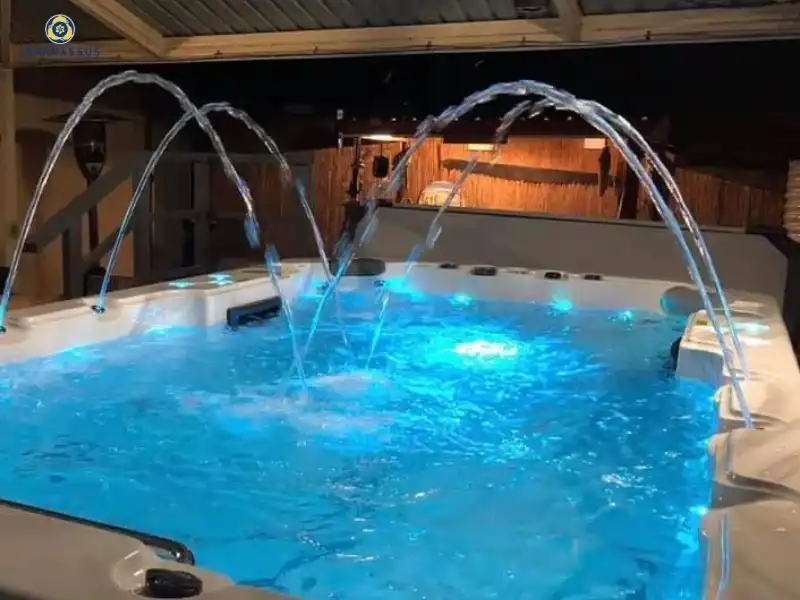
A large hot tub and the people who use it are both safer when it is well taken care of. Every practice, from managing energy and making sure electrical equipment is safe to water chemistry and filter care, helps keep costs down and equipment lasting longer. For resort builders, hotel managers, and business spas, a structured maintenance program is just as important as the choice to buy in the first place. With its 101 jets, dual waterfalls, LED ambiance lighting, and smart control integration, the iParnassus® 9R00 Party Spa is made for busy commercial settings. However, it will only keep working at that level with regular maintenance.
Frequently Asked Questions
1. How often should I change the water in a large hot tub?
For commercial or high-use environments, drain and refill every 60–90 days. With 2,540 liters of water, this schedule keeps total dissolved solids (TDS) under control and prevents chemical buildup that degrades water quality and equipment.
2. Does improper maintenance void the warranty?
Yes. Most manufacturers require documented proof of regular maintenance, including water chemistry records and filter replacement logs. Skipping these steps can void coverage on pumps, heaters, and control systems — components that carry the highest replacement costs.
3. How do I know when to replace the filters?
Replace cartridge filters annually under commercial use, or sooner if rinsing no longer restores adequate water flow. Discoloration, visible tears, or persistent cloudiness after chemical soaking are clear indicators that replacement is overdue.
4. What certifications should I look for in a commercial spa?
Look for products holding multiple international certifications covering electrical safety, water sanitation, and structural integrity. The iParnassus® 9R00 holds six international certifications, which support compliance in regulated hospitality and commercial environments across North America, Europe, Australia, and the Middle East.
Partner with iParnassus® for Commercial-Grade Hot Tub Solutions
Every iParnassus® product is backed by more than 80 patents and 18 years of experience making spas. The 9R00 Party Spa is one of the most versatile large hot tubs that can be bought by businesses. It has 101 jets, a capacity of 2,540L, two waterfalls, and smart controls that are designed for heavy use. We serve resort builders, hotel owners, and spa dealers all over the world as a reliable big hot tub maker with certified goods and quick customer service after the sale. To get details or talk about sources, email our team at info@iparnassus.com.
References
1. Pool & Hot Tub Alliance. 2022 Industry Standards and Operations Report. Pool & Hot Tub Alliance, 2022.
2. National Fire Protection Association. NFPA 70: National Electrical Code. NFPA, 2023.
3. American Chemistry Council. Water Treatment Guidelines for Recreational Water Facilities. American Chemistry Council, 2021.
4. Centers for Disease Control and Prevention. Healthy Swimming: Hot Tub/Spa Water Quality. CDC, 2022.
5. ASHRAE. ASHRAE Standard 90.1: Energy Standard for Buildings Except Low-Rise Residential Buildings. ASHRAE, 2022.
6. NSF International. NSF/ANSI 50: Equipment for Swimming Pools, Spas, Hot Tubs and Other Recreational Water Facilities. NSF International, 2023.

Send Inquiry