_1768872582663.webp)
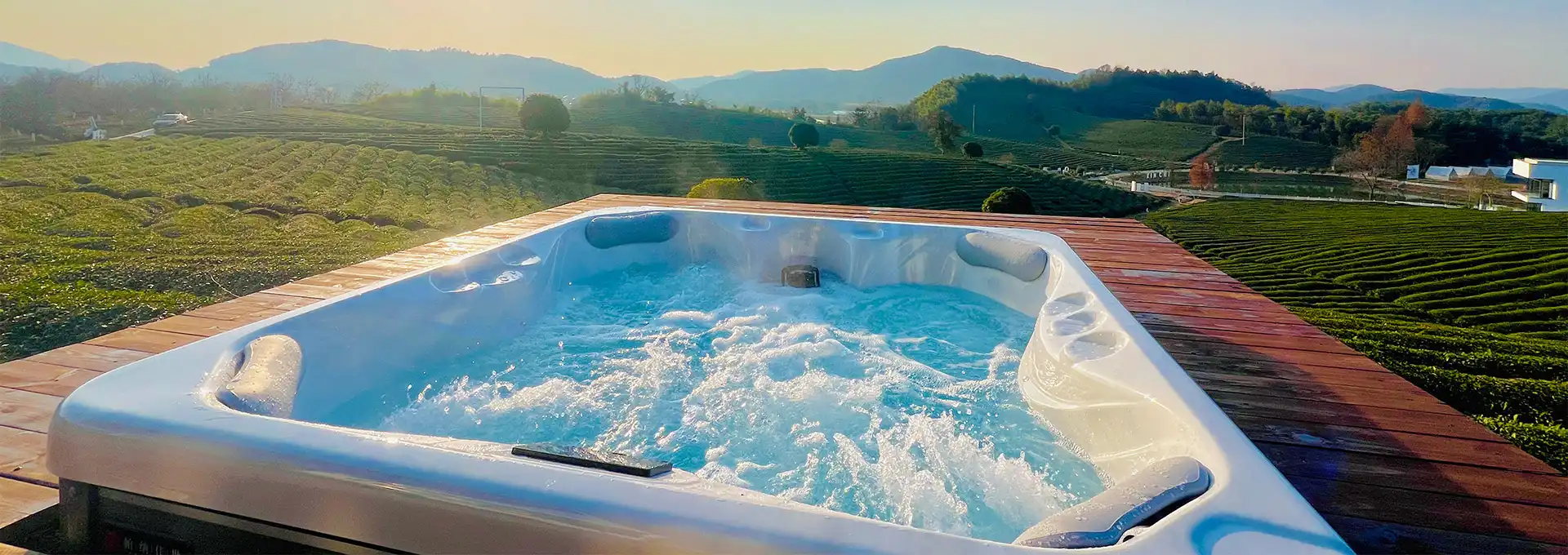
Hot Tub Therapy Benefits for Pain and Stress Relief
Hot Tub Therapy treatment has been shown to provide meaningful alleviation of chronic pain and stress through three synergistic mechanisms: warm water immersion, buoyancy, and focused jet massage. In a study published in the Journal of Rheumatology, it was shown that individuals with arthritis and fibromyalgia had decreased joint inflammation and muscular tension after frequent hydrotherapy sessions [1]. For B2B buying experts – purchasing managers, resort developers, wellness center owners and OEM integrators – knowing these therapeutic advantages translates into better product choices and more satisfied clients. This handbook provides therapeutic science, comparative treatment analysis, purchasing criteria, and sourcing strategy so your purchasing choices are based on facts, not preconceptions.

Understanding Hot Tub Therapy and Its Benefits
Warm water immersion triggers vasodilation, which increases peripheral blood flow and accelerates nutrient delivery to damaged muscle tissue [2]. Simultaneously, buoyancy reduces effective body weight by approximately 90%, relieving compressive load on spinal discs and articular cartilage — a critical benefit for clients managing degenerative joint conditions.
Pain Relief Through Hydrotherapy
Jet-driven hydromassage applies mechanical pressure to soft tissue, interrupting pain signal transmission along peripheral nerve pathways. A 2019 review in Complementary Therapies in Medicine found that consistent hydrotherapy use reduced chronic low back pain scores by up to 40% over eight weeks [3]. For corporate wellness programs and physical therapy clinics procuring equipment, this outcome data justifies budget allocation convincingly.
Stress Reduction and Sleep Quality
Beyond musculoskeletal benefits, warm water immersion lowers cortisol levels and stimulates endorphin release. The resulting relaxation response reduces hypertension, anxiety, and insomnia — conditions that cost U.S. employers an estimated $300 billion annually in lost productivity, according to the American Institute of Stress. Hotels and wellness resorts that offer therapeutic soaking experiences report measurably higher guest satisfaction and repeat booking rates.
Cardiovascular and Circulatory Support
Elevated water temperature causes mild cardiovascular conditioning similar to low-intensity aerobic exercise. For senior wellness communities and rehabilitation centers, this passive circulatory benefit makes Hot Tub Therapy an accessible entry point for patients who cannot tolerate conventional exercise.

Comparing Hot Tub Therapy with Alternative Therapies
Procurement professionals frequently evaluate warm water immersion alongside competing modalities. Each option serves distinct clinical and hospitality scenarios, and the most effective wellness programs combine rather than substitute them.
Hot Tubs vs. Sauna, Massage, and Cold Plunge
The sauna treatment gives dry radiant heat that quickly elevates the core body temperature, but it does not have the mechanical joint relief of buoyancy. Traditional massage treatment provides targeted physical pressure, but the need for certified professionals incurs ongoing labor expenditures that the permanent jet systems save over the long term. Cold plunge treatment improves muscle recovery post-exercise by lowering inflammation – a complementary approach, not a substitute. Contrast treatment circuits that boost healing results by combining cold plunge sessions with hot water immersion are available at many premium wellness establishments.
Permanent vs. Inflatable Hot Tubs for Commercial Use
Inflatable units are cheaper to buy initially and are suitable for temporary installations, but they have poorer jet pressure, deteriorate more rapidly under frequent commercial usage, and seldom reach the therapeutic criteria required by clinics or resorts. Permanent acrylic hot tubs and swim spas provide stable hydrodynamic performance, commercial-grade pump systems, and connectivity with hotel management infrastructure—all non-negotiable for medium-to-large B2B installations.
How to Choose the Best Hot Tub for Therapeutic Use: A Decision Support Approach
Selecting the right therapeutic unit involves matching clinical specifications to the procurement context. Size, jet configuration, pump capacity, energy efficiency, and after-sales support all affect long-term ROI and user outcomes.
The iParnassus® 3D80: A Purpose-Built Therapeutic Swim Spa
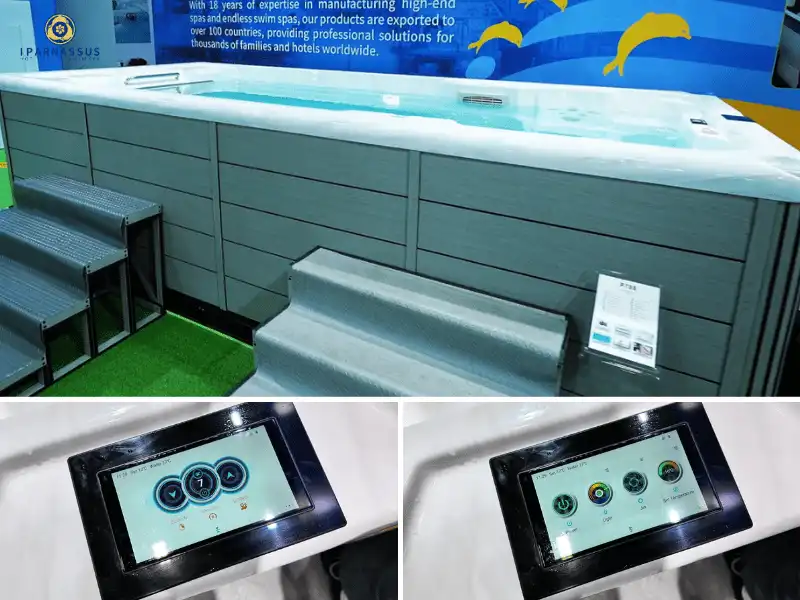
Among swim spas engineered specifically for Hot Tub Therapy performance, the iParnassus® 3D80 stands apart as a best-selling single-zone swim spa designed to serve diverse therapeutic and recreational needs simultaneously. Here are the core advantages of this unit:
- 60 massage jets powered by 4 dedicated pumps — yielding a 20-jets-per-seat ratio, the highest in its category, ensuring thorough coverage from shoulders to feet across all three seating positions.
- Dual-function layout (2 massage seats + 1 swim current zone) — allows two guests to receive targeted hydromassage while a third user engages in resistance swimming, maximizing facility throughput.
- Built-in aromatherapy compatibility — a differentiated feature absent from most standard units — enables spa operators to offer sensory-enhanced relaxation protocols that command premium pricing.
- Extra-deep basin with blue safety marker lines — accommodates users across all age groups and body types, while clear floor markings reduce slip risk in commercial environments.
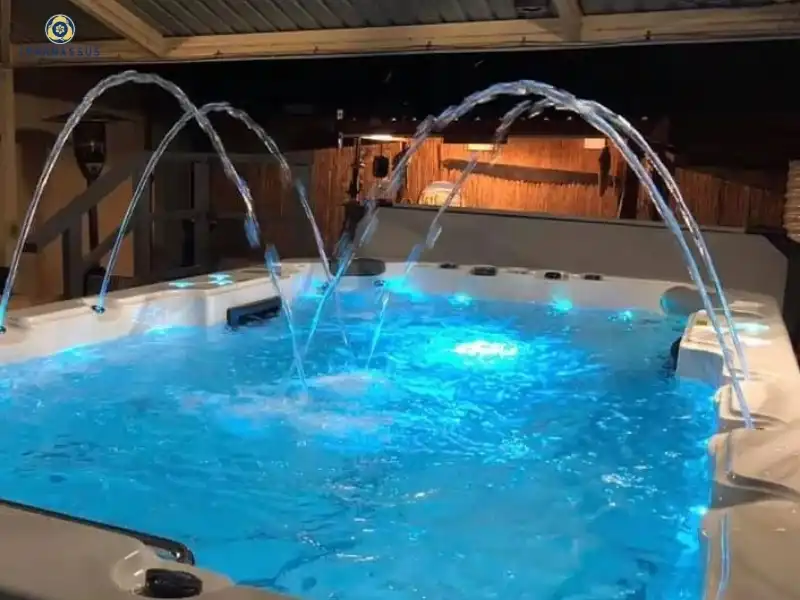
- Illuminated waterfall and built-in ice buckets — the illuminated waterfall creates compelling nighttime ambiance for hospitality settings, while dual ice buckets add practical convenience guests genuinely appreciate.
- Hotel central management integration — up to six units can be monitored and controlled through a central system, dramatically reducing operational overhead for large resort deployments.
These benefits immediately address the most recurrent pain issues in commercial hot tub procurement, including lack of jet intensity, single-function design, and management complexity at scale. But beyond performance, the 3D80 has an outstanding logistical profile – up to 6 units fit into one 40HQ container, slashing ocean freight costs significantly for foreign consumers.
The iParnassus® smart control system expands this value. Operators may remotely control the water temperature, intake, drainage, and safety lockouts by smartphone, with automated self-protection programs and intelligent water replenishment reminders. iParnassus® = Not marketing jargon, but verified engineering depth: 18 years of production experience and 80 patents filed by 2026.
When assessing suppliers, check for warranty coverage of more than two years, verified after-sales networks in your target area, and OEM customization capabilities. iParnassus® supports active distribution channels in North America, Europe, Australia, and the Middle East — regional infrastructure that streamlines service logistics for multinational procurement initiatives.
Conclusion
Clinically proven advantages of warm water immersion treatment, including alleviation of chronic pain, stress reduction, better circulation, and greater sleep quality, clearly translate into demonstrable value for hospitality, wellness, and rehabilitation procurement programs. Permanent, commercial-grade devices like the iParnassus® 3D80 stand out in every aspect that appeals to B2B buyers: jet intensity, dual-function ability, Hot Tub Therapy integration, and long-term durability. The therapeutic specification and logistical benefits of the 3D80 offer a convincing argument when your sourcing option has to please several user demographics, survive extensive commercial usage, and justify premium investment.
FAQ
1. How often should a hot tub be used for therapeutic benefit?
Most physical therapy guidelines recommend 15–20-minute sessions three to five times per week for chronic pain management. For stress relief and general wellness, daily use at moderate temperatures (100–102°F) is safe for most healthy adults. Facilities serving clinical populations should consult with licensed practitioners to establish usage protocols aligned with individual patient needs.
2. What safety protocols apply in commercial hot tub installations?
Commercial deployments must comply with local health department standards regarding water chemistry, maximum bather loads, and temperature limits. The iParnassus® smart control system includes automatic high-temperature and low-temperature protection, water shortage alerts, and remote lock/unlock features that simplify compliance management across multi-unit installations.
3. Can hot tub therapy complement physical rehabilitation programs?
Yes. Hydrotherapy is widely integrated into post-surgical and injury rehabilitation protocols because buoyancy reduces joint load during early-stage movement exercises. Procurement managers equipping physical therapy clinics should prioritize adjustable jet intensity, accessible entry design, and durable pump systems capable of sustaining high daily use volumes.
4. Is the iParnassus® 3D80 suitable for outdoor commercial environments?
The 3D80 is engineered for both indoor and outdoor installation with commercial-grade acrylic construction and weatherproof control panels. Its smart control system operates remotely, allowing staff to prepare units before guest arrival regardless of conditions.
Discover iParnassus® Hot Tub Therapy Solutions for Your Business

iParnassus® has built its reputation as a trusted Hot Tub Therapy manufacturer with 18 years of production expertise and 80 registered patents. The 3D80 swim spa delivers the jet density, aromatherapy compatibility, and central management capabilities that serious B2B buyers require. Whether you operate a resort, a rehabilitation clinic, or a vacation rental portfolio, our team provides tailored procurement support from specification to delivery. Contact us at info@iparnassus.com.
References
1. Verhagen, A.P., et al. "Balneotherapy (or spa therapy) for rheumatoid arthritis." Cochrane Database of Systematic Reviews, 2015. https://www.cochranelibrary.com/cdsr/doi/10.1002/14651858.CD000518.pub2/full
2. Mooventhan, A., and Nivethitha, L. "Scientific evidence-based effects of hydrotherapy on various systems of the body." North American Journal of Medical Sciences, 2014. https://www.ncbi.nlm.nih.gov/pmc/articles/PMC4049052/
3. Becker, B.E. "Aquatic therapy: Scientific foundations and clinical rehabilitation applications." PM&R, 2009. https://www.pmrjournal.org/article/S1934-1482(09)00544-3/fulltext
4. Kamioka, H., et al. "Effectiveness of aquatic exercise as intervention for chronic low back pain." PLOS ONE, 2016. https://journals.plos.org/plosone/article?id=10.1371/journal.pone.0166103
5. American Institute of Stress. "Workplace stress." The American Institute of Stress, 2023. https://www.stress.org/workplace-stress
6. Geytenbeek, J. "Evidence for effective hydrotherapy." Physiotherapy, 2002. https://www.physiotherapyjournal.com/article/S0031-9406(05)61331-6/abstract

Send Inquiry