_1768872582663.webp)
How to Choose the Right Large Hot Tub for Your Home
When choosing the best big hot Large Hot Tub, you’ll need to consider seating capacity, jet performance, water volume, and longevity. It’s a choice that has significant financial and operational weight, whether you run a private estate, a commercial spa, or a luxury resort. A good spa provides constant hydrotherapy advantages, is great for group get-togethers, and can handle years of hard use. This guide covers all the crucial elements – from structural type to procurement methods – to help you invest with confidence and choose a model that really fits your area, your visitors, and your ambitions.

Understanding Large Hot Tubs — Definitions, Benefits, and Key Features
Not all big spa pools are made equal. There are three main types of structures used in the market: inflatable versions, hard-shell acrylic tubs, and custom-constructed installations. Inflatables are less expensive to purchase and easier to transport, but compromise jet power, depth of insulation, and structural longevity—liabilities that matter considerably in commercial or high-frequency home usage. Rigid, reinforced acrylic or composite tubs give constant performance year-round and work with the latest hydrotherapy systems. Installations are customized to particular architectural projects when conventional sizes are not applicable.
Why Size and Water Depth Actually Matter
Shallow water quality of immersion is reduced, and therapeutic value is limited. The Association of Pool & Spa Professionals (APSP) says ideal hydrotherapy needs water deep enough to immerse the body from shoulder to calf [¹]. Larger tubs (such ones that carry 2,540 liters) have more water capacity, so you can really submerge your whole body — something smaller portable tubs just can't do. That level of immersion becomes a distinguishing feature of comfort, rather than a marketing afterthought, for group wellness facilities or family gatherings of seven to eight.
But without health measures, we need to pay strict attention to energy use. Advanced foam insulation and high-efficiency pumps provide significant savings on monthly running expenses. So when procurement managers (who are looking at total cost of ownership) ask for energy use statistics, they need to ask for watts per hour, not simply headline jet counts.
Key Criteria for Choosing the Right Large Hot Tub
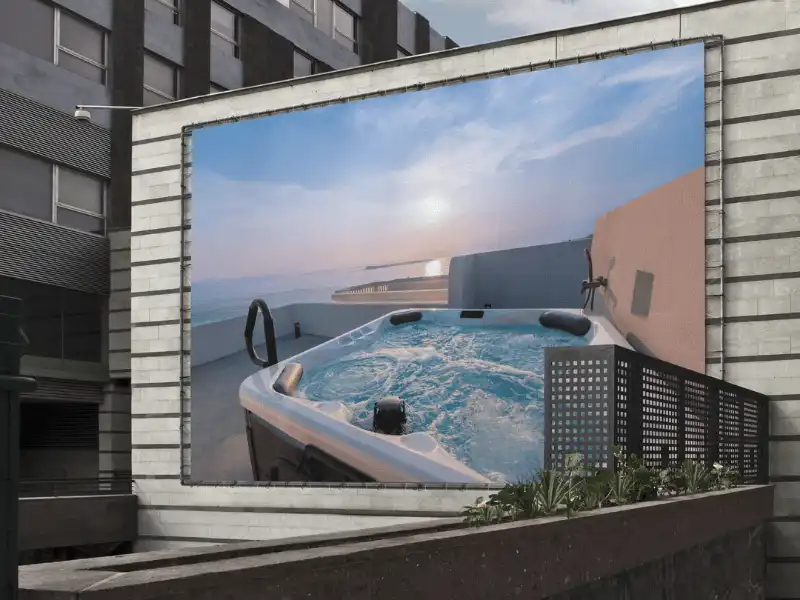
A structured selection process starts with clearly defining the application scenario before comparing any product specifications. Residential use, boutique hotel deployment, and commercial spa operation each impose distinct demands on jet coverage, maintenance cycles, and structural ratings.
Here are the core evaluation criteria procurement teams rely on:
- Seating capacity and layout: Confirm whether the hot tub accommodates your peak-use headcount. A spa rated for eight users should distribute jets evenly across every seat, not concentrate performance in two or three premium positions.
- Jet count relative to pump power: Research consistently shows that jet quality depends on pumps, not raw numbers alone. Aim for roughly 20–30 jets per dedicated massage pump to ensure adequate water pressure per seat [²]. A spa with 101 jets supported by three pumps meets this benchmark effectively.
- Tub dimensions versus available footprint: Measure your installation site carefully, including access corridors for delivery. A unit measuring 379 × 225 × 88 cm requires clear pathway planning well before purchase.
- Certification coverage: Commercial buyers in the U.S. should verify compliance with relevant ANSI/APSP standards, UL listings, and any applicable regional codes. Six international certifications signal a manufacturer serious about regulatory accountability.
- Warranty depth and after-sales infrastructure: A three-to-five-year structural warranty with accessible technical support reduces long-term operational risk considerably.
These criteria provide a replicable screening framework, regardless of whether you're outfitting one estate or sourcing units across a hotel portfolio. Applying them consistently prevents the common mistake of prioritizing aesthetics over engineering substance.
Comparing Large Hot Tub Types and Brands
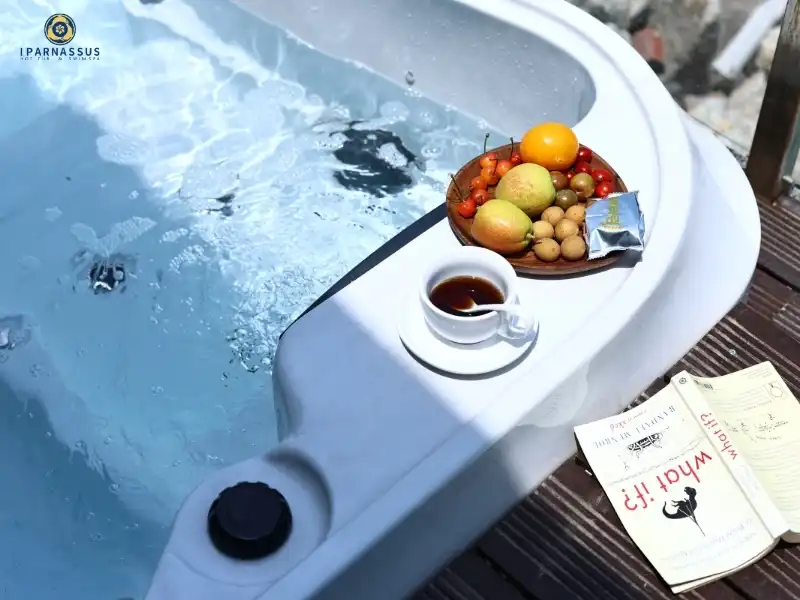
Hard-shell acrylic spas rule the commercial and luxury residential categories because they allow for larger jet counts, deeper water volumes, and integrated amenities – waterfalls, LED systems, music – that inflatable counterparts cannot physically house. Swim spas fall into a distinct category, being built for water exercise rather than group hydrotherapy, and have a different energy and maintenance profile.
What Separates Premium Brands From Mid-Tier Options
Leading spa manufacturers differentiate themselves via exclusive jet positioning research, ergonomic seat contouring, and important aesthetic distinction. For example, dual waterfall features are still quite unusual in the market – most companies only provide a single ornamental water feature at best. Models with 24-point LED ambient lighting and dual waterfalls take into account the visual atmosphere of the area as well as the physical sensation of the bath.
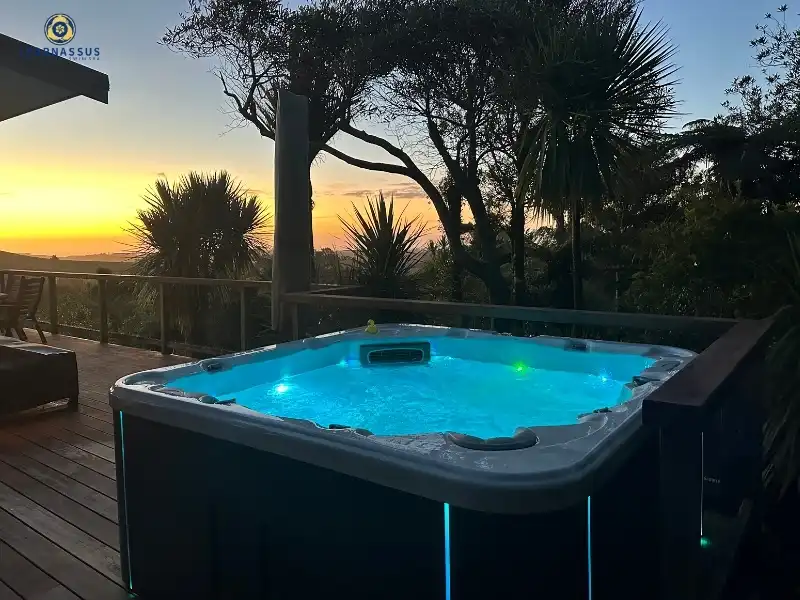
The iParnassus® 9R00 Party Spa is a good example of this equilibrium. It measures 379 x 225 x 88 cm and is rated for seven to eight people. It has 101 massage jets powered by three dedicated pumps – a ratio that ensures continuous hydrotherapy pressure throughout all seated positions. All the chairs are oriented toward two major locations near the filter, forming a social formation that allows discussion while also covering the body from shoulders to legs. For couples or smaller groups within the same unit, two cozy corner chairs provide a more secluded alternative. Features like built-in ice buckets, integrated handrails, LED fountains, twin waterfalls, and 24 decorative lights turn a practical spa into a full hosting atmosphere – the difference between a party spa and a conventional soaking tub.
Procurement and Installation Essentials for Large Hot Tubs
Sourcing channels include e-commerce platforms, direct manufacturer relationships, and authorized dealership networks. Direct purchasing from a manufacturer typically offers better customization flexibility, clearer warranty terms, and access to technical support teams who understand the product's engineering specifics. Dealerships provide localized installation capacity, which matters considerably for units of this scale.
Site Preparation and Foundation Requirements
A solid, level foundation is non-negotiable. Concrete pads remain the industry standard — a minimum of four inches thick, properly cured, and load-rated for the combined weight of water, structure, and occupants. A filled 2,540-liter hot tub with eight adults adds substantial structural load, typically exceeding 3,500 kg. Prefabricated base systems from reputable manufacturers can simplify this step for sites where pouring a pad is impractical [³].
Water treatment and seasonal maintenance protocols directly affect equipment lifespan. Establishing a regular sanitation schedule — balancing pH, sanitizer levels, and filter cleaning cycles — prevents premature wear on jet components and heating elements. Smart control systems that enable remote water management and automatic temperature regulation reduce the manual burden substantially, particularly in commercial deployments.
Case Studies and Best Practices
A luxury resort operator in the Southwest U.S. sourced eight-person spa units for poolside cabanas and encountered two recurring problems with their previous supplier: insufficient jet coverage at outer seats and no visual focal point to justify premium pricing. Switching to a model with 101 jets, three pumps, and integrated waterfall features resolved both pain points simultaneously — guests reported higher satisfaction scores, and the visual appeal supported a meaningful rate increase on cabana bookings [⁴].
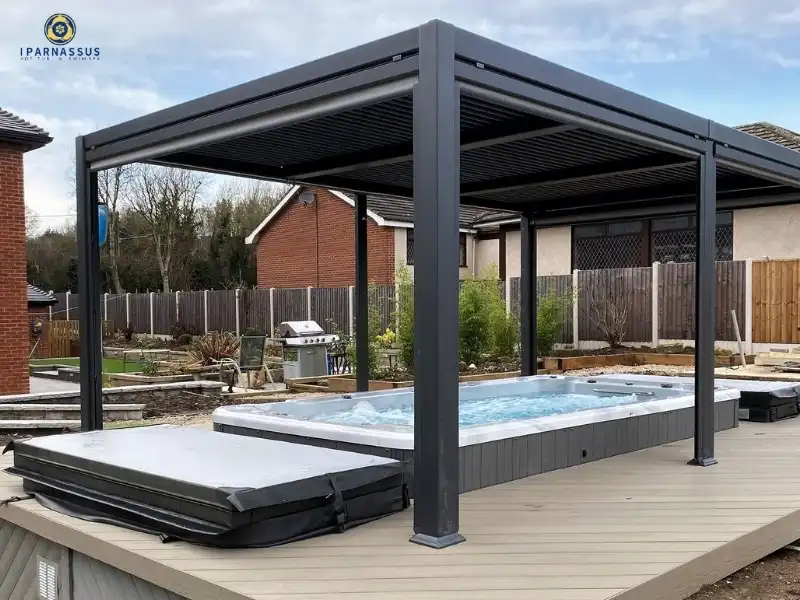
A private estate owner in Southern California had a different challenge: a deck-mounted installation site with structural load constraints. Working directly with the manufacturer's technical team, they obtained load distribution specs early in the planning phase and reinforced the deck accordingly, avoiding costly post-installation remediation [⁵].
Both scenarios underscore the same lesson: engage the supplier's engineering resources before finalizing site preparation, not after.
Conclusion
Choosing the correct Large Hot Tub for a big gathering area or business wellness setting is a systematic criteria review — seating configuration, jet-to-pump ratios, water depth, foundation compatibility, and certification, all of which have actual operational repercussions. Aesthetic factors like dual waterfalls and LED ambient systems have a demonstrable value to the visitor when included in the building, and not added as accessories. With 18 years of manufacturing expertise, 80+ patents, and an established presence in North America, Europe, the Middle East, and Australia, iParnassus® manufactures spa equipment designed for precisely these needs. Visit iphottubs.com for the complete lineup.
FAQ
1. How many people can a large hot tub comfortably seat?
Most commercial-grade oversized spa pools accommodate between six and eight users. A true eight-person configuration requires sufficient water volume, jet distribution across every seat, and structural dimensions that prevent crowding. Units under 350 cm in length often fall short of this in practice.
2. What maintenance costs should I expect annually?
Annual operating costs for a large spa typically include electricity (varying by climate and insulation quality), water treatment chemicals, and filter replacements. Energy-efficient models with smart temperature management can reduce electricity costs compared to older heating systems. Budget approximately $800–$1,500 per year for a well-maintained hard-shell unit in a moderate climate [⁶].
3. Are large hot tubs more energy-efficient than smaller models?
Not inherently — efficiency depends on insulation quality, pump technology, and control systems. However, a well-insulated large tub used at full capacity distributes energy cost across more users, lowering the per-person operating cost relative to a smaller unit used at the same frequency.
4. What certifications should a commercial spa have?
Look for ANSI/APSP compliance, UL or ETL electrical certification, and relevant regional safety standards. Six international certifications across a single product line indicate serious regulatory investment and support smoother procurement approvals in commercial projects.
Connect With iParnassus® — Your Trusted Large Hot Tub Supplier
iParnassus® brings 18 years of spa manufacturing expertise and 80+ patents to every project. Our large hot Large Hot Tub product line — including the 9R00 Party Spa — is built for resort developers, hotel operators, and private estate owners who demand commercial-scale performance and genuine aesthetic distinction. Reach our team at info@iparnassus.com to request a quote or schedule a product consultation today.

References
1. Association of Pool & Spa Professionals (APSP). ANSI/APSP/ICC-1 2014: American National Standard for Residential In-ground Swimming Pools. APSP, 2014. https://www.phta.org/standards/
2. Recreational Water Quality Committee. Hot Tub Hydrotherapy and Jet Efficiency Guidelines. Water Quality & Health Council, 2019. https://www.waterandhealth.org/
3. Pool & Spa News. Hot Tub Installation Best Practices for Commercial Properties. Hanley Wood Media, 2021. https://www.poolspanews.com/
4. SpaRetailer Magazine. Resort Spa Procurement: Matching Jet Configurations to Guest Experience Goals. SpaRetailer, 2022. https://www.sparetailer.com/
5. International Association of Certified Home Inspectors (InterNACHI). Structural Load Requirements for Deck-Mounted Hot Tubs. InterNACHI, 2020. https://www.nachi.org/hot-tubs.htm
6. U.S. Department of Energy. Energy Efficiency of Residential Hot Tubs and Spas. Energy.gov, 2023. https://www.energy.gov/energysaver/swimming-pools-hot-tubs-and-spas

Send Inquiry