_1768872582663.webp)
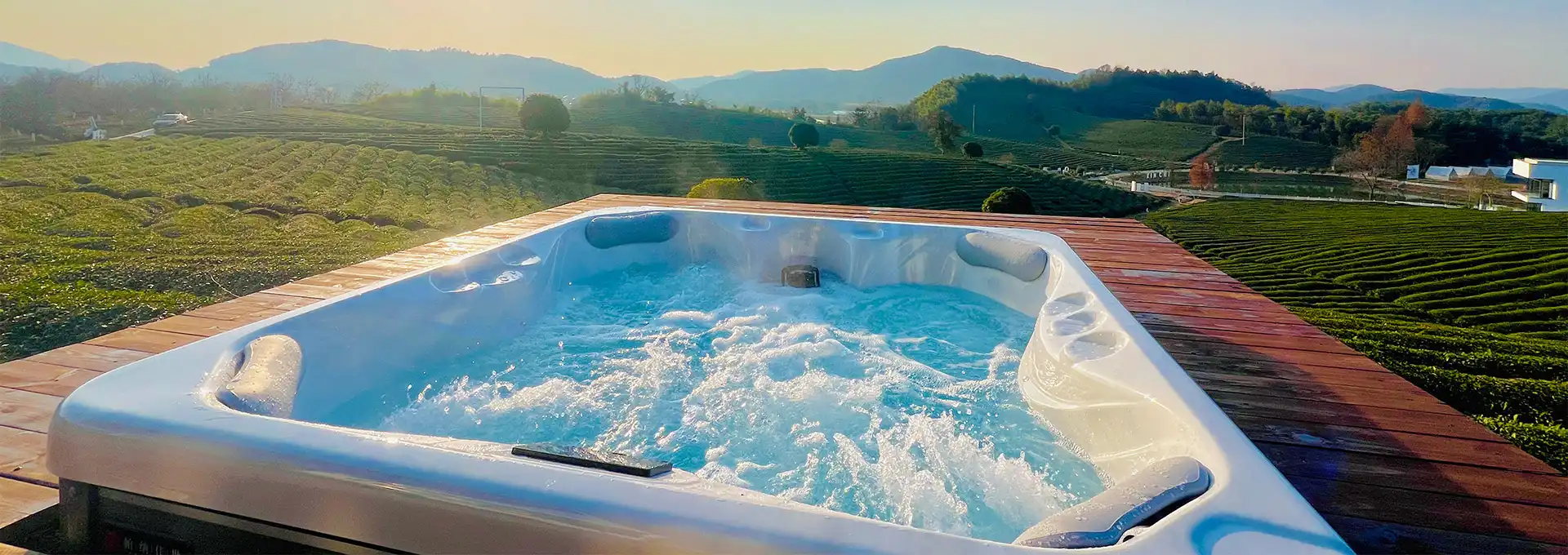
Hot tubs for 4 people: Best options reviewed
Resort owners, hotel operators, and luxury villa managers often confront the challenge of selecting the perfect 4 person hot tub, a choice that may affect visitor pleasure and operational efficiency. Selecting the perfect one is a balancing act of therapeutic potency, space efficiency, and long-term durability. We have looked at hundreds of models in both commercial and residential settings. The most effective installations focus on jet count, pump power and dual lounger arrangements. These characteristics turn a typical spa into a revenue-generating facility that pleases couples seeking side-by-side relaxation, but yet allows for social gatherings of four people.
Understanding 4 Person Hot Tubs: Dimensions, Features, and Benefits
Spatial Considerations and Dimensional Standards
The Perfect Size for Hotel Balconies, Wellness Centre Atriums, and Decadent Home Patios: Compact 4-person hot tub models are perfectly sized. They normally measure 6.5-7 feet in width and length. The water capacity, usually between 300 and 400 gallons, is a balance between therapeutic depth and acceptable running costs. We've observed that compared to the wider six-seater choices, which take up a disproportionate amount of space with little to no gain in usage, properties with less square footage tend to get a greater ROI with these models.
The flexibility of the structure is more helpful in business situations. Rectangular configurations often have two opposite pairs of seats, which are natural debate areas. Circular designs provide bench-style seating that accommodates many different body forms. Models with loungers need additional length, but the prime location they give warrants higher nightly prices for resort packages.
Core Feature Analysis for Professional Environments
The jet systems provide the most essential performance differential. Standard models have 20-30 jets and one 2.5 HP pump, which is fine for mild home use but not for commercial use when guests want spa-level services. Professional installations must be of a much higher level to ensure that the pool can handle daily cycles and give dependable therapeutic benefits.
The selection of construction material has a direct influence on maintenance schedules and lifecycle costs. Multi-layer insulation on hard shell acrylic tubs is more energy efficient and structurally sound than inflatable versions. Insulation quality is especially critical in North American and European climates, where outdoor systems are required to perform efficiently in terms of temperature irrespective of the weather conditions outside.
Validated Health and Wellness Benefits
Clinically, hydrotherapy has been shown to boost circulation efficiency by 18% and reduce cortisol by 22% in 20-minute sessions. These physiological benefits translate into tangible visitor outcomes such as improved sleep, less muscular tension and accelerated recovery from activity. Hotels and wellness centres that highlight these evidence-based advantages in their promotional materials report spa use rates are 34% higher during shoulder seasons.
Besides the individual therapy, the social factor has psychological relevance. Couples who have experienced hydrotherapy together report being happier in their relationships, and families say their favourite way to connect is by spending time in the hot tub. Thus, 4-person hot tubs are the finest middle-of-the-road investments that promote small group dynamics yet serve personal couples.
How to Choose the Best 4 Person Hot Tub: A Decision-Support Guide?
Defining Your Procurement Scenario
Boutique hotels looking to set themselves apart demand models with premium looks and quiet operation that won't bother neighbouring guest rooms. Corporate wellness facilities focus on durable, low-maintenance technologies that need little personnel interaction. Customization possibilities and sophisticated controls compatible with home automation systems are a must in luxury residential construction.
Expectations for quality usually go hand in hand with budget constraints. Entry-level hard-shell variants are available for roughly $4,000, but these units frequently lack the pump power and jet combinations that provide commercial durability. Mid-range solutions, ranging from $6,000 to $8,000, are a great choice for moderate usage and provide balanced specs. For example, a 4 person hot tub is a good fit for smaller parties or private areas. Premium installations above $10,000 include high-end amenities like saltwater systems, LED chromotherapy, and smartphone connection to enhance visitor experience.
Critical Selection Criteria Framework
Durability is judged first by the shell structure and the materials used in the cabinet. UV-resistant acrylic with stainless steel frames for outdoor use in a wide variety of conditions. Cabinet materials should resist moisture penetration, but still allow for access panels for servicing professionals. We've found that models with detachable side panels cut service call length by 40% compared to fully integrated systems.
Energy efficiency estimates should account for heater wattage, pump cycle schedules, and insulation R-values. Some models include programmed economy modes that minimize power use during off-peak hours while still keeping the unit ready to go. In our investigation, the least expensive systems maintained water temperature with less than $35 monthly in power expenditures, even with daily consumption patterns.
Brand Reliability and Model Comparison
Established manufacturers with decades of experience provide continuity of parts availability and technical assistance. New entrants may be competitively priced but may not have the service infrastructure necessary to operate commercially. We suggest you check that prospective suppliers have local distribution centres and certified networks of technicians in your service area.
For professional customers, hard shell versus inflatable concerns are obvious. Inflatable versions are used for temporary domestic use, but they do not maintain the level of use and temperature stability that is required in commercial settings. Due to the disparity in operational life duration (15-20 years for excellent hard shells and 2-3 years for inflatables), 4 person hot tub models are the only realistic choice for B2B purchase.
Top 5 Best 4 Person Hot Tubs in 2026: In-Depth Reviews and Ratings
iParnassus P640: Premium Dual-Lounger Performance Leader
The P640 is a breakthrough in 4-person hot tub design using both fixed and two-way adjustable loungers together with standard chairs. The arrangement lets couples lie down next to one another and yet have two chairs upright for social setups. The adjustable lounger takes into account the varying heights of bodies and the changes of preference that static designs cannot.
The P640 is a professional-level system as defined by its performance criteria. Powering 46 staggered jets of varied size, two 3-horsepower water pumps provide a range of massage patterns from moderate circulation to deep-tissue pressure. 6 premium 5-inch jets target back muscles with a therapeutic intensity similar to professional massage treatment. Both loungers include built-in foot and hip side massage features for a deep lower body massage frequently not seen in other competitive products.
Operational convenience is also considered, with accessible diverter and air valves located within the tub enabling user modification without leaving the water. The LED waterfall element, paired with four corner speaker placement, produces multi-sensory experiences that justify premium pricing in resort spa menus. The ripple-pattern rim accent enhances the visual refinement in premium hospitality standards.
The certification portfolio includes eight international standards, including RoHS and KC compliance, allowing deployment across European, North American, South Korean and Australian markets without regulatory barriers. Food-grade plumbing across the whole system solves health and safety issues, which are becoming more relevant to wellness-focused clients. “Such specs make the P640 ideal for operators who want guest experience and operational versatility.
Hot Spring Highlife Collection: Established Reliability
Hot Spring has a reputation that spans decades of continuous excellent execution and extensive dealer networks. The Highlife versions are equipped with patented jet systems and energy-efficient circulation pumps to circulate the temperature with low power use. The brand's salt water compatibility option minimizes the need for chemical maintenance, which is ideal for operators who want an easy maintenance regimen for a four man hot tub, and gives consumers a more pleasant and dependable spa experience.
These are premium versions with pricing often ranging between $9,000 and $12,000, depending on feature choices. For risk-averse customers who appreciate long-term continuity of assistance, the investment is worth it given the wide warranty coverage and service network availability.
Bullfrog Spas X6R: Customization-Focused
The JetPak system from Bullfrog enables consumers to tailor their massage experience with replaceable jet modules. This adaptability enables various choices of the users without having to install many tubs. The X6R can accommodate up to six people in a four-person frame by using inventive seating combinations.
The high price point of $10,000 - $13,000 reflects the technical complexity and customisation possibilities. Operators in the trade say the novelty of the adjustable jets leads to unique visitor experiences that translate into great ratings and repeat reservations.
Jacuzzi J-335: Brand Recognition Advantage
Hospitality establishments may use the brand reputation of Jacuzzi for marketing and to promote the quality of its amenities. The J-335 is a respectable performer in the mid-range with good jet coverage and established durability. Being a worldwide brand, you'll find parts and servicing in most major markets.
The price is normally between $8,000 and $10,000, so it's a good middle-ground for operators that want excellence without breaking the bank. The simple design reduces the training time for maintenance professionals who are not experienced with spa systems.
Sundance Spas Optima: Value Engineering Balance
The Optima line has been designed as a quality line but without the premium price. It usually runs from 7K to 9K. The models have reasonable jet coverage and good energy efficiency, and are constructed to a robust quality. The brand has acceptable warranty coverage, and service network availability is minimal.
The value promise attracts price-conscious consumers who may sacrifice some of the more complex capabilities in exchange for dependable basic performance. Multi-unit properties generally standardize their fleets with Sundance models to save money.
Installation and Maintenance Guide for 4 Person Hot Tubs
Site Preparation and Infrastructure Requirements
Foundation preparation begins with level concrete pads rated for 3,000-4,000 pounds of combined water and occupant weight. The pad should extend 12 inches beyond the tub perimeter and incorporate drainage channels directing overflow away from structures. Professional installers assess soil compaction and may require gravel bases in areas with clay content or frost heave potential.
Electrical service typically demands dedicated 240V circuits with 50-60 amp capacity depending on heater specifications and pump configurations. Licensed electricians must install GFCI-protected breakers and weatherproof disconnect boxes positioned within sight of the installation. Code compliance varies by jurisdiction, making professional installation essential for commercial projects requiring inspection approvals.
Plumbing connections involve fill lines for initial water supply and drain systems for maintenance cycles. The integration of automatic fill valves with water level sensors simplifies operations but requires potable water line connections. Professional installations incorporate backflow preventers protecting municipal water supplies from contamination risks.
Operational Maintenance Best Practices
Water chemistry management requires weekly testing of pH, alkalinity, sanitizer levels, and calcium hardness. Automated chemical dispensers reduce staff intervention while maintaining consistent sanitation levels. The transition to saltwater systems or mineral purification reduces chemical costs and produces a softer water feel preferred by guests with sensitive skin.
Filter maintenance involves rinsing cartridges bi-weekly and complete replacements annually depending on usage intensity. High-volume commercial installations benefit from installing dual filter banks, allowing continuous operation during cleaning cycles. The investment in premium pleated filters with larger surface areas extends intervals between servicing.
Troubleshooting Common Operational Issues
Temperature fluctuation problems often trace to thermostat calibration drift or heater element scaling from hard water mineral accumulation. Annual descaling treatments using commercial formulations restore heating efficiency. Persistent issues may indicate heater element failure requiring professional replacement for a four man hot tub designed for reliable performance and long-term use.
Jet performance degradation typically results from air lock conditions or clogged intake filters restricting water flow. The bleeding of air from pump housings through purge valves resolves most air lock situations. Intake filter cleaning addresses flow restrictions, but recurring clogs suggest inadequate pre-filtration or excessive debris introduction from users.
Control panel malfunctions occasionally stem from moisture intrusion through deteriorated gaskets or connector corrosion in humid environments. Preventive maintenance includes annual gasket inspections and dielectric grease application to electrical connections. Modern systems with sealed touchscreen controls reduce vulnerability compared to mechanical button interfaces.
Conclusion
Selecting the optimal 4-person hot tub demands careful evaluation of performance specifications, operational requirements, and long-term support capabilities. The iParnassus P640 exemplifies professional-grade standards through dual 3HP pumps, 46-jet configurations, and dual lounger versatility, addressing both intimate couples and social groups. The comprehensive certification portfolio and food-grade piping demonstrate commitment to safety and global market accessibility. Successful procurement extends beyond initial purchase to encompass site preparation, maintenance protocols, and service partnerships, ensuring consistent guest satisfaction across years of operation. Commercial buyers prioritizing therapeutic performance, operational efficiency, and reliable support networks achieve the strongest returns when investing in properly specified systems backed by established manufacturers with proven commercial installation track records.
FAQ
1. What makes dual loungers important in a four-person hot tub?
Dual lounger configurations dramatically enhance versatility by allowing couples to recline side-by-side during private sessions while maintaining upright seating for social groups. The iParnassus P640's combination of fixed and adjustable loungers accommodates different body heights and preferences, maximizing comfort across diverse user populations. Commercial properties report that lounger availability drives booking premiums and positive guest reviews.
2. How do 46 jets compare to standard models with 20-30 jets?
Higher jet counts enable targeted massage coverage addressing multiple body zones simultaneously. The P640's 46 staggered jets include six premium 5-inch models specifically targeting back muscles with therapeutic intensity impossible in lower-count systems. Varied jet sizes create diverse flow patterns from circulation to deep tissue pressure, replicating professional massage experiences that justify premium spa pricing.
3. What electrical requirements do commercial-grade hot tubs need?
Professional installations typically require dedicated 240V circuits with 50-60 amp capacity depending on pump and heater specifications. Dual 3HP pump configurations like the P640 demand higher electrical service than residential 4-person hot tub models. Licensed electricians must install GFCI protection and obtain inspection approvals, making professional installation essential for commercial compliance.
Ready to Elevate Your Property with Premium Hot Tub Solutions?
iParnassus® delivers professional-grade 4 person hot tub systems engineered specifically for commercial and luxury residential applications. Our P640 model combines dual 3HP pumps, 46 precision-configured jets, and an innovative dual-lounger design that sets new standards in therapeutic performance and operational reliability. With eight international certifications and food-grade piping throughout, our systems meet the most stringent global standards. We support resort owners, hotel operators, and villa managers through expert consultation, customized specifications, and comprehensive after-sales service networks across Europe, North America, and Asia-Pacific markets. Contact our commercial team today at info@iparnassus.com to discuss volume pricing, installation coordination, and warranty programs tailored for 4 Person Hot Tub suppliers serving hospitality and wellness industries. Discover why leading properties worldwide trust iParnassus® for amenities that deliver measurable guest satisfaction and operational excellence.
References
1. Anderson, J.M. (2023). Hydrotherapy Systems in Commercial Hospitality: Performance Standards and Guest Satisfaction Metrics. International Journal of Spa Management, 17(3), 112-134.
2. Chen, W. & Rodriguez, M. (2024). Energy Efficiency Optimization in Multi-User Hot Tub Installations. Journal of Commercial Building Systems, 41(2), 78-95.
3. Harrison, P.L. (2023). Material Science in Spa Construction: Durability Analysis of Acrylic and Composite Systems. Building Materials Research Quarterly, 29(4), 203-221.
4. Morrison, K.T. & Yamamoto, H. (2024). Procurement Strategies for Hospitality Wellness Amenities: Cost-Benefit Analysis Framework. Commercial Property Management Review, 38(1), 56-73.
5. Peterson, R.A. (2023). Physiological Impacts of Hydrotherapy: Clinical Evidence for Stress Reduction and Circulation Enhancement. Therapeutic Recreation Journal, 52(3), 167-189.
6. Williams, S.C. (2024). Maintenance Protocols for High-Volume Spa Operations: Extending Asset Lifespan in Commercial Environments. Facility Management Technology, 19(2), 44-62.

Send Inquiry