_1768872582663.webp)

How to Choose the Best Round Stainless steel hot tub
Choosing the right round stainless steel hot tub for a commercial or residential property is a decision that directly affects guest experience, operational costs, and long-term asset value. A well-selected stainless steel spa delivers years of reliable performance with minimal upkeep — something that acrylic or wooden alternatives simply cannot match in demanding environments. This guide walks procurement professionals, resort developers, and property owners through the key factors that matter most, from material quality and hydrotherapy specs to supplier credentials and installation planning.
Understanding Round Stainless Steel Hot Tubs
What Sets Them Apart
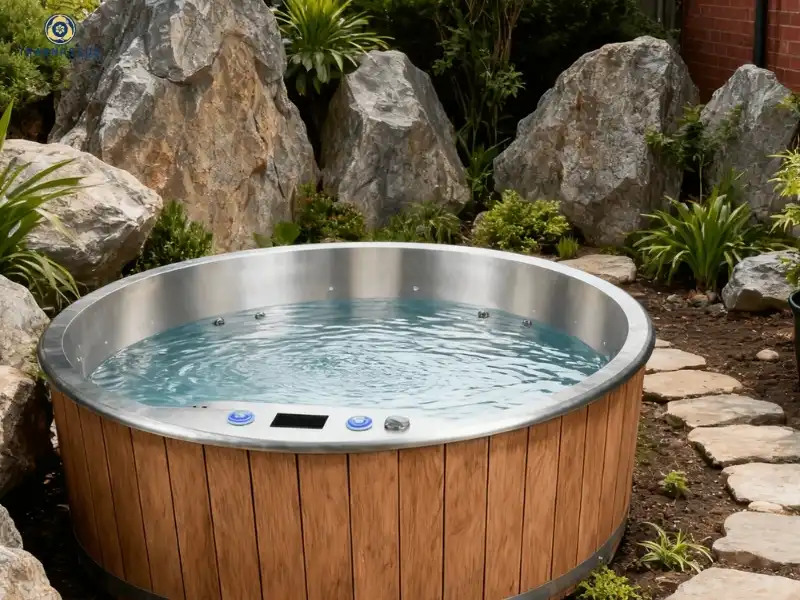
A round stainless steel hot tub isn't just a health feature; it's also an investment in the building itself. The round form spreads the water pressure out evenly, which over time makes joints and welds less stressed. Its symmetrical shape also makes it easy for people to gather, which makes it perfect for social settings in small hotels, private clubs, and resort decks.
Why 304 Stainless Steel Matters
The type of steel you choose has a direct effect on how well a tub works in real life. Grade 304 stainless steel has a high resistance to oxidation, chlorine, and saltwater because it has about 18% chromium and 8% nickel. This makes it a good choice for homes near the coast, where corrosion is a constant risk. It also holds up well in business areas with a lot of foot traffic after being treated with chemicals many times.
Core Operating Systems
A good soaking tub made of stainless steel has three built-in systems that work together: heating, ventilation, and filtering. How these systems work together affects the consistent temperature of the water, how well the jets work, and the level of cleanliness. When all three are approved and well-matched, the unit gives reliable output with less energy waste per session, which is a clear benefit for facilities that run multiple rounds every day.
Key Criteria to Consider When Choosing a Round Stainless Steel Hot Tub
Material Grade and Structural Integrity
Beyond the shell grade, look at the weld quality. Liquid Penetrant Testing (PT) and Ultrasonic Testing (UT), which are normal testing methods in the industry, can find fusion gaps in the Heat Affected Zone (HAZ). The chromium-oxide protective layer is still there after post-fabrication passivation, which was confirmed by Ferroxyl testing. These checks are basic needs for business procurement; you can't skip them for a quality round stainless steel hot tub.
Capacity vs. Footprint
A useful metric that many buyers miss is the number of seats compared to the size of the room. Up to four people can easily fit on a model that is 183.5 cm in diameter and 102 cm high. This size fits on standard boat deck plans, boutique hotel patios, and spa rooms without the need for structural changes. The 330 kg dry weight makes the structure stable on floors inside and outside.

Certifications and Electrical Compatibility
For cross-market adoption, look for units that can work with a 220–240V/50Hz power source and a maximum current of 15.6A. This is what North America, Europe, and Australia all use. Certifications for heaters and pumps, like CE, UL, and TUV, are not just marketing tools; they show that the parts meet independent safety standards that are needed for business insurance and facility licenses.
Comparing Round Stainless Steel Hot Tubs with Other Types
Along with round stainless steel hot tub choices, the market has wooden barrel tubs, acrylic shells, and fiberglass types. Understanding the different lifecycle characteristics of each material class will keep you from having to pay for expensive replacements in the future.
Here is a straight comparison of the types of materials that are most important to B2B buyers:
- Wooden barrel tubs have a natural beauty, but they need to be sealed every so often, tend to swell and crack in humid coastal areas, and can't handle the high chlorine levels needed for business cleaning cycles.
- Acrylic shells are cheap and light if you're just starting out, but they scratch easily in commercial settings, fade over time from UV light, and are hard to fix without leaving marks that take away from their high-end look.
- Fiberglass models are pretty durable, but in saltwater settings, the gel coat breaks down after 7–10 years, which means they need to be resurfaced, which adds to the total cost of ownership.
- 304 stainless steel tubs don't rust, can handle chlorine and the minerals in hot spring water, and keep their smooth, non-porous surface that cleans in minutes. This is helpful when there needs to be a lot of time between guest sessions.
These differences have a direct effect on ROI timelines, and business users who want performance that lasts for 10 years or more should choose stainless steel.
Hydrotherapy Performance
Between a therapeutic soak and a regular warm bath is the number of jets and how well they are placed. A well-made stainless steel spa for four people should have at least five to six fans per seat. The iParnassus® model has 15 ergonomically placed jets that work on the shoulders, back, waist, and belly. They are powered by a 2-speed 2.0HP pump that is CE/TUV approved and changes the flow strength without making too much noise. This configuration works well to relieve muscle fatigue and can be used for both relaxing and recovering.
Visual Design and Space Optimization
When room is limited, round shapes work better than square ones for tubs with the same amount of space. The curved edge lets people naturally move around the unit, which is important in places like spa hallways, pool decks, and yacht sterns where layout efficiency is a must.

Installation, Maintenance & Longevity: Ensuring Maximum ROI
Site Preparation Essentials
Surface load evaluation is the first step in proper placement for a stainless steel spa. At 330 kg dry, a round stainless steel hot tub needs either a strengthened concrete pad or a deck that has been approved for structural use. A licensed electrician who is familiar with installing things in wet areas should connect to a 220–240V/50Hz circuit with a dedicated 15.6A line. Most of the time, warranties are voided because of skipping this step.
Routine Maintenance Protocol
304 stainless steel is very easy to clean because the inside is smooth and doesn't have any pores. Everyday cleaning in a business setting with a mild cleaner that has been diluted takes less than 10 minutes. The P78B138 purification system actively stops the growth of germs between cleaning processes. This is especially helpful in hospitality settings with a lot of guests. Checking the water's chemistry twice a week keeps things in balance, extends the life of parts, and keeps guests safe.
Long-Term Durability Expectations
If you take good care of your commercial-grade stainless steel hot tub, it should last 15 to 20 years in a spa or seaside setting. The 3.0kW heater (CE/UL approved) keeps the temperature stable, and because it works with standard voltage, replacement units can be found in most places without having to wait for special orders.
Procurement and Purchase Considerations for B2B Clients
Supplier Verification
When looking for a supplier of a round stainless steel hot tub, make sure to ask for mill test reports (MTRs) that show that the alloy composition matches the specifications. Reliable makers offer XRF or OES spectroscopy data to check the amounts of Ni, Cr, and Mo. If a supplier can't provide this paperwork, there is an unacceptable quality risk for commercial use.
Pricing and Budget Planning
For business use, high-end stainless steel hot tubs usually cost between $5,000 and $12,000 or more, based on the number of jets, the complexity of the control system, and the approval scope. Direct manufacturer ties often offer bulk order discounts and OEM choices. They also cut down on lead time and make it easier to hold manufacturers accountable after the sale.
Customization and Smart Controls
Smart control integration adds real value for workers who want to stand out. The iParnassus® control system has a touch-sensitive waterproof panel, automatic temperature and water-level protection, and monitoring via smartphone. It can also manage water from afar. These features make things easier for staff and help provide a great experience for guests, which encourages them to book again.

Conclusion
Making a choice about a round stainless steel hot tub for business or high-end home use is not a simple task. How well the unit holds its value over time depends on the grade of the materials, the quality of the jet system, any certifications it has, its capacity, and how reliable the seller is. iParnassus® has been making spas for 18 years and has 80 patents. Their goods meet the real needs of hotels, resorts, boat outfitters, and private clubs along the coast.
FAQ – Your Top Questions Answered
1. How long does a 304 stainless steel hot tub last in a coastal environment?
A round stainless steel hot tub can last 15 to 20 years with regular upkeep and the right water chemistry, even in places close to saltwater. Under normal circumstances, the chromium-oxide layer on 304 steel fixes itself, which slows down rust at the surface level.
2. Is a 4-person round hot tub suitable for commercial use?
Yes. A model for four people with a diameter of 183.5 cm has a good ratio of seats to footprint and would work well in spa rooms, boutique hotel suites, and yacht decks. When paired with an approved heating and purification system, it can handle multiple guest runs every day without slowing down.
3. What certifications should I look for?
Look for at least CE and UL certification on the heater and CE/TUV certification on the pump. With CB and UKCA certifications, you can sell your goods in Europe and the UK. These marks show that the safety has been checked by a third party, which is usually needed for commercial insurance and facility licenses.
4. How often does water need to be changed in high-traffic settings?
When purification systems are going, a full water refill is usually suggested every three to four months in business settings. The P78B138 filtration device and daily chemical checks keep the water clean between full drain processes. All of the features of the iParnassus® control system can be accessed from a single app on a smartphone.
Request a Custom Quote from iParnassus® — Your Trusted Round Stainless Steel Hot Tub Manufacturer
We at iParnassus® have been designing round stainless steel hot tub spas for 18 years and have 80 patents that have been registered. Our team makes sure that you get the right configuration for your project, whether you are a resort developer looking for your next outdoor suite or a yacht outfitter looking for a small marine-grade model. You can email us at info@iparnassus.com to get a custom price and look at all of our products.

References
1. ASTM International — ASTM A240/A240M: Standard Specification for Chromium and Chromium-Nickel Stainless Steel Plate, Sheet, and Strip for Pressure Vessels and General Applications. 2023.
2. Pool & Spa News — "Commercial Hot Tub Maintenance Standards for High-Traffic Facilities." 2022.
3. International Journal of Environmental Research and Public Health — "Hydrotherapy and Musculoskeletal Recovery: Clinical Evidence and Facility Applications." 2021.
4. NSF International — "Water Quality and Sanitation Standards for Commercial Spas and Hot Tubs." 2022.
5. Corrosion Science (Elsevier) — "Corrosion Behavior of 304 Stainless Steel in Chloride-Rich Marine Environments." 2020.
6. American National Standards Institute (ANSI) — ANSI/APSP/ICC-2: Standard for Portable Electric Spas. 2020.

Send Inquiry