_1768872582663.webp)
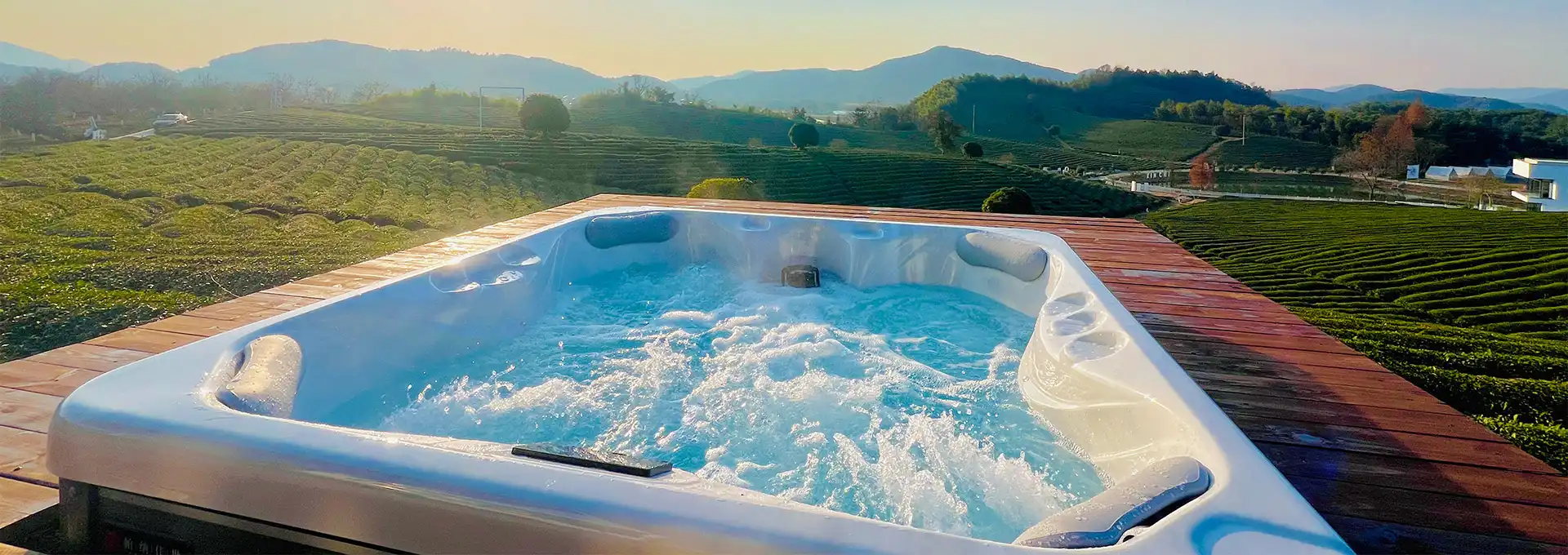
How to Maintain an Outdoor Swimming Spa Year-Round
Keeping an outdoor swimming spa in top condition throughout all four seasons requires a consistent schedule, the right products, and a clear understanding of your equipment. Whether you manage a hotel, a private estate, or a resort, proper care directly affects water safety, equipment lifespan, and guest satisfaction. From weekly water testing to winterizing protocols, the maintenance steps you take today determine how well your spa performs next year. This guide walks through everything procurement professionals and facility operators need to know to protect their investment year-round.
Understanding Common Maintenance Challenges for Outdoor Swimming Spas
When compared to swim spas that are located inside, those that are located outdoors have a different pressure configuration. The water chemistry and the mechanical pieces underneath the shell are subjected to stress from a variety of sources, including sunlight, rain, wind, and temperature fluctuations.
Environmental Exposure and UV Damage
Direct ultraviolet radiation has the ability to deteriorate glass surfaces and cover materials over time. According to the Pool & Hot Tub Alliance, one of the top three issues that companies that operate spas in office settings complain about is surface damage caused by ultraviolet radiation. Covers that have coatings that protect against ultraviolet light and surface conditioning on a regular basis bring this process to a halt.
Debris Accumulation and Filtration Load
The water in open settings is constantly being contaminated with debris such as leaves, insects, pollen, and dust. There is a decrease in circulation and an increase in the quantity of bacteria in the air when filter cycles are unable to keep up with the demand. Water flow remains constant in all jet zones so long as filters are inspected and cleaned once per week and refills are changed every three to four months in high-traffic units. This ensures that the water flow is consistent.
Chemical Imbalance from Seasonal Changes
The way that chlorine or bromine react in water may be altered by temperature shifts, such as those that occur from summer to winter. While individuals tend to use more hand sanitiser when the temperature is high, the effectiveness of chemicals decreases when the temperature is low. Testing for pH and total alkalinity, and doing so at least twice a week, provides workers with the knowledge they need to make adjustments to their dosages before any issues arise.

Seasonal Maintenance Strategies for Year-Round Spa Care
Unless the maintenance plan is modified to account for the changing of the seasons, a spa that functions normally in July may have significant problems by October. There are certain tasks that need to be completed every three months.
Spring and Summer: High-Usage Preparation
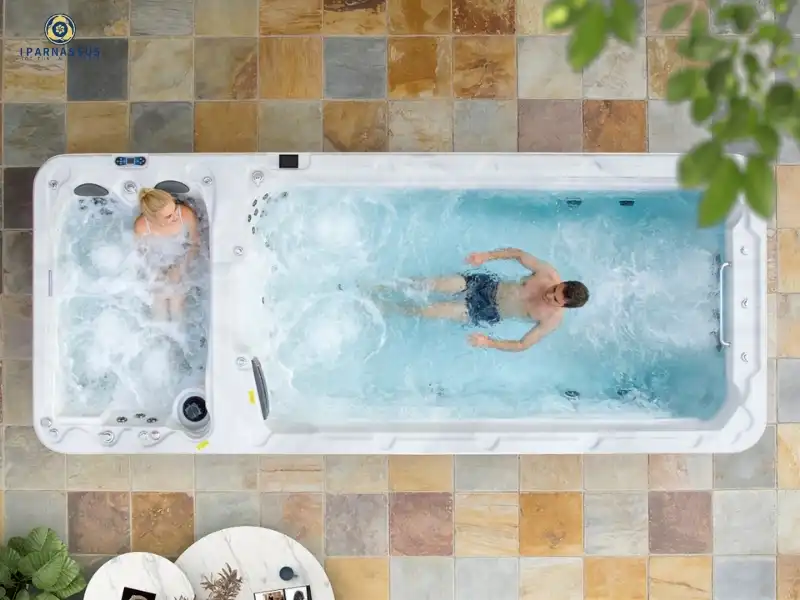
Examine each component that may have been subjected to stress over the course of the winter in the spring. Make sure that the heating element is operational, that all of the pump seals are in good condition, that the filter box is clean, and that the jet flow is the same in both zones. In models with two zones, such as the iParnassus® 5U70, which has 37 swim jets and 39 massage jets distributed over two zones that are individually regulated, ensuring that each zone warms and flows appropriately before the peak season prevents breakdowns from occurring in the midst of the season. Instead of checking the hand sanitiser once a week, you should look at it three times a week throughout the summer.
Fall: Transition and Preventive Inspection
As the temperature drops, flush the plumbing lines, check all the O-rings and gaskets, and look at the insulation panels around the cabinet of your outdoor swimming spa. Also, now is the time to check the locks and seals on your cover. If they are broken, it will cost a lot more to heat your home during the cooler months.
Winter: Freeze Protection and Energy Management
When the temperature drops below freezing, the most essential thing to do is to prevent the plumbing from being damaged by the ice. Insulation in contemporary swim spas helps to maintain the water's temperature, so you shouldn't empty the whole thing. Instead, ensure that the water continues to circulate through the unit. Before the first freeze, make sure that all of the fittings are plugged and that all of the lines have been blown out if you are going to have to empty the unit on your own.

Best Practices for Cleaning, Water Treatment, and Equipment Care
Having access to clean water and having equipment that is properly maintained are not two different goals; rather, they are interdependent. Ignoring one will always have an effect on the other.
Surface and Shell Cleaning
Every two weeks, use a spa cleaner that does not include abrasives to clean the surfaces of the acrylic shell. Attention should be paid in particular to the waterline, since this is the area where calcium and organic debris collect the quickest. When it comes to huge commercial spas like the 5U70, which measures 572 × 225 × 128 cm, it is imperative to prolong cleaning sessions to include the whole circumference. This is not a choice but a necessity.
Water Chemistry Management
The following is a list of the primary parameters that need to be monitored, as well as the goal ranges that should be maintained:
- When the pH falls outside of this range, the efficiency of the sanitiser decreases, and surfaces deteriorate more quickly.
- The total alkalinity ranges from 80 to 120 parts per million and functions as a buffer to restore pH stability.
- A range of 3–5 parts per million (ppm) for chlorine and 4–6 ppm for bromine is considered acceptable in business environments.
- Having a calcium hardness of between 200 and 400 parts per million helps to avoid corrosion and scale accumulation on pumps and jets.
Due to the fact that these parameters interact with one another, modifying any one of them always necessitates rechecking the others. When it comes to commercial operations, automated dosing systems significantly reduce the amount of physical labour required.
Equipment Inspection and Pump Care
Additionally, the iParnassus® 5U70 is responsible for the operation of four water pumps with a capacity of three horsepower in the swim zone alone. Three of these pumps are devoted to swim jet propulsion, while the fourth pump is dedicated to the leisure massage area. Inspect the impellers and seals of the pump once every three months. As early bearing wear is typically audible before it becomes a mechanical failure, it is important to pay attention to any changes in motor tone that occur while the machine is in operation. Record each inspection in order to maintain a record of the service history.
Energy Efficiency and Cost-Effective Maintenance Approaches
There are real energy costs that come with running a big swim spa all the time. Smart maintenance techniques cut those costs right away without hurting efficiency.
Insulation and Cover Management
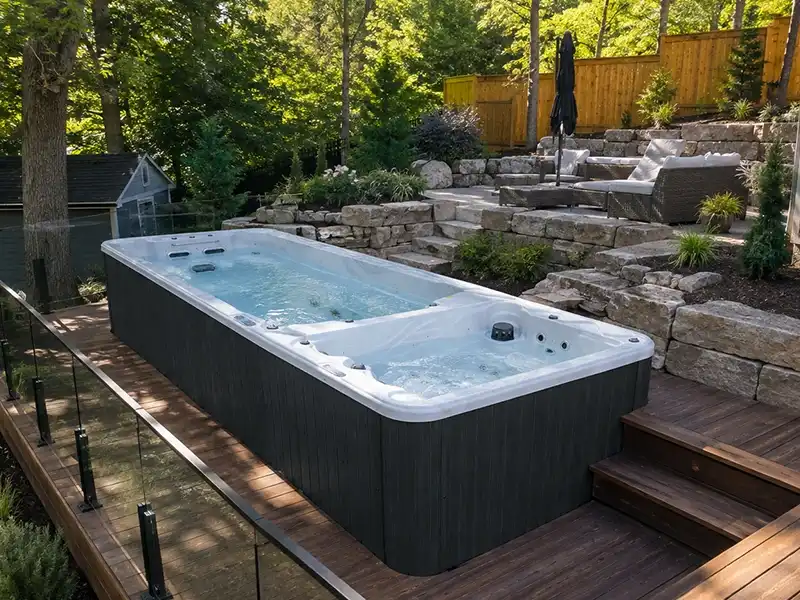
One of the most cost-effective tools you can use for an outdoor swimming spa is good insulation. A closet with good insulation keeps the heat inside the spa, so the heater doesn't have to work overtime to make up for the constant loss. The reinforced cabinet design of the 5U70 helps keep heat in well. According to the Association of Pool & Spa Professionals (APSP), a high-density foam cover that fits tightly also cuts down on heat loss overnight and when the pool is not being used. This can save up to 40% on heating costs.
Programmable Heating Schedules
Instead of keeping the temperature at its highest level 24 hours a day, set the heating system to run at lower levels when the house is not being used. The iParnassus® smart control system lets you schedule things from your phone and check the water temperature and system state in real time. This takes the guessing out of managing energy and makes sure that operating costs are always known.
Pump and Jet Efficiency Monitoring
When filters are dirty, pumps have to work harder, which uses more energy and speeds up wear. One of the easiest and most effective ways to save energy is to keep the filters clean. Record how many hours the pump has been running and plan preventive repairs so that efficiency losses caused by wear don't build up.
Selecting the Right Maintenance Solutions and Suppliers for Your Business Needs
Maintenance quality depends heavily on the support structure behind the equipment. When evaluating outdoor swimming spa suppliers and service partners, the right fit matters as much as the right product.
Warranty Coverage and Manufacturer Support
Look for manufacturers that back their products with documented warranties covering both structural components and mechanical systems. iParnassus® holds over 80 patents as of 2026 and brings 18 years of spa manufacturing experience to its product engineering. That depth of technical knowledge supports both product durability and long-term service reliability.
Service Contract Structures
Commercial operators benefit most from structured service agreements that include scheduled inspections, guaranteed response times, and discounted parts pricing. When sourcing through a trusted outdoor swimming spa manufacturer, confirm that the service team has hands-on knowledge of the specific models in your facility. Generic spa technicians unfamiliar with dual-zone systems may misdiagnose issues that a brand-trained technician resolves quickly.
Customized Maintenance Plans for Commercial Applications
Hotels, resorts, and wellness centers each have different usage patterns and regulatory requirements. A maintenance plan built for a private villa differs from one designed for a 200-room resort. Suppliers with B2B experience can structure maintenance schedules around occupancy cycles, local health codes, and equipment-specific service intervals.
Conclusion
Maintaining an outdoor swimming spa all year isn't a single job; it's a system of regular care, seasonal adjustments, and professional help. Commercial operators can extend the life of their equipment and cut down on unexpected costs by making water chemistry, mechanical inspection, energy management, and supplier selection all important issues that are linked. The iParnassus® 5U70's two-zone design, four-pump swim configuration, and smart control integration make it a solid base for site management. When you pair that with a regular repair schedule, it will keep working at full power for years.
Frequently Asked Questions
1. How often should I test the water in a commercial swim spa?
Test pH, alkalinity, and sanitizer levels at least twice per week under normal usage. During peak summer months or high-occupancy periods, increase testing to three times weekly. Automated monitoring systems can supplement manual testing but should not replace it entirely, as sensor calibration drift is common.
2. What is the best way to prevent freeze damage in winter?
Keep the water circulating at all times rather than shutting the unit down. Modern insulated swim spas are designed to retain heat efficiently even in cold climates. If a full drain is necessary, blow out all plumbing lines and plug every fitting before the first freeze. Never leave standing water in unpowered pipes.
3. Does maintenance frequency affect my manufacturer warranty?
Yes. Most manufacturers require documented proof of routine maintenance as a condition for honoring warranty claims. Keep written records of water test results, chemical additions, filter cleanings, and equipment inspections. These records protect your warranty coverage and support faster service resolutions.
4. How long do swim spa pumps typically last?
With proper maintenance, quality swim spa pumps last between 8 and 12 years. Factors that shorten pump life include running the unit with dirty filters, chemical imbalances that corrode seals, and infrequent lubrication of mechanical components.
Partner with iParnassus® for Reliable Swim Spa Support
Over eighty patents and 18 years of experience making spas back up the engineering behind iParnassus®. All of our outdoor swimming spas for sale, like the high-performance 5U70, are made to last in business settings. We help business-to-business clients by giving them technical advice, genuine parts, and quick service after the sale. Get in touch with our team to talk about the needs of your facility and find the best solution for your business. You can email us at info@iparnassus.com.

References
1. Association of Pool & Spa Professionals (APSP). 2022 Industry Standards for Residential and Commercial Spa Operation and Maintenance. APSP Publications, 2022.
2. Pool & Hot Tub Alliance. State of the Industry Report: Spa and Hot Tub Market Trends. PHTA, 2023.
3. National Swimming Pool Foundation. Aquatic Facility Operator Manual, 4th Edition. NSPF, 2021.
4. World Aquatic Health Conference. Commercial Hydrotherapy Equipment Maintenance Guidelines. WAHC Proceedings, 2022.
5. American Chemistry Council. Water Treatment Best Practices for Recreational Water Facilities. ACC, 2020.
6. Energy Information Administration (EIA). Residential and Commercial Water Heating Energy Consumption Patterns. U.S. Department of Energy, 2023.

Send Inquiry