_1768872582663.webp)
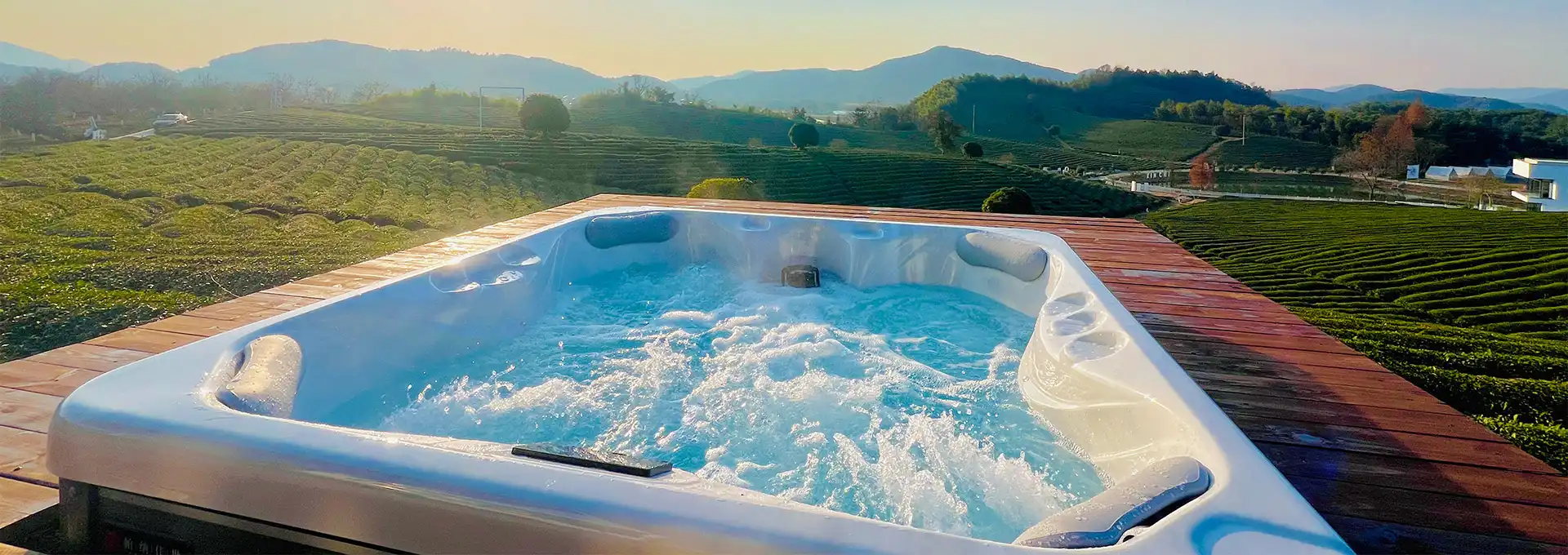
Relax & Retreat Hot Tubs Maintenance Tips for New Owners
Owning a set of relax & retreat hot tubs is a serious investment — one that pays dividends in guest satisfaction, brand reputation, and long-term operational efficiency. Whether you manage a luxury resort, a boutique villa development, or a vacation rental portfolio, keeping your spa units in peak condition is non-negotiable. Neglected maintenance leads to water quality failures, premature equipment wear, and costly downtime. This guide walks you through everything you need to know, from daily water chemistry to seasonal winterization, so your investment continues to perform at the highest level.
Why Hot Tub Maintenance Matters More in Commercial Settings?
In household settings, a tub that isn't well taken care of is a pain. It's a problem for a business property. A 2019 study in the Journal of Environmental Health confirmed that poorly cleaned hydrotherapy pools are a major source of [Pseudomonas aeruginosa] skin infections, which is the germ that causes hot tub folliculitis. One bad hygiene incident can lead to bad reviews and extra scrutiny from regulators for hotel developers and resort operators.
Putting off repair not only puts guests at risk, but it also speeds up the breakdown of parts. Every circuit is constantly put under mechanical stress by a four-pump system that moves 6,800 liters of water. Biofilm builds up inside jet nozzles and pump housings when filter rounds are skipped or pH balance is not taken into account. This lowers flow efficiency and puts stress on motors. Because of this, your equipment will last less long, and your energy bills will go up, which will directly lower your total cost of ownership.
Essential Maintenance Tasks for Your Spa Units
To keep commercial-grade hot tubs in good shape, you need to follow set schedules every day, every week, and every three months. These are the main repair chores that every business-to-business service provider should include in their service schedule:
- Daily water chemistry checks: Measure free chlorine or bromine levels, pH, and total alkalinity. Water chemistry in a high-traffic spa can shift within hours, particularly in warm climates.
- Weekly filter inspection and rinse: Remove cartridge filters and rinse with low-pressure water to dislodge debris. In high-occupancy settings, increase this cadence to twice weekly. A clogged filter forces pumps to work harder, raising energy consumption measurably.
- Monthly deep-clean cycle: Soak filter cartridges in a diluted chemical cleaner for a minimum of eight hours, then rinse thoroughly before reinstalling. Inspect jet nozzles for scale buildup and clear blockages manually.
- Quarterly pump and seal inspection: For relax & retreat hot tubs, check all four pumps for unusual vibration, irregular noise, or visible seal degradation. Addressing a minor seal weep early costs a fraction of a full pump replacement.
In order for a club to run smoothly, these jobs must be done. In a property with a lot of traffic, skipping even one cycle can quickly turn into a more serious system fault.
Seasonal planning makes things even more difficult for people who own property in Northern Europe and North America. Make sure that all of the water lines are drained and insulated before winter, and that the spa cover keeps its thermal seal. In hot places like the Middle East and Australia, shell surfaces and cover materials can break down due to UV light, so they need to be inspected every six months.
Water Temperature and Safety Protocols
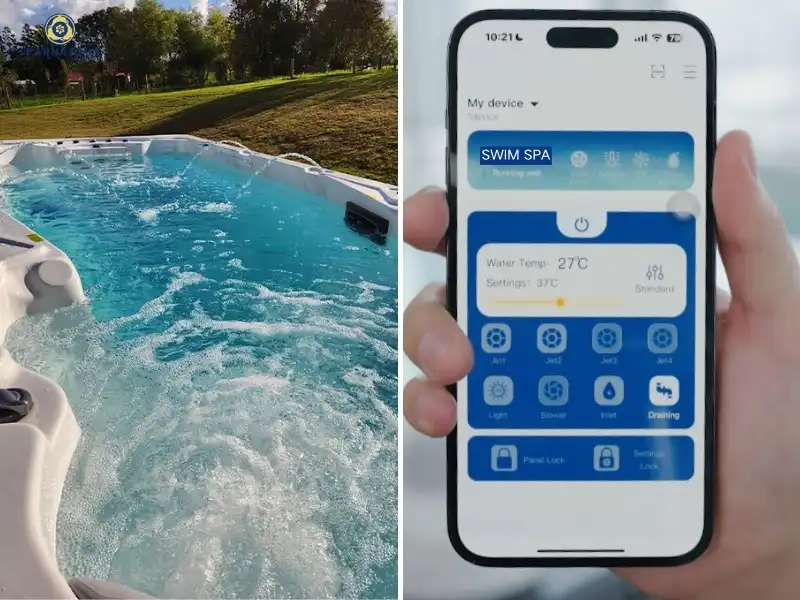
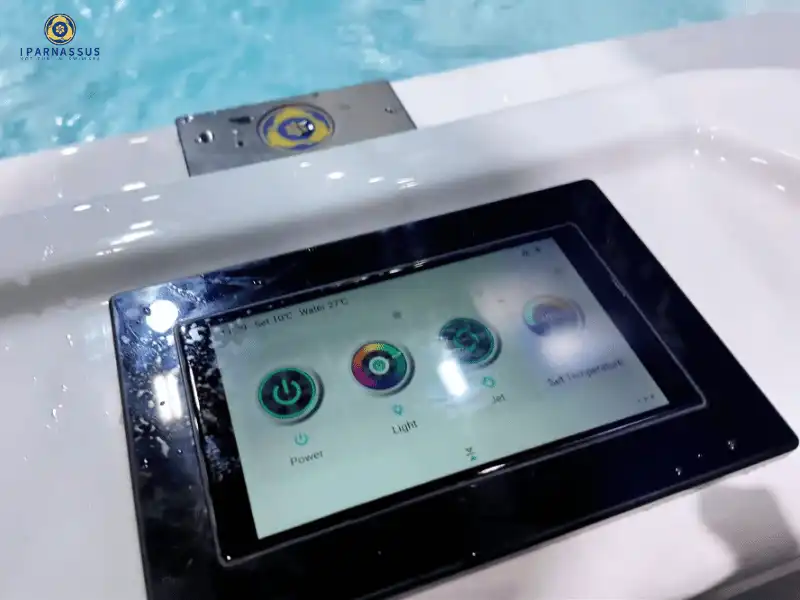
The U.S. Consumer Product Safety Commission says that for public and semi-public hydrotherapy installations, the water should not be warmer than 104°F. Controlling the temperature precisely not only keeps people safe, especially guests who are heart- or blood-pressure-sensitive, but it also saves money on heating costs. The iParnassus® smart control system lets you check the temperature in real time on your smartphone, and the software automatically protects against high and low temperatures.
Optimizing Energy Efficiency at Scale
One of the highest costs of running a spa with multiple units is the energy used. Scheduling filter processes for times when energy rates are lower, always using insulated covers, and keeping idle temperatures two to three degrees lower than active use temperatures can save a lot of money across a group of units.
Troubleshooting Common Operational Issues
Even with careful repair, business spas have problems with how they work. Finding these problems early keeps small problems from getting worse and needing expensive repairs or an unplanned closure.
Inconsistent heating is often caused by a temperature sensor that is dirty or a screen that is partly blocked, preventing flow to the heater. Check to see if the filter is clean before thinking the heater is broken.
When a pump makes strange noises, like grinding or cavitating sounds, it's usually because air is getting into the pipes or a bearing is almost worn out. It's easy to remove air from the system at home, but a qualified technician is needed to repair the bearings.
If the water is cloudy or foamy, it means that there is either an imbalance of chemicals or a high organic load from bathers using the water a lot. Use a non-chlorine oxidizer to shock-treat the water, check the chemistry again, and think about cutting down on the time between draining and refilling.
When problems can't be fixed by the company itself, operators of relax & retreat hot tubs should call in a qualified service provider. If you try to fix sealed pump assemblies or control boards without permission, you could void the warranty. No commercial operator should take that chance.
When faults exceed in-house diagnostic capacity, escalate to an authorized service provider. Attempting unauthorized repairs on sealed pump assemblies or control boards can void warranty coverage — a risk no commercial operator should accept.
Leveraging Warranty Coverage and Authorized Support
Maintenance is important, but it's also important to know what your warranty covers. iParnassus® stands behind its products with full warranties that cover both the integrity of the shell and its parts, as long as the maintenance instructions have been followed. Warranty paperwork should be kept with each unit's repair log and looked over by any third-party expert who works on the equipment.
Accessing Certified Service Networks
Authorized dealer networks and qualified service providers have troubleshooting tools that are specifically made for iParnassus® control systems. If you use technicians who aren't qualified, you could get a wrong report or replace the wrong part. Setting up a service-level agreement with an approved regional dealer is a good way for business-to-business owners who are in charge of multiple sites to make sure they can get parts and respond quickly.
Digital Resources and Staff Training
iParnassus® offers full technical manuals and online training classes that can be accessed through official channels. By teaching your on-site maintenance team basic diagnostics like how to change filters, dose chemicals, and find their way around a control panel, you can do fewer routine tasks that need to be done by outside technicians and build up their skills over time.
Best Practices for Procurement Managers
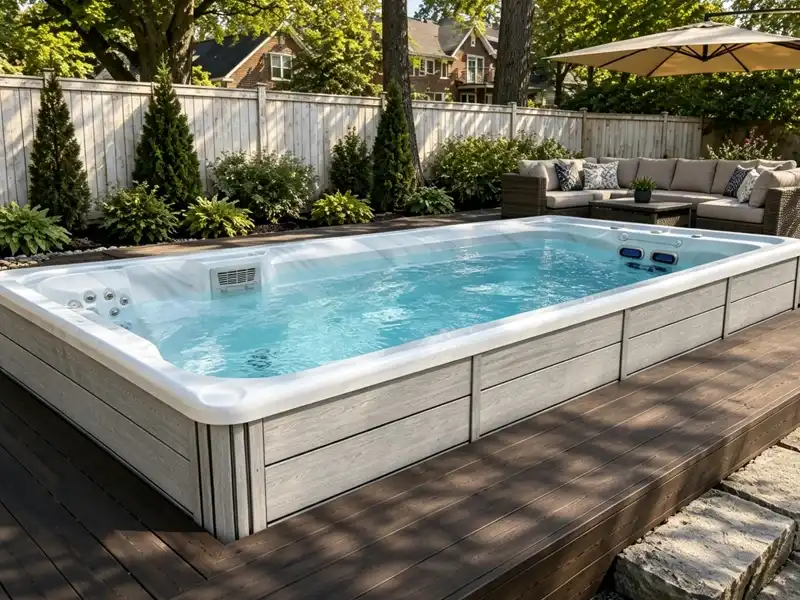
If you are buying a swim spa or hot tub for a large development, you should think about how much maintenance it will require, along with how it looks and how it works. This balance is well shown by the iParnassus® 4D40 swim spa, which is a type that long-term business clients always choose. In its large interior, there is a large lounge seat with evenly spaced jets that massage from the trapezius muscles down to the calves and soles. Each of the three seats has its own massage pattern, and the resting seats on either side of the swim current zone have extra jets for even better therapeutic coverage. Safety rules are met with distance markers and non-slip floor zones that don't get in the way of the guests' experience. The lit waterfall adds a relaxing element that makes a dining area seem more valuable.
It's easier to keep track of a unit with this many specifics than a mix of single-use goods when it comes to buying things. The administrative work of managing a building is cut down by having fewer supplier connections, a single parts inventory, and a single control environment.
Every source choice should be based on the total cost of ownership. Over the course of five years, a more expensive unit that comes with a strong guarantee, an energy-efficient pump design, and smart self-cleaning routines will always work better than a cheaper one.
Conclusion
Maintaining the performance of commercial spas, including relax & retreat hot tubs, is not a job, but a practice. Structured water chemistry practices, regular upkeep on filters and pumps, troubleshooting that is done before it happens, and smart use of insurance and support channels all help assets last longer and give a better return on investment. Properties that make these habits part of their business culture always do better than properties that only do repairs when something goes wrong. As the size of the installation grows, so does the technology built into modern hydrotherapy units. It rewards careful maintenance and punishes neglect.

FAQ
1. How often should water be completely drained and refilled in a commercial hot tub?
In a commercial setting with a lot of foot traffic, full water replacement is usually suggested every 30 to 60 days, but this depends on how many people use the pool and how much chemical they use. A useful method is to divide the total amount of water in liters by the number of baths that are taken every day and then divide that number by three.
2. What signs indicate that professional servicing is needed?
If the water stays cloudy after shock treatment, the pH keeps changing within 24 hours, the pump starts making noise again after bleeding, or there is an error code on the control panel that doesn't go away after restarting, a certified technician should come fix it.
3. Do maintenance procedures differ across geographic markets?
Yes. Properties in colder areas need to be winterized with steps like line purging and freeze protection. Shell and cover inspections should happen more often in places with a lot of UV light, like the Middle East and Australia. Doses of chemicals may also need to be changed depending on how hard the water is where they come from and what chemicals are in it.
4. Can the iParnassus® smart control system assist with maintenance scheduling?
You can use your smartphone to access the iParnassus® control system, which lets you see the water level in real time, set automatic reminders to add more water, and get temperature alerts. These features help plan upkeep and lower the chance that chemistry changes won't be noticed between checks.
Partner with iParnassus® for Long-Term Spa Excellence
Every unit that iParnassus® makes is backed by 18 years of manufacturing experience and 80 patents. Relax & retreat hot tubs is a trusted supplier of hot tubs for resorts, villas, and hotels in North America, Europe, Australia, and the Middle East. We offer bulk purchasing programs that include extended warranty coverage, installation support, and ongoing technical resources. You can talk to our team at info@iparnassus.com to talk about a custom solution for your property collection.

References
1. Journal of Environmental Health — "Microbiological Quality of Public Spa Pools," 2019.
2. Centers for Disease Control and Prevention (CDC) — "Healthy Swimming: Hot Tub and Spa Safety Guidelines," 2021.
3. U.S. Consumer Product Safety Commission — "Guidelines for Home Spas and Hot Tubs," 2020.
4. ASHRAE Handbook: HVAC Applications — Chapter on Natatoriums and Aquatic Facilities, 2019.
5. International Journal of Environmental Research and Public Health — "Hydrotherapy and Its Clinical Applications in Musculoskeletal Disorders," 2021.
6. Pool & Spa News — "Commercial Hot Tub Maintenance Best Practices for High-Occupancy Facilities," 2022.

Send Inquiry