_1768872582663.webp)
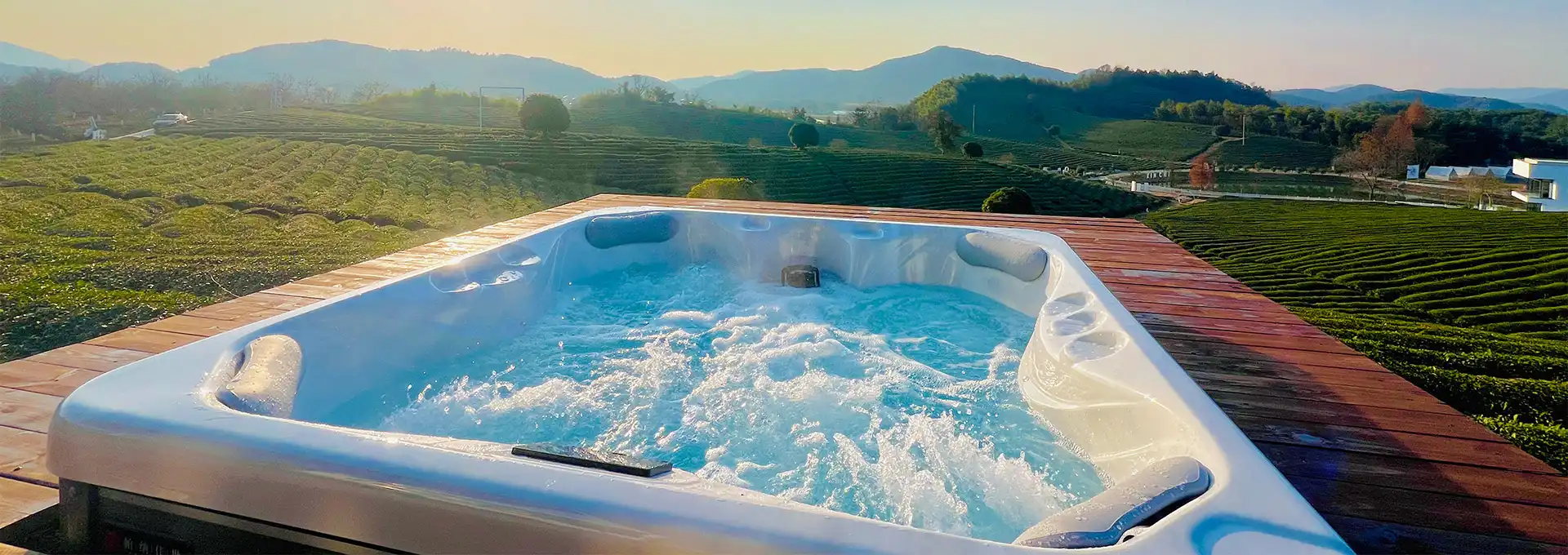
Shopping Guide to Choose the Perfect 5-Person Jacuzzi Hot Tub
Choosing the right 5-seater hot tub demands careful evaluation of several critical factors, especially when investing in commercial or residential settings. A well-selected five-person spa balances generous seating capacity with a compact footprint, typically measuring around 200cm, while delivering powerful hydrotherapy through strategically positioned jets. This guide helps resort developers, hotel managers, yacht owners, estate homeowners, and distributors navigate essential decision criteria—from dual-lounger configurations and jet-to-seat ratios to energy efficiency and safety features—ensuring your investment aligns perfectly with operational goals and guest satisfaction standards.
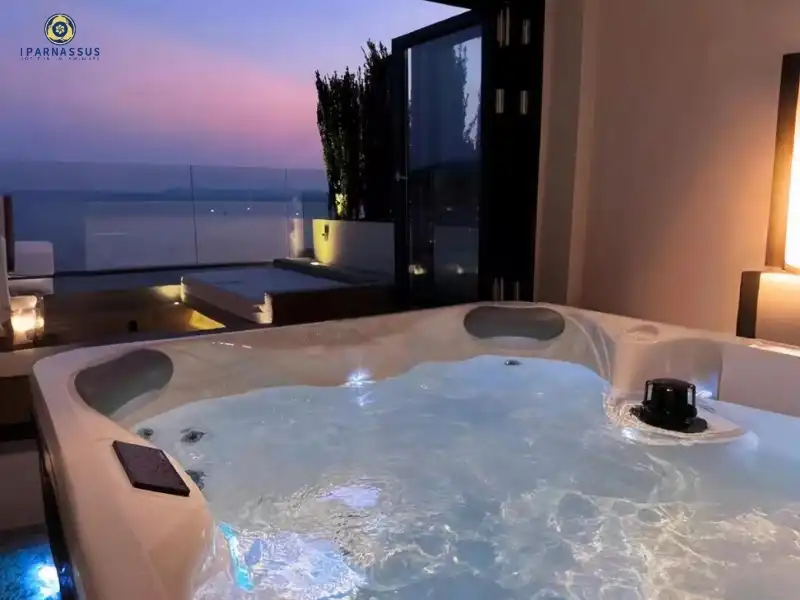
Understanding the 5-Person Jacuzzi Hot Tub: Features and Benefits
When making an investment in a business or domestic environment, it is extremely important to consider a number of important factors when selecting the best 5-seater hot tub. A well-chosen five-person spa delivers potent hydrotherapy through well-placed jets while striking a compromise between ample sitting capacity and a small footprint, usually about 200 cm. From dual-lounger configurations and jet-to-seat ratios to energy efficiency and safety features, this guide helps resort developers, hotel managers, yacht owners, estate homeowners, and distributors navigate crucial decision criteria, ensuring your investment perfectly aligns with operational goals and guest satisfaction standards.
Balancing Space and Capacity in Mid-Size Spas
Typically measuring between 6'6" and 7'9" in length and breadth and between 2'7" and 3'2" in height, a 5-seater hot tub falls into the sweet spot between smaller 3-4 seater versions and bigger 7+ person ones. Because of its size, it is especially appealing for mid-size commercial applications in upscale residential and hospitality environments where maximising available space is crucial. The iParnassus 5R51 model, with its 200 cm (about 6'6") footprint that can easily fit five persons without overpowering small deck, patio, or boat installations, is the ideal example of this equilibrium.
The Dual-Lounger Advantage
Dual loungers are what set premium five-person versions apart from regular layouts. The majority of mid-size tubs only have one or no loungers at all; therefore, the 5R51 fills a big vacuum in the market by offering two dedicated lounge seats with specialised jets that target back, leg, and foot massage spots. The remaining three chairs have a barrier-free arrangement that enables visitors to roam freely throughout the spa, which is crucial for social events and business settings where visitor interaction improves the experience.
Advanced Hydrotherapy and Jet Technology
Any spa's jet system is the main source of its therapeutic effectiveness. On average, high-quality five-person versions should provide 5–6 jets per seat and 20–30 jets per massage pump. With 47 jets and a single 3.0 HP pump, the 5R51 achieves an amazing 9.4 jets per seat ratio. This arrangement preserves energy economy while guaranteeing uniform massage pressure in every seated position. Jet location is just as important as number since specialised jets for particular muscle groups offer tailored relief from physical exhaustion and tension, making these devices useful for both luxury hotel facilities and wellness programmes.
Energy-Efficient Systems for Commercial Deployment
For commercial purchasers, operating expenses are a big consideration. To reduce power usage, contemporary 5-seater hot tubs use sophisticated heating controls, effective filtration systems, and insulating technologies. The iParnassus control system provides energy-efficient heat pump integration, automated temperature adjustment with high- and low-temperature protection, and smartphone monitoring of water levels and operating conditions. When compared to previous models, these characteristics drastically lower monthly utility costs, which has a direct effect on the profitability of resort and hotel enterprises that operate several locations.
Safety and Compliance Considerations
Strong safety elements that go beyond residential requirements are necessary for commercial installations. By limiting illegal access and lowering liability concerns, the triple-lock mechanism seen on models such as the 5R51 targets unsupervised use situations typical in hotel and resort environments. Manual power shutoffs are no longer necessary since automatic self-protection programmes operate when water enters and exits. While satisfying the strict commercial safety certifications needed in North America, Europe, and other regulated markets, water shortage protection and sophisticated water level sensing improve reliability.
Criteria to Consider When Choosing the Perfect 5-Person Jacuzzi Hot Tub
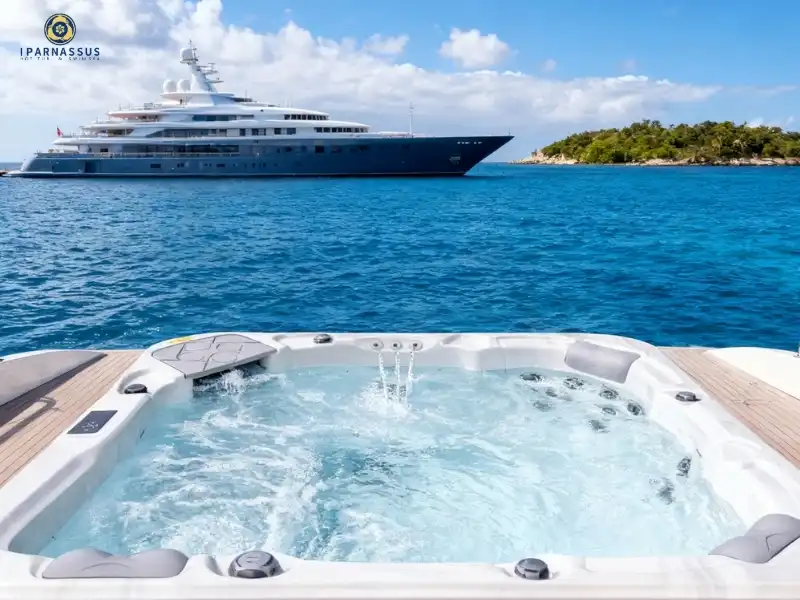
Evaluating Your Particular Application Requirements: Different requirements are required in different commercial contexts. Durability, simplicity of maintenance, and security considerations for unattended guest use are given top priority in hospitality applications. To support continuing operating expenses, corporate wellness initiatives may highlight therapeutic advantages and energy efficiency. Compact size and corrosion-resistant materials appropriate for saltwater settings are necessary for marine systems aboard boats. Every choice you make during the selection process is influenced by your understanding of your main use case.
Assessing Your Specific Application Needs
Understanding your primary use case shapes every subsequent decision in the selection process. For example, choosing a 5-seater hot tub requires considering how it will be used, as hospitality applications prioritise durability, ease of maintenance, and security features for unsupervised guest use. Corporate wellness programmes may emphasise therapeutic benefits and energy efficiency to justify ongoing operational costs. Marine installations on yachts require compact dimensions and corrosion-resistant materials suitable for saltwater environments.
Size and Footprint Analysis
Feasibility is frequently determined by space limits before any other consideration. Take meticulous measurements of the area you want to install, taking into consideration not only the spa's dimensions but also the space needed for maintenance access on all sides. A typical 5-seater hot tub needs between 78 and 93 square feet of floor area. Compact variants are perfect for urban rooftop decks, boat stern platforms, and boutique hotel courtyards where every square metre demands premium value because of their 200 cm footprint, which enables installation in areas where bigger six-person units just won't fit.
Evaluating Jet Configuration and Massage Effectiveness
Understanding jet-to-pump and jet-to-seat ratios answers the argument between jet quantity and quality. Compared to a 60-jet type with insufficient pump capacity that struggles to maintain pressure, a spa with 47 jets driven by a single 3.0 HP pump provides more effective hydrotherapy. Seek out versions that provide distinct jet clusters for every seating position, along with intensity adjustments that let visitors personalise their experience. Specialised jet arrays that target the back muscles, legs, and feet independently of typical seated postures should be included in dual-lounger setups.
Energy Efficiency and Operating Cost Projections
Instead of concentrating only on the purchase price, compute the total cost of ownership. Ask manufacturers for information on their monthly energy use, which is usually expressed in kilowatt-hours under average usage circumstances. Thanks to enhanced insulation, variable-speed pumps, and intelligent heating algorithms, contemporary energy-efficient 5-seater hot tubs use 30–40% less electricity than versions from just five years ago. Operators may minimise waste during idle times by optimising heating schedules around peak consumption hours thanks to the iParnassus system's automated power management and remote monitoring features.
Warranty Coverage and After-Sales Support
Commercial deployments require quick service networks and extensive warranty protection. Examine the warranty conditions for electrical components (1-2 years), plumbing and equipment (3-5 years), and shell construction (usually 10-15 years). The manufacturer's distribution network and the availability of components in your area are equally crucial. In order to provide prompt assistance when problems occur, iParnassus has service agreements in North America, Europe, the Middle East, and Australia. Established producers exhibit the technical depth required for long-term reliability with 80 patents and 18 years of production expertise.
Installation, Maintenance, and Safety Best Practices for Optimal Performance
Licensed experts with knowledge of regional electrical codes and commercial plumbing standards are needed for commercial projects. While some smaller models provide 110V plug-and-play choices with less heating and jet capability, 5-seater hot tubs usually require separate 240V electrical service with appropriate GFCI protection. Levelling a concrete pad or reinforced decking that can hold 3,500–4,500 pounds when filled is part of site preparation. Models such as the 5R51 include an incorporated step that makes access easier, but it has to be properly anchored to avoid movement while in use.
Professional Installation Requirements
Commercial installations require licensed professionals familiar with local electrical codes and commercial plumbing standards. 5-seater hot tubs typically require dedicated 240V electrical service with proper GFCI protection, though some smaller models offer 110V plug-and-play options with reduced heating and jet performance. Site preparation includes levelling a concrete pad or reinforced decking capable of supporting 3,500-4,500 pounds when filled. The integrated step featured on models like the 5R51 simplifies access but requires proper anchoring to prevent shifting during use.
Routine Maintenance Protocols
In commercial settings with significant visitor turnover, water quality monitoring is crucial. Testing sanitizer concentration and pH levels on a daily basis (keeping them between 7.2 and 7.8) stops bacterial growth and prolongs equipment life. Biofilm accumulation is avoided by weekly filter system cleaning and monthly comprehensive cleaning of plumbing lines and jets. Many maintenance activities are automated by the iParnassus self-cleaning and antiviral features, which lower personnel costs while upholding constant water quality standards. Without having direct access to control panels, staff may empty and replenish units in between guest uses thanks to remote water management features, making solutions like a 5-person hot tub 5 person more convenient for commercial applications that require efficient turnover and reliable operation.
Energy-Saving Operational Practices
In business settings, smart scheduling dramatically lowers energy use. Instead of keeping the temperature constant, schedule heating cycles to attain the ideal temperature shortly before periods of high usage. Invest in high-quality insulated coverings since 50–70% of energy waste is caused by heat loss through open water surfaces. Modern systems' smartphone control capabilities allow for remote temperature change depending on reservation schedules, potentially reducing heating expenses by 30–40% when compared to continuous operation.
Safety Protocols and Liability Management
Clearly define the maximum capacity limitations, time constraints, and forbidden behaviours for business venues. Put up conspicuous signs explaining regulations and emergency protocols. In hotel settings, the triple-lock system reduces liability risk from unsupervised usage by preventing entry after hours. Frequent safety audits should confirm that lights, emergency shutdown systems, and temperature controls are operating as intended. To guarantee visitor safety and legal compliance, train employees on chemical handling techniques and emergency response methods.
Comparing Popular 5-Seater Hot Tub Models for B2B Buyers
The unique mix of two full-length loungers in a small five-person configuration sets the 5R51 apart. Its 200cm narrow-edge design reduces the amount of deck area needed while maximising the inside room. With specialised jet clusters for back, leg, and foot therapy in the lounger positions, the 47-jet system with a 3.0 HP pump provides constant massage pressure in all seating positions. The three basic chairs' barrier-free arrangement promotes social contact, making it perfect for small group get-togethers in resort settings or couples looking for luxury.
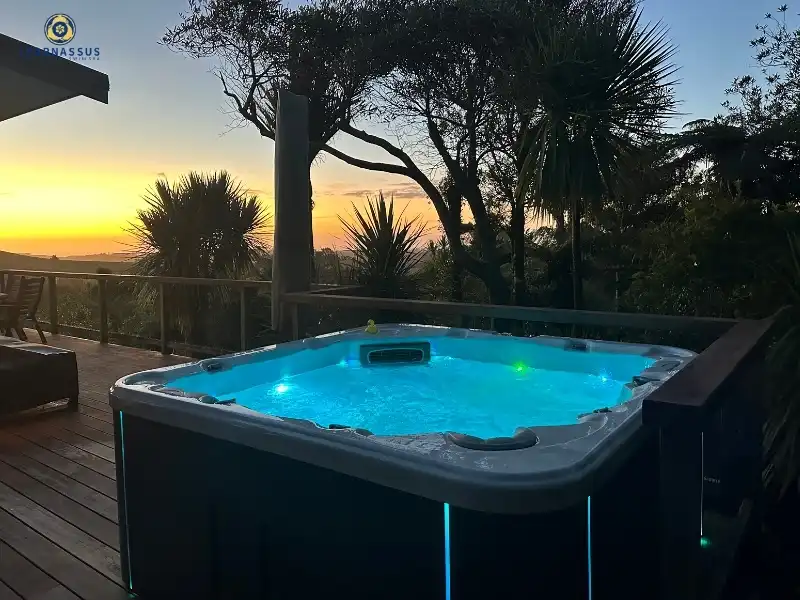
iParnassus 5R51: The Dual-Lounger Commercial Solution
In commercial applications, the integrated step makes access and exit easier, which is especially beneficial for a variety of visitor demographics. Property managers may plan cleaning cycles, prevent access during maintenance times, and remotely check operating status thanks to smart control integration. Operating expenses are lowered by the energy-efficient design, which is important when operating several units throughout resort sites. The 5R51 is an example of proven engineering appropriate for rigorous commercial deployment thanks to iParnassus's vast patent portfolio and 18-year production record.
Acrylic versus Alternative Materials
The market for high-end spas is dominated by acrylic construction because of its stain resistance, longevity, and capacity to preserve surface quality even after years of intense usage. Generally speaking, acrylic shells have structural guarantees of 10 to 15 years, which are significantly longer than those of inflatable equivalents that are mainly intended for short-term domestic usage. Commercial customers should completely steer clear of inflatable versions since, despite their cheaper initial cost, they are not durable enough for high-turnover conditions and need to be replaced frequently, which significantly raises lifecycle costs.
Key Specifications for Procurement Comparison
Make a comparison matrix with the following information when assessing competing models, including options such as a hot tub 5 person: precise dimensions and weight capacity; jet count and pump horsepower; energy consumption ratings; warranty coverage information; available safety features (locking systems, automatic shutoffs); and control system capabilities (smartphone integration, remote monitoring). Instead of depending just on marketing promises, ask for comprehensive technical details. When jet-to-pump ratios show insufficient pressure delivery across all locations simultaneously, models that claim extraordinary jet counts frequently fall short.
Conclusion
A number of elements unique to your business or home application must be balanced when choosing the ideal 5-seater hot tub. The perfect model combines rigors safety measures appropriate for your deployment location, powerful yet energy-efficient hydrotherapy systems, and a roomy interior capacity. With well-designed jet systems, dual-lounger combinations like the iParnassus 5R51 fill niches in the market while providing outstanding massage experiences. Your investment will provide long-term value and visitor happiness over years of tough commercial service, provided you carefully consider overall ownership costs, manufacturer support capabilities, and particular operational requirements.
FAQ
1. What is the ideal temperature range for a commercial hot tub?
For maximum visitor comfort and safety, commercial hot tubs should keep their temperature between 100 and 104°F (37 and 40°C). Due of the health dangers connected with prolonged exposure to higher temperatures, public spa temperatures above 104°F are prohibited by regulations in the majority of jurisdictions. The iParnassus control system ensures constant comfort while fulfilling safety regulations for commercial operations by offering accurate temperature control and automated overheating protection.
2. How much space do I need for a five-person hot tub installation?
A 5-seater hot tub installation should have between 80 and 100 square feet of total area, taking into consideration the unit's size as well as space for maintenance access. Compact variants such as the 5R51, with a 200cm (6'6") footprint, require around 7' x 7' of real equipment area, plus an extra 2-3 feet of room on at least two sides to service electrical and pump components. Make sure your deck or pad can sustain a total weight of 4,000–4,500 pounds when it is completely occupied.
3. How often should commercial hot tubs undergo maintenance?
In high-use commercial environments, appropriate sanitisation is maintained by daily water testing and chemical adjustment. Depending on the bather load, clean or change the filters once a week. Plan on having pumps, heaters, and control systems inspected by professionals on a regular basis. While upholding water quality regulations, the iParnassus self-cleaning and automatic monitoring features minimise human maintenance work. In high-turnover settings, drain and thoroughly clean the system once a month; in residential applications with lesser usage, do this every three to four months.
Connect with iParnassus® for Your Commercial Spa Solution
Expertly designed 5-seater hot tub solutions for resort, hospitality, maritime, and luxury residential applications are offered by iParnassus®. Our 5R51 model, which combines dual-lounger elegance with small 200cm dimensions, 47-jet hydrotherapy powered effectively by a single 3.0HP pump, and extensive smart controls lowering operating complexity, tackles the particular difficulties faced by business clients. We are the industry leader in spa engineering with 80 patents and eighteen years of production expertise. Discover why top resort developers and hospitality organisations in North America, Europe, the Middle East, and Australia use iParnassus as their reliable 5-seater hot tub provider by contacting our staff at info@iparnassus.com to discuss your unique requirements.
References
1. Johnson, M. & Williams, R. (2023). Commercial Spa Equipment Selection: A Comprehensive Buyer's Guide for Hospitality Professionals. Hospitality Equipment Press.
2. Anderson, K. (2024). Energy Efficiency Standards in Commercial Aquatic Facilities. Journal of Facility Management and Operations, Volume 18, Issue 3.
3. Chen, L. & Rodriguez, P. (2023). Hydrotherapy Systems: Engineering Principles and Commercial Applications. International Journal of Wellness Technology.
4. Thompson, S. (2024). Safety Compliance and Risk Management in Commercial Hot Tub Operations. Resort Management Quarterly, Spring Edition.
5. Martinez, A. (2023). Total Cost of Ownership Analysis for Commercial Spa Equipment. Business Equipment Review, December Issue.
6. National Spa and Pool Institute. (2024). Commercial Hot Tub Installation and Maintenance Standards. NSPI Technical Guidelines, Third Edition.

Send Inquiry