_1768872582663.webp)
Swim Spa Training Pool Maintenance: Complete Guide
Proper swim spa training pool maintenance is the basis of long-term performance and safety. Unlike a traditional backyard pool, a swim spa training pool combines strong current systems, hydrotherapy jets, and precise temperature controls in one small machine — and all of that needs planned maintenance. For those who operate a commercial fitness facility, hotel wellness center, or private training space, regular maintenance directly influences water quality, equipment longevity, and user experience. This tutorial takes you through all you need to know about maintenance, from daily inspections to seasonal service.
Understanding Swim Spa Training Pool Maintenance
Many pool owners believe that a swim spa is just a smaller pool that isn't as demanding in terms of maintenance. Because of this mentality, fixing things costs a lot of money. The water is constantly being heated and moving back and forth; therefore, the pumps operate longer in a swim spa training pool than in a leisure pool, and the jet systems have to cope with significant loads every day.
What Makes It Different
Taking care of a swim spa is different from taking care of a standard pool since there is less water in a swim spa; therefore, chemicals change more rapidly. Most swim spas carry between 1,500 and 2,500 gallons of water. If you alter the pH or sanitizer levels by a little amount, the water quality is changed in days or weeks, not immediately.
Why Consistency Matters for Commercial Settings
Not having a unit at a hotel, resort, or training facility might result in unsatisfied customers and endanger the company. Procurement managers should emphasize from the outset that preserving written records of repairs is also a means of protecting manufacturer warranties.
Common Misconceptions
Many people assume salt water systems don't have to be handled with any chemicals. Chloride is still generated in salt systems via electrolysis, and pH has to be adjusted periodically. People also assume that you only clean filters when they seem filthy, and that’s not true. Filters truly should be cleaned once a week, whether they seem good or not.
Key Maintenance Dimensions for Swim Spa Training Pools
There are four aspects that determine whether your aquatic training pool equipment is working at peak performance. They are water chemistry, filtration and circulation, mechanical integrity, and energy management. If you disregard any one, it will start a chain reaction and affect the others.
Water Quality Management
Target pH will be 7.4 to 7.6, total alkalinity will be 80 to 120 ppm, and free chlorine will be 1 to 3 ppm. Establishments with a large number of bathers need chemical changes more often than residential use. In a business context, water should be tested at least three times a week.
Filtration and Circulation Systems
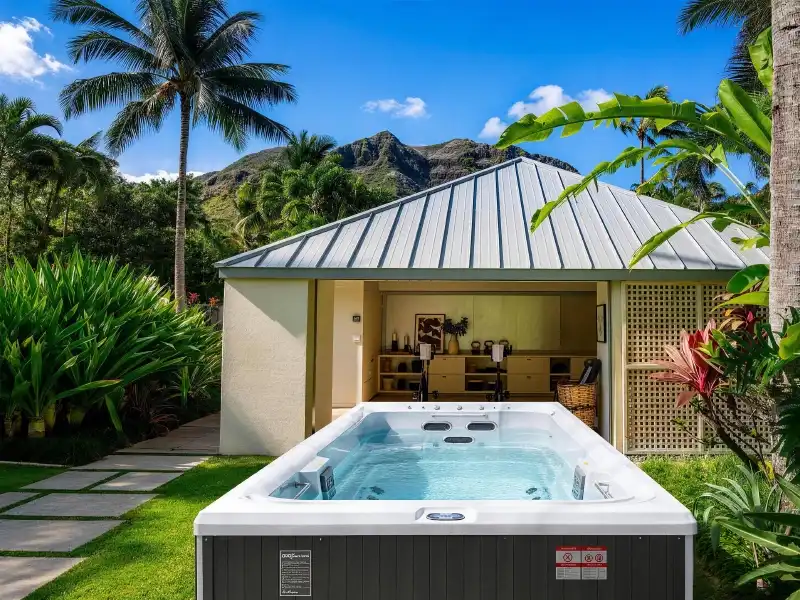
Current water quality is a factor in pump health. For instance, the iParnassus® Acrylic Infinity Swim Spa has three 13.5-inch swim jets powered by two 4HP and one 3HP pump. Weekly, inspect these pumps for seal integrity, abnormal noise, and constant flow rate. Filters should be washed weekly and cleaned thoroughly every 4-6 weeks.
Mechanical and Structural Integrity
Lucite acrylic surfaces are more resistant to UV damage and chemical wear than standard fiberglass but still need monthly inspection for surface stress marks, seal gaps around jet connections, and cabinet weatherproofing. For commercial installations with high use, examine the jet nozzles every three months for wear.

Step-by-Step Guide to Maintaining Your Swim Spa Training Pool
You don't have to guess what to do to keep your investment safe if you have a routine. This split, which is set up by frequency, is very helpful. If places follow this plan, they will need to call for help less often, and their tools will last longer.
Daily and Weekly Tasks
- Daily: check water temperature, visually examine surface and jet outputs, check pump performance, confirm cover seal is intact
- Weekly: test water chemistry (pH, chlorine, alkalinity), rinse cartridge filters, wash down waterline with a non-abrasive cleanser, and check handrails and entrance stairs for stability.
- Weekly: Read problem codes from the control panel. The iParnassus® smart system offers real-time water level and operational condition notifications to your smartphone, allowing facility managers to easily monitor from afar.
– Test your water each week for pH, chlorine, and alkalinity. Rinse cartridge filters and clean the waterline with a non-abrasive cleanser. Also check that the railings and stairs at the entrance are strong.
Once a week, inspect the control panel for any error codes. With the iParnassus® smart system, facility managers may get real-time warnings regarding the water level and operating condition directly to their phones so they can monitor from afar.
Monthly Tasks
Look for signs of leaks in all of the pump covers and jet lines. To clean the filters really well, use a chemical cleaner. Make sure there is no scale buildup on the heater element. Mineral layers form more quickly in places with hard water. You should oil any cabinet hardware that moves. Compare the amount of energy being used to the starting point to see if there have been any drops in efficiency.
Seasonal and Annual Tasks
Every three to four months, empty and refill the unit if it's used a lot for business. Every four to six months if it is being used for home training. Before going back to normal, shock-treat the water while it's being filled up. Check the inside of the shell all the way around. The 4.75-meter swim lane and right-angle form of the Acrylic Infinity Swim Spa make it easy to see everything you need to see when checking the surface. Someone should check out your system once a year. The electrical connections and control board should be looked at as part of this.

Comparative Insights: Swim Spa Training Pool Maintenance vs Other Pool Types
Swim spa buyers need to understand how they are different from other kinds of pools so they can make intelligent judgments about how much they will cost to operate and how frequently they will require repairs.
Swim Spa vs. Traditional In-Ground Pool
A 20,000-gallon in-ground pool has to be winterized and have a lot of chemicals injected into it. It should also be vacuumed by a professional. This is because a swim spa training pool requires a little bit of water. That implies chemicals are around 60-70% less expensive. But with high-output pumps, jet arrays, and built-in heating, component-level maintenance has to be done more carefully.
Saltwater vs. Freshwater Systems
Saltwater systems are easier on your skin because they maintain the chlorine at a low level. But salt cells need to be replaced every three to five years, depending on how hard the water is in calcium. Freshwater systems are better at handling contaminants in locations where the quality of the water might vary. Both may be used for training in swim tubs. The choice of which to use relies on the regulations of the facility and the nature of the water in the region.
Indoor vs. Outdoor Installation Considerations
If you are installing outside, you require UV light-resistant coverings, weatherproof cabinet treatments, and freeze protection once a year in colder areas. But the temperature inside a swim spa training unit is more steady, and there has to be adequate air movement to keep the humidity low. There are two methods to install the Acrylic Infinity Swim Spa. This is composed of Lucite acrylic, which makes it weatherproof.
Procurement and Support for Swim Spa Training Pool Maintenance
As vital as following the care plan is choosing the correct swim spa training pool provider. A good firm doesn’t just offer you the tools you need; they provide you with the assistance, replacement parts, and instructions you need to keep your facility working.
Evaluating Manufacturer Support
Look for companies that test their products for at least 24 hours before shipping. Before a unit leaves the factory, iParnassus® undergoes an intensive inspection procedure, validated by 80 patents and 6 international certifications. These metrics tell you how deep the tech really is, not what the corporation is saying. If you purchase a swim spa training pool, be careful to check that the package includes expert assistance after the sale.
Warranty and Service Terms
The guarantee includes the shell, pump parts, and control systems, allowing buyers to better plan when to replace parts. Look at what’s written down and for how long before you sign a company deal.
Customized Maintenance Programs
For buildings with many units, it’s a good idea to have a structured service for the manufacturer or authorized dealer. iParnassus® partners with resort developers, hotel developers, and training facilities to establish plans that are optimal for the number of workers to be utilized, the degree of usage, and the quality of the water supply. This protects the performance of operations and the long-term return on investment.
Conclusion
A well-maintained swim spa training pool preserves your investment and maintains water safety and equipment performing at maximum capacity for athletes and users. Every stage of maintenance, from daily water checks to yearly system diagnostics, leads to longer equipment life and reduced operational expenses. When a well-built device (like the iParnassus® Acrylic Infinity Swim Spa with its strong three-jet current system and Lucite acrylic shell) is coupled with a disciplined maintenance program, commercial and residential operators may rely on a year-round, high-performance aquatic training asset.
FAQ
1. How often should I test the water in a commercial swim spa?
Every part of the maintenance cycle, from daily checks on the water to a full system diagnosis once a year, makes the equipment last longer and cost less to run. If you take care of a well-made unit like the iParnassus® Acrylic Infinity Swim Spa, which has a strong three-jet current system and a Lucite acrylic shell, you'll have a reliable, high-performance aquatic training tool all year.
2. What are the most common maintenance problems in swim spa training pools?
Things go wrong most of the time when the pH changes: filters get clogged, pump seals wear out, and scale forms on heater elements. These issues can be found early on by regular checks, which saves you a lot of money on repairs.
3. Should I hire a professional or manage maintenance in-house?
Both ways will work, depending on how many people work in your building. Employees who work for the company can do daily and weekly tasks as long as they are trained. Technicians with the right training should do all of the diagnostics, electrical checks, and pump repair once a year.
4. Does the iParnassus® Acrylic Infinity Swim Spa require special maintenance products?
The Lucite acrylic shell works well with chemicals that are made for spas. Use soft cleaners on the inside when you clean it. The smart control system keeps an eye on the water level and the state of the operation, which makes day-to-day management easier.
5. How does the 4.75-meter swim lane affect maintenance planning?
When compared to smaller models, the longer swim lane slightly increases the total amount of water. This lets it go longer without having to change the full water. It's also easy to check visually and clean the surface because the inside is set up at a right angle.
Connect With iParnassus® for Your Swim Spa Training Pool
We've been making spas for 18 years and have 80 patents for our work. Professional athletes and hotel and resort owners can use swim spa training pools that were made just for them. Before it is shipped, our Acrylic Infinity Swim Spa goes through 6 international certifications and tests to make sure it works like a real infinity pool. If you buy a swim spa training pool from us, you can get help after the sale and personalized maintenance plans. You can email us at info@iparnassus.com to get a price.

References
1. Pool & Spa News — Commercial Aquatic Facility Maintenance Standards, 2022.
2. ASHRAE Journal — Water Quality Management in Therapeutic and Fitness Aquatic Environments, 2021.
3. Journal of Swimming Research — Hydrodynamic Training Systems and Equipment Durability in Competitive Aquatics, 2020.
4. NSF International — Certified Spa and Hot Tub Equipment Performance and Safety Standards, 2023.
5. Aquatics International — Operational Best Practices for Commercial Swim Spas and Training Pools, 2022.
6. Water Quality & Treatment: A Handbook on Drinking Water (American Water Works Association) — Chemical Balancing and Filtration Principles for Recirculating Water Systems, 6th ed., 2011.

Send Inquiry