_1768872582663.webp)
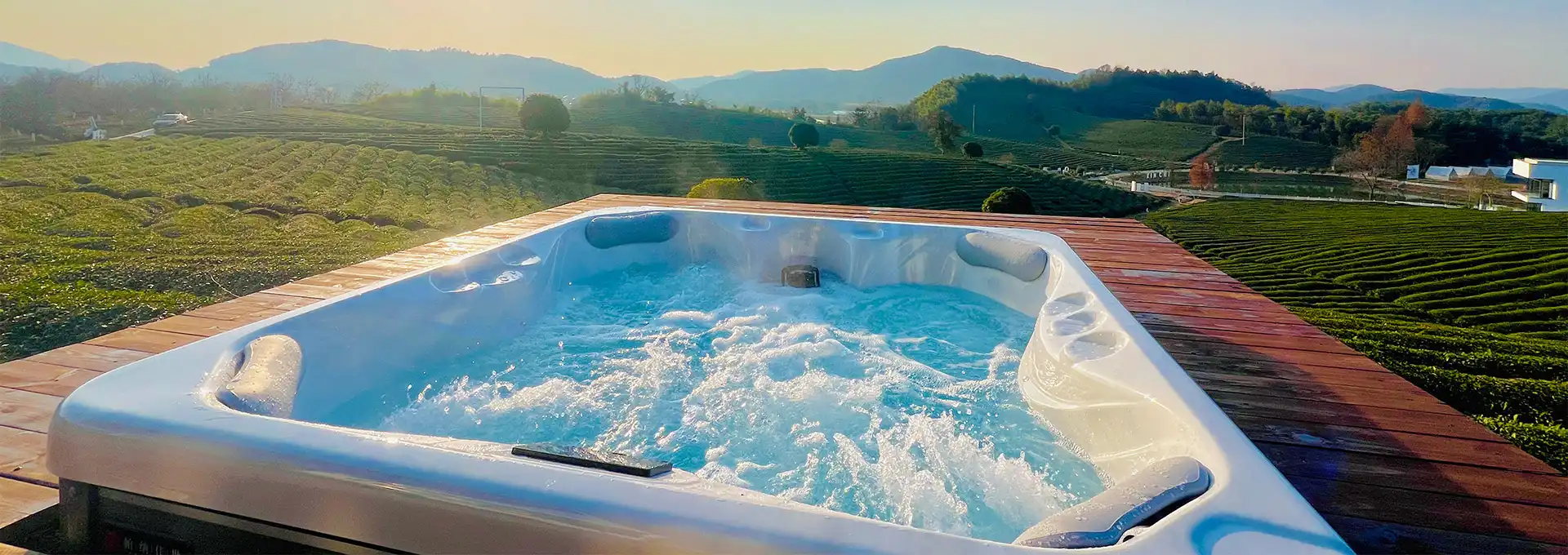
What Is an Inground Swim Spa? Benefits, Costs, and Options
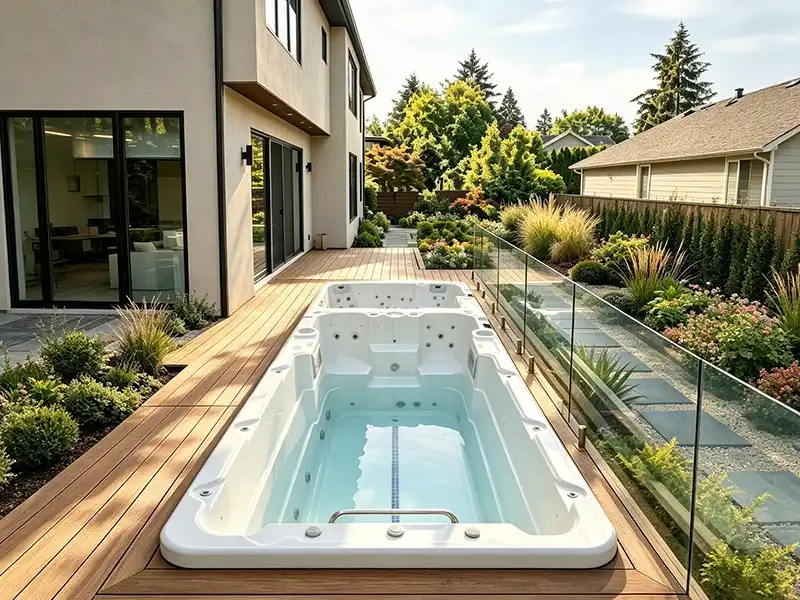
An inground swim spa is a recessed aquatic installation that combines the hydrotherapy functions of a hot tub with the swimming capability of a lap pool—all within a compact, flush-mount footprint. Unlike above-ground units, an inground swim spa sits level with the surrounding deck or landscape, creating a seamless visual integration that appeals to architects, resort designers, and custom home builders alike. With advanced jet systems, smart controls, and space-efficient engineering, these units deliver serious performance without the footprint of a traditional pool.
Understanding Inground Swim Spas
Structure and Technology
There are several important ways in which an in-ground swim spa is not the same as a movable hot tub or a regular swimming pool. It's usually rectangular, made for swimming against the river, and can be partly or fully recessed below grade. A high-output circulation pump, a dedicated filtration circuit, and a precise heating unit keep the water temperature between 26°C and 40°C so that the wellness performance is always the same.
Putting all of these parts into a small housing is what makes a well-engineered unit stand out. For instance, the iParnassus® Inground Swim Spa has three 3.0 HP pumps that create a strong, changeable swim current that is strong enough for athletic training but also set up for therapy use. This type of pump configuration isn't common in entry-level products; it's more like what you'd find in hotel pools, wellness centers at resorts, and high-end homes.
Customization and Sizing
Scalable versions are often needed by commercial and OEM buyers. Inground swim spas come in a variety of sizes, from small dual-zone units to large lap-swimming pools. Customizations can be made to shell color, jet layout, step setup, and control panel type for each project by manufacturers like iParnassus®. This gives buying teams a lot of freedom without affecting lead times.
Benefits of Inground Swim Spas for B2B Clients
Wellness, Aesthetics, and Space Efficiency
An in-ground swim spa has many strategic benefits that go beyond how it looks. There is scientific evidence that hydrotherapy with pressure water jets works. For example, a 2018 study in the International Journal of Aquatic Research and Education found that regular spa users had lower amounts of cortisol and pain in their muscles and joints. For business health centers, spas, and rehab centers, this means a real perk that keeps customers coming back and supports charging more.
Here are the core advantages that make inground swim spas a strong B2B asset:
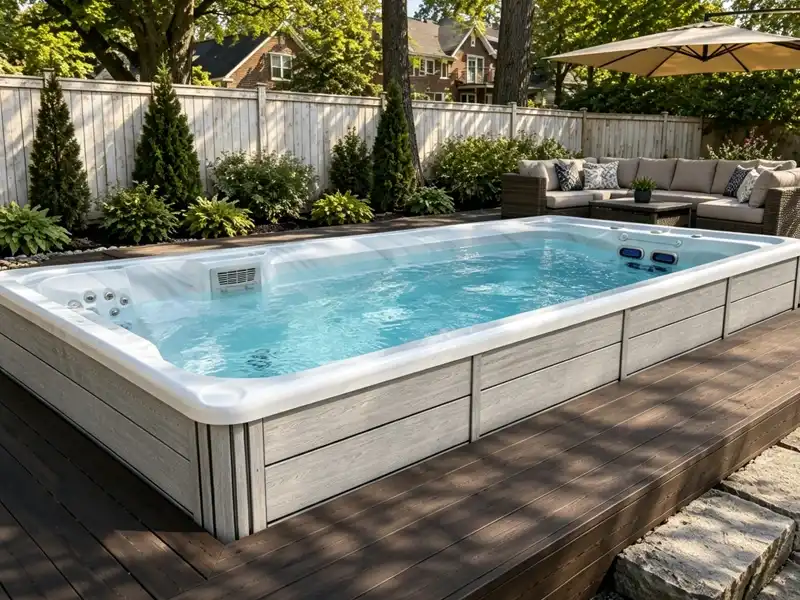
- Landscape integration: A flush-mount design gets rid of the bulk of above-ground cabinets, so the unit can look like it belongs on garden patios, poolscapes, or hotel lobbies. This unity raises the value of the property and how guests see it.
- Dual-function performance: Residents or guests can go from a high-resistance swim workout to a massage seat without getting out of the water, which is something that regular pools can't do.
- Year-round usability: These units can be used all year because they have insulated shells and efficient heating systems that keep them running even in the winter. This means that resort and hospitality operators can make more money during that time.
- Reduced chemical load: Because in-ground swim spas have less water than full-size pools, they need a lot less chemicals. This lowers their costs and their impact on the earth over time.
These advantages make the Inground Swim Spa a compelling choice for projects where long-term operational efficiency and guest experience both carry weight.
Cost Considerations and Procurement Options
Investment Framework and ROI
An average in-ground swim spa costs between $12,000 and $28,000 up front. Depending on the conditions of the spot, work may add to the total cost. This range is based on differences in pump power, shell material, control systems, and structural needs like concrete vaulting and drainage systems.
When you look at the total cost over its lifetime, the in-ground swim spa type usually gives you a better return than a standard in-ground pool. Installing a normal residential pool costs between $35,000 and $65,000, and the yearly costs for chemicals, upkeep, and heating are much higher. Because the Inground Swim Spa's water amount is small, it takes less time to heat up and uses fewer chemicals, which lowers the overall cost of running the business.
Procurement teams should factor in the following cost drivers during budgeting:
- Excavating the site and putting in concrete foundations
- Supply of electricity
- Infrastructure for drainage and waterproofing
- Permit and compliance rules set by each area
- Heat pumps can be added as an option to save energy.
B2B buyers operating across multiple properties—hotels, resorts, or residential developments—may negotiate volume pricing or explore manufacturer-direct procurement. iParnassus® supports OEM and project-based orders with dedicated account management and flexible lead-time planning.
Choosing the Right Inground Swim Spa: Brands, Features, and Durability
What to Evaluate Before You Buy?
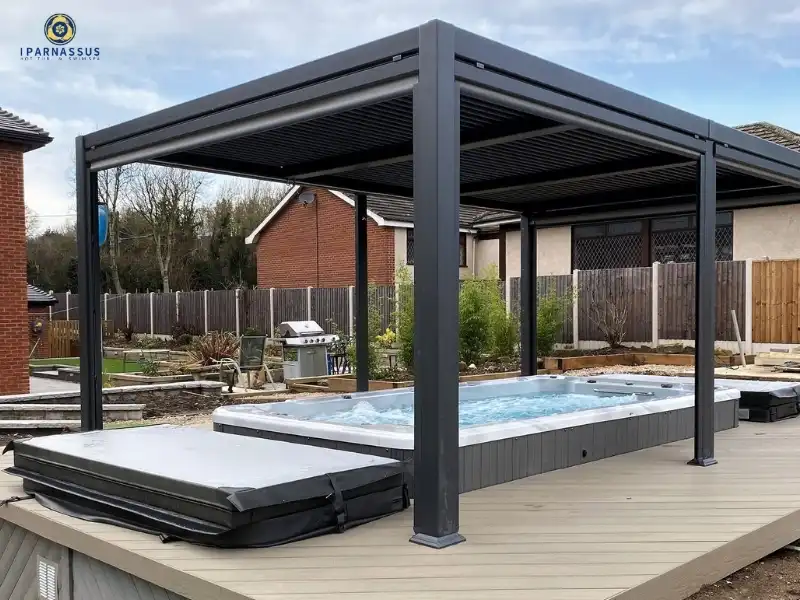
When choosing an inground swim spa for a business or high-end home, you need to look closely at a number of factors. The quality of the material is important. Acrylic shells strengthened with fiberglass last longer, are resistant to UV light, and have smooth surfaces that work well in areas with a lot of foot traffic. For a fully customized look, some models come with Gresite ceramic tile finishes, which is something that is becoming more and more popular in high-end resort and house installs.
Control panel sophistication is another differentiator. The iParnassus® tablet control system can be managed from a smartphone, can check the water level in real time, and has built-in safety features for when the temperature gets too high or too low. One-key lock and open via phone add a significant level of operational security to business areas that are shared.
Warranty terms and after-sales infrastructure carry equal weight. As of 2026, iParnassus® has 80 filed patents and has been making spas for 18 years. This is a track record that procurement managers in North America, Europe, Australia, and the Middle East can use to judge the reliability of a provider.
Installation and Maintenance Best Practices
Engineering a Low-Friction Ownership Experience
An in-ground swim spa installation that goes well starts with carefully preparing the site. The concrete vault has to be strong enough to hold the unit when it's full, which can be more than several tons, and big enough to let the technical room fit. There must be a floor drain system built into the concrete pad; if there isn't one, rainwater can build up and damage the unit's electronics and wheels over time.
Coordination between the in-ground swim spa provider, general builder, and electricity subcontractor should begin before digging starts. Delays at this stage often lead to project timeline overruns, which can really add up when building a hotel or resort.
The iParnassus® Inground Swim Spa addresses a persistent industry pain point with its fully waterproof movable service access. All electrical components and accessories are organized inside this access panel, which includes built-in ladders. Maintenance technicians can service the unit without removing side panels or working in tight perimeter spaces—a critical advantage when the unit is installed flush against walls or within a compact deck surround. The integrated direct drain system also accelerates water change cycles, reducing downtime between service intervals.
Wide entry steps built at one end of the unit enhance user safety and double as resting seats—a practical detail that swimmers and hydrotherapy users both appreciate. For ongoing maintenance, water chemistry should be checked weekly, filters cleaned on a defined schedule, and the heat pump inspected seasonally to preserve efficiency and equipment lifespan.

Conclusion
For architects, developers, and owners of high-end homes who care about how the space looks, how well it works, and how efficiently it runs, an inground swim spa is an excellent investment. These units work better than both above-ground spas and regular pools when they are equipped with the right pump power, control system, and access design. When every design choice has financial weight, the flush-mount format is important because it enhances the surrounding landscape instead of competing with it.
FAQ
1. What makes an inground swim spa different from a regular hot tub?
For both swimming and treatment, an in-ground swim spa is sunk below ground level. Usually, a hot tub is built above ground and only has massage jets. Inground swim spas have bigger, rectangular bodies, swimming jets that work against the current, and a flush-mount installation that blends in perfectly with the landscape or deck structures around it.
2. How much maintenance does an inground swim spa require?
Checking the water chemistry once a week, cleaning the filters every so often, and inspecting the heat pump every season are all part of routine maintenance. Units with a single-side service access—like those from iParnassus®—make maintenance much faster by putting all the parts in one easy-to-reach place. This means that you don't have to take off the outside panels or navigate tight perimeter clearances.
3. Can an inground swim spa be used year-round?
Yes. An in-ground swim spa can keep the water at a comfortable temperature even during the winter months if it has good insulation and a heating system that works well. This makes it a useful wellness feature for both homes and businesses all year long.
4. Is an inground swim spa suitable for commercial projects?
Of course. Inground swim spas are often chosen by hotels, resorts, health centers, and high-end home projects because they are good for hydrotherapy and have a smaller area than full-size pools.
Elevate Your Project with iParnassus® Inground Swim Spa Solutions
iParnassus® makes commercial-grade inground swim spas for builders, architects, and hotel owners who need high-performance products with precise designs. As a reliable in-ground swim spa manufacturer with 80 patents and 18 years of experience, we help customers all over the world with OEM, project-based, and volume purchases. Talk to our team about your project requirements right away by emailing info@iparnassus.com.

References
1. SwimLife. Can a Swim Spa Be Installed In-Ground? SwimLife Swim Spas, 2023.
2. Aquavia Spa. What Are Inground Swim Spas? Aquavia Spa Blog, 2022.
3. Becker, B.E. Aquatic Therapy: Scientific Foundations and Clinical Rehabilitation Applications. PM&R, 2009.
4. HomeAdvisor. How Much Does It Cost to Build a Swimming Pool? Angi/HomeAdvisor, 2024.
5. Master Spas. What Does It Take to Install an Inground Swim Spa? Master Spas Blog, 2023.
6. Marquis Spas. Benefits of a Swim Spa. Marquis Corporation, 2023.

Send Inquiry