_1768872582663.webp)
6 Person Hot Tub Dimensions: Size Guide and Space Tips
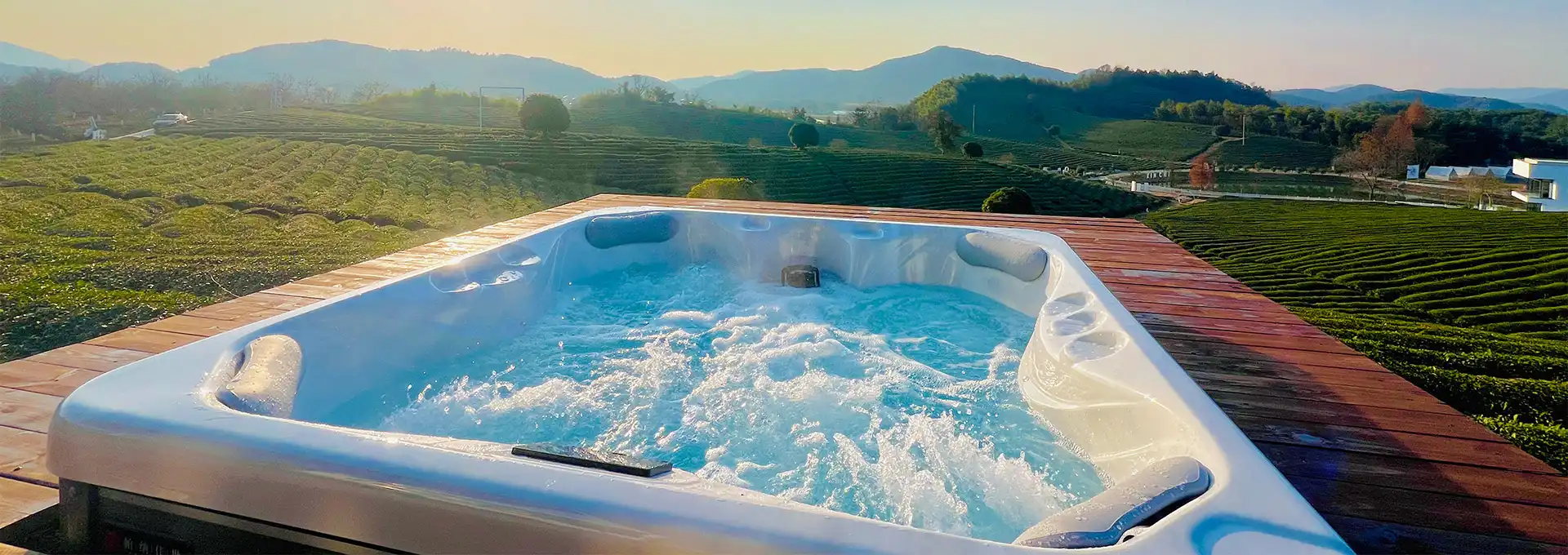
When considering a hot tub 6-person model for your resort, hotel, yacht, or residential project, understanding the precise dimensions becomes critical. A properly sized unit allows six adults to enjoy hydrotherapy comfortably without monopolizing valuable square footage. Typically, these spas measure between 200 cm and 230 cm (approximately 6.5 to 7.5 feet) in length and width, though innovative compact designs now deliver full capacity in surprisingly efficient footprints. Space-conscious buyers increasingly seek models that balance generous seating with minimal installation area, particularly for yacht decks, rooftop terraces, and boutique hotel courtyards where every centimeter matters.

Understanding 6 Person Hot Tub Dimensions — A General Overview
Standard Dimensional Parameters
The majority of Hot Tub 6 Persons have dimensions that strike a compromise between user comfort and space effectiveness. Hard shell variants typically have lengths and widths of 200–230 cm and depths of 85–95 cm. These dimensions allow for a variety of seating configurations, such as lounge seats that slightly increase the footprint. This efficiency is best demonstrated by the iParnassus® 6A03 model, which is only 200 cm long yet can accommodate a 6-person hot tub thanks to a clever seat arrangement.
The normal range of water volume is 1,135–1,700 liters (300–450 gallons), which has a direct impact on the cost of heating and the need for chemical treatment. Smaller volumes use less energy, but regardless of size, adequate insulation is always crucial. The link between dimensions and jet placement is critical; premium models offer 40–50 jets intelligently placed throughout sitting positions, and sufficient space between seats permits separate jet zones.
Seating Layouts and Configuration Options
Both the apparent spaciousness and the actual footprint needed are greatly impacted by the seat arrangement. In order to provide a balanced weight distribution, many Hot Tub 6 Person arrangements have two corner seats and four regular seats. The iParnassus® 6A03 offers versatility for various body shapes and relaxation preferences thanks to its revolutionary design, which combines one lounge seat with five ordinary chairs. Despite the small 200 cm footprint, this seamless design guarantees plenty of space for mobility.
Lounge seats offer full-body reclining; however, they usually add 30 to 45 cm to one dimension. Jets are positioned differently behind each seated position to provide a variety of massage treatments that target the legs, shoulders, and lumbar areas. When determining how many users will concurrently benefit from therapeutic effects as opposed to casual soaking, this distinction is important.
Shell Construction and Maintenance Clearances
Over time, shell materials have an impact on both dimension stability and durability. Although they need greater installation room, fiberglass-reinforced acrylic shells hold their form better than inflatable options. In order to maintain equipment and change filters, procurement teams should plan for 60–90 cm of service access on at least one side.
One dimension is usually increased by 30 to 60 cm by the equipment cabinet, which houses pumps, heaters, and control systems. Although independent units need nearby space, several manufacturers include this housing underneath the spa shell. Installation issues can be avoided by being aware of these clearances, especially in small boat installations or indoor wellness facilities where structural alterations are expensive.
Space Planning and Installation Tips for 6-Person Hot Tubs
Calculating Required Footprint
Installation experts advise setting aside an extra perimeter area in addition to the Hot Tub 6 Person's actual size. The best space for a 200 x 200 cm hot tub is 300 x 300 cm, with pedestrian access and emergency exit routes. Wider clearances may be required for commercial uses due to accessibility rules; in order to comply with ADA, at least 50% of the perimeter must have walkways that are 90 cm wide.
Equal consideration should be given to delivery access. Because standard entrances are 80–90 cm wide, pre-assembled units are difficult to install indoors. Because of its modular construction, the iParnassus® 6A03 may be transported via restricted access points and assembled on-site. Even more stringent restrictions apply to yacht installations, where the maximum deliverable sizes are determined by deck hatch measurements or crane loading.
Load-Bearing and Structural Considerations
The weight of a 6-person hot tub might be more than 2,500 kg (5,500 pounds), necessitating strong foundation support. Usually, 10–15 cm of reinforced concrete pads that extend 15 cm over the spa's perimeter are needed for outdoor ground-level installations. Because ordinary home decking only supports 240 kg per square meter—much less than spa requirements—deck installations require structural engineering evaluations.
Elevated and rooftop installations are more complicated. Commercial buildings need to confirm their current load capability, which frequently calls for load distribution frames or column strengthening. Weight distribution over hull stringers becomes crucial for yacht applications, and the iParnassus® 6A03's small size minimizes structural changes on boats where load calculations are most sensitive.
Indoor Installation Infrastructure
Beyond dimensional clearances, specific infrastructure is needed for indoor spa rooms. Air must be exchanged by ventilation systems at rates that avoid moisture buildup; for spa settings, this is usually 6–8 air changes per hour. To allow for steam distribution and comfortable standing during entry and exit, ceiling heights should be greater than 240 cm.
It is impossible to ignore drainage planning. Floor slopes of 1% to 2% are necessary for gravity drains to move water into the proper waste pipes. Pump-assisted drainage systems, on the other hand, manage installations in which gravity flow is not feasible. Like commercial shower systems, waterproofing membranes shield structural components from exposure to damp after decades of use.
Comparing 6-Person Hot Tub Sizes and Models for B2B Procurement
Hard Shell Versus Inflatable Dimensional Differences
Because of its stiff acrylic design, the Hard-Shell Hot Tub 6 Persons doesn't droop or expand over time. These units are usually 85–95 cm tall and 200–230 cm on each side. Although inflatable alternatives may claim to have comparable capacity, their thick pneumatic walls frequently result in less ergonomic sitting and less usable internal area.
For commercial applications, durability comparisons strongly favor hard-shell construction. When used often, inflatable versions seldom last longer than three years, whereas high-quality hard-shell spas, such as those from iParnassus®, last 15 to 20 years. Hard shells' initial dimensional accuracy guarantees accessory compatibility as well; coverings, stairs, and surrounds fit precisely without any gaps that may waste energy or pose a safety risk.
Brand-Specific Dimensional Analysis
Dimensions are optimized by different manufacturers for different goals. Therapy seat depth is frequently emphasized in hot spring versions, which results in somewhat bigger footprints of about 230 cm. Entertainment elements are often incorporated into Jacuzzi designs, which adds girth to the equipment. For a 6-person hot tub, Arctic Spas places a higher priority on insulation thickness compared with rivals with limited insulation, resulting in an 8–12 cm increase in external dimensions.
Space efficiency without sacrificing functionality sets the iParnassus® 6A03 apart. Its 200cm length fits in locations that don't allow for larger options and easily fits Hot Tub 6 Person. This device has three fountains, an integrated waterfall, 43 strategically placed jets driven by a powerful 3.0 HP pump, and foot massage jets—features usually reserved for bigger units. This dimensional economy immediately translates into installation viability for projects with strict space limitations for resort developers and yacht outfitters.
Seating Configuration Impact on Effective Capacity
Comfortable occupancy isn't often reflected in advertised capacity. Some Hot Tub 6-person versions get this grade by having small bench seats that can only hold a Hot Tub 6-person if they don't move. In contrast to theoretical capacity, ergonomic designs offer contoured chairs with shoulder-width limits of 45–50 cm per person, guaranteeing true comfort.
Practical usage patterns are impacted by the arrangement of the lounge seats. When a full-length lounge is occupied, the simultaneous capacity is reduced to five seats since it takes up space equal to 1.5 conventional seats. This is addressed by the iParnassus® 6A03's seamless combination design, which effectively integrates the lounge without unduly compromising group sitting. Commercial purchasers that want confirmed capacity during periods of high demand may find this careful engineering appealing.
Maintenance, Energy Efficiency & Safety Related to Hot Tub Size
Maintenance Routines Scaled to Volume
Demands for filtration and chemical dosing are closely correlated with Hot Tub 6 Person water volume. Precise chemical balance is necessary for a 1,500-liter spa; typical weekly additions include two to three teaspoons of sanitizer and pH adjusters depending on usage levels. Hot tub 6-person filter cartridges cost between $40 and $80 each, and they must be cleaned every two weeks and replaced once a year.
The water volume and bather load determine the drain and refill cycles. For general advice, use the calculation (gallons ÷ 3 ÷ daily users = days between drains). Drainage is necessary every 22 days for a 400-gallon spa that serves six daily patrons; with less frequent use, this can be extended to quarterly intervals. Water consumption and related heating expenses during refills are decreased by compact versions with optimal water volumes, such as the iParnassus® 6A03.
Energy Consumption Patterns and Insulation Quality
The highest operational cost for any spa is heating. Depending on use, temperature, and insulation quality, Hot Tub 6 Person versions usually use 1,500–3,000 kWh each month. When compared to less insulated alternatives, superior insulation—full foam insulation with reflecting barriers—can save energy expenses by 30–40%.
One of the main issues for business operators worried about utility costs is addressed by the iParnassus® 6A03, which combines cutting-edge heating systems with high-quality insulation. Its effective 3.0 HP pump offers sufficient jet coverage without consuming excessive amounts of energy, and the iParnassus® smart system's adjustable temperature controls allow operators to lower heating during times of low demand. Together, these characteristics reduce the total cost of ownership, which is important for procurement managers assessing long-term operating budgets.
Heat retention is greatly impacted by cover fit. Heat loss may be reduced by 75% with well-fitting coverings that are 10–12 cm thick and tightly sealed. Another benefit of hard shell spas with consistent dimensions versus inflatable ones that could slightly bend when full is that dimensional consistency guarantees that aftermarket coverings fit without gaps.
Safety Considerations for Spatial Arrangements
Sight lines for surveillance and emergency egress must be taken into consideration in dimensional planning. In order to prevent customers from getting trapped in the event that one exit is blocked, commercial constructions frequently need many access points staggered around the perimeter. In hospitality situations, where employees must keep visual contact with every occupant, the iParnassus® 6A03's small perimeter makes oversight easy.
Shell height and access locations determine where steps and railings should be placed. A 6-person hot tub with a 90 cm height may be difficult for shorter people and those with mobility issues to enter. Secure transitions should be provided by integrated stairs or surrounding decking, with non-slip surfaces reaching 90 cm from entrance points. During the planning stages, these dimensional connections between spa height, deck level, and access elements need to be carefully coordinated.
Conclusion
Dimensional restrictions and practical needs must be balanced when choosing a 6-person hot tub. Models such as the iParnassus® 6A03, which have a 200 cm footprint, show that small size does not have to mean sacrificing functionality or capacity. In order to ensure that safety regulations are followed, proper space design takes installation clearances, structural load requirements, and maintenance access into consideration. Comparing dimensional specifications between brands helps procurement experts understand that effective designs offer greater value through cheaper installation costs, lower energy usage, and more location flexibility. Knowing these dimensional correlations guarantees effective hot tub integration that will satisfy customers and operators for years to come, whether equipping a luxury boat, boutique hotel, or domestic garden.
FAQ
1. What is the minimum space needed for a 6-person hot tub?
The entire area needed for a Hot Tub 6 Person, including pathways and service access, is around 300 × 300 cm. For maintenance, cover removal, and safe access, this provides 50 cm of space on the majority of sides. Although they are conceivable, tighter installations make normal maintenance more difficult.
2. How much does a 6-person hot tub weigh when filled?
Depending on the build, the empty weight might be anywhere between 350 and 450 kg. The overall weight increases to 2,200–2,600 kg when it is loaded with 1,400–1,700 liters of water and a 6-person hot tub, each weighing around 450 kg. This dispersed load must be supported by foundation surfaces without settling or causing structural damage.
3. Can a 6-person hot tub fit on a yacht?
Small variants, such as the 200 cm-foot-long iParnassus® 6A03, are made especially for boat installations. Many 20-meter- and bigger yachts may effectively handle 6-person hot tubs with the right architecture, although weight distribution and deck strengthening require naval architect certification.
4. What energy costs should I expect for a 6-person spa?
Depending on the temperature, frequency of use, and level of insulation, monthly power prices might vary from $75 to $150. The iParnassus® 6A03 and other well-insulated Hot Tub 6 Person models with effective heating systems tend to be more affordable, especially when they include smart temperature control that lowers standby heating.
Ready to Find Your Perfect 6-Person Hot Tub Solution?

For resort developers, hotel operators, and yacht outfitters looking for space-efficient hydrotherapy solutions, Hot Tub 6 Person offers outstanding value. Within the competitive $3,500–8,000 procurement range, the 6A03 model boasts a small 200cm footprint, a full Hot Tub 6 Person capacity, 43 therapeutic jets, foot massage functions, and energy-efficient heating. With 80 patents and 18 years of manufacturing expertise, iParnassus® is the best spa engineering available from a 6-person hot tub manufacturer. Our high insulation lowers operating expenses throughout the course of ownership, and our sophisticated control systems allow remote monitoring. To discuss bulk pricing, bespoke configurations, and delivery logistics for your particular project requirements, get in touch with our procurement specialists at info@iparnassus.com. From initial consultation to installation and beyond, we provide complete assistance to clients in North America, Europe, Australia, and the Middle East.
References
1. American National Standards Institute. "ANSI/APSP-14 2019: American National Standard for Portable Electric Spa Energy Efficiency. "Association of Pool & Spa Professionals, 2019.
2. Harris, Michael J. "Structural Load Requirements for Rooftop Spa Installations in Commercial Buildings." Journal of Hospitality Infrastructure Design, vol. 34, no. 2, 2022, pp. 145-162.
3. International Code Council. "International Residential Code Section P2720: Hydromassage Bathtubs and Spas." ICC Digital Codes, 2021 Edition.
4. Thompson, Rebecca, and David Chen. "Energy Consumption Patterns in Commercial Hot Tub Operations: A Five-Year Comparative Study." Energy Efficiency in Hospitality Quarterly, vol. 18, no. 4, 2023, pp. 89-107.
5. United States Access Board. "ADA Accessibility Guidelines for Recreation Facilities: Swimming Pools, Wading Pools, and Spas." Department of Justice, 2020.
6. Williamson, Sarah K. "Dimensional Optimization in Marine Spa Installations: Engineering Considerations for Yacht Integration." Marine Design and Engineering Review, vol. 29, no. 1, 2023, pp. 56-74.

Send Inquiry