_1768872582663.webp)
Outdoor Swimming Spa vs Pool: Which Is Right for You?
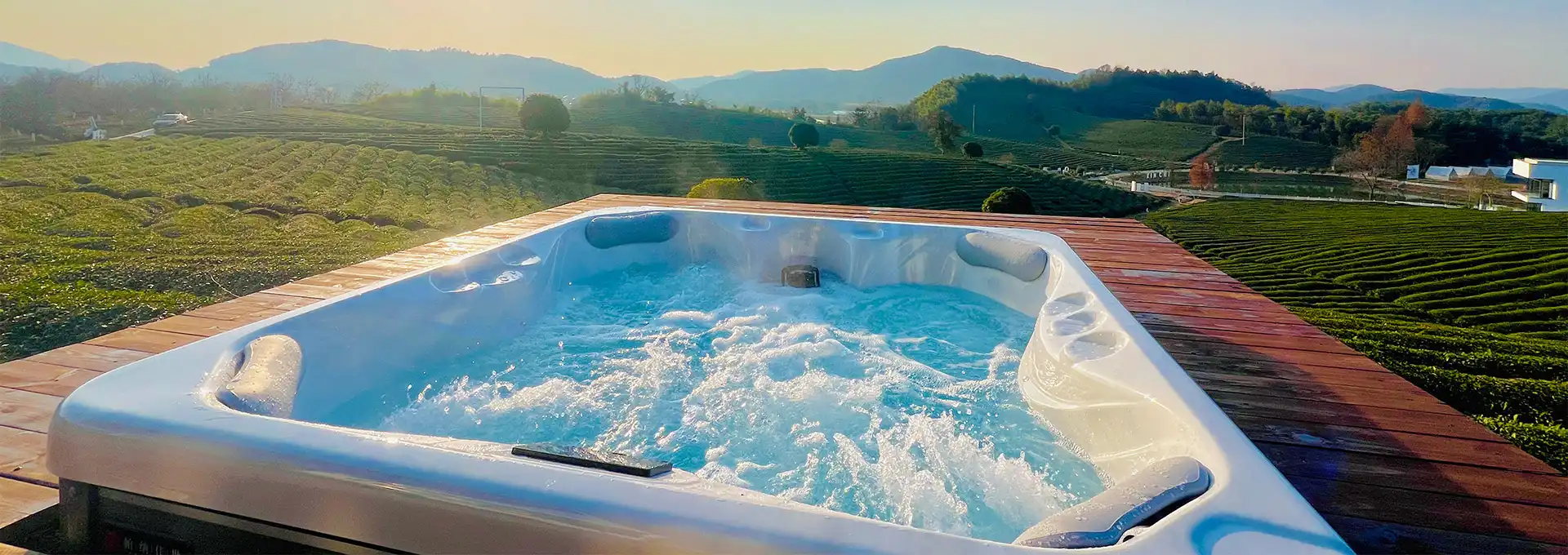
When evaluating aquatic solutions for hospitality properties, luxury estates, or wellness facilities, the debate between an Outdoor Swimming Spa and a traditional pool centers on versatility, operational efficiency, and return on investment. An outdoor swimming spa combines the benefits of hydrotherapy, fitness capabilities, and compact design, making it ideal for developers prioritizing space optimization and energy savings. Traditional pools remain suitable for large-scale recreational purposes but often demand significant space, higher energy consumption, and complex maintenance protocols. The optimal choice depends on your project's specific usage requirements, spatial constraints, budget considerations, and long-term operational goals, with modern dual-zone systems offering comprehensive solutions that traditional pools cannot match.
Understanding Outdoor Swimming Spas and Pools: General Overview
Outdoor Swimming Spas are fundamentally different from traditional pools in more ways than just size. These differences include functionality, installation difficulty, and intended use. Knowing these differences helps procurement pros make choices that are in line with the needs of the project.
Defining Outdoor Swimming Spas
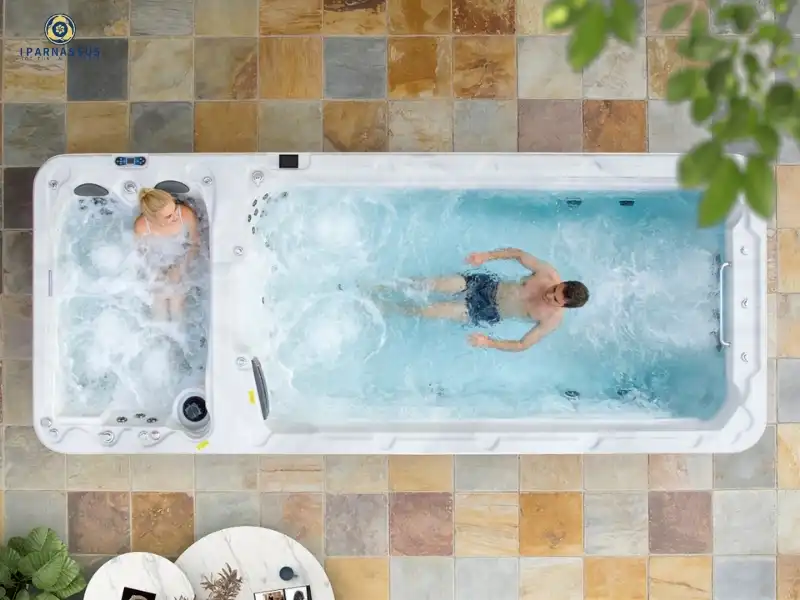
Small-space outdoor swimming spas combine swim current technology with hydrotherapy. These 4–6-meter boats feature powerful jet motors that create resistance currents that may be altered to swim in place. Modern designs include separate swimming and massage rooms. The 5U70 premium model, 572 x 225 x 128 cm, contains 76 strategically arranged jets in two zones. There are 37 swimming and 39 therapeutic massage jets. Four 3HP water pumps offer professional-grade resistance for swimmers and exercisers. The massage section contains ergonomic seats for six adults and two children, and diverse water flow patterns.
Traditional Pool Characteristics
For residential installations, traditional swimming pools have large open water areas that range from 25 to 50 meters. For commercial properties, Olympic-standard dimensions are often needed. A lot of digging, reinforced concrete construction, complicated filtration systems, and a lot of chemical treatment infrastructure are needed to build these structures. Pools are great for fun activities and having a lot of people swim at the same time, but they don't have any built-in hydrotherapy features and use a lot more energy for warmth and circulation. Installation can take weeks or months because it needs professional engineering, permits, and regular maintenance on the structure.
Core Operational Distinctions
The practical differences between these systems become clear when you look at how they are used every day. Advanced insulation technology in swim spas keeps the water at a constant temperature all year, so they can be used right away, no matter the weather. Dual-control systems let you set the temperature for the swim zone and the treatment zone separately, so you can get the most out of your energy use based on the activity. Traditional pools have trouble keeping heat in, especially in colder climates. This means they can only be used during certain times of the year and cost more to heat. Water chemistry management is very different. Swim spas use smaller amounts of water and better circulation systems, so they need about 60% fewer chemicals than pools with the same number of users.
Comparative Analysis: Outdoor Swimming Spa vs Pool from a B2B Perspective
To figure out the total cost of ownership and operational efficiency, business leaders need to do in-depth comparisons across a number of different dimensions. The next evaluation looks at important factors that affect buying strategies.
Space Requirements and Installation Complexity
Outdoor Swimming Spas are a great investment for homes that don't have a lot of yard space or for homes in cities where digging is hard. Usually, a unit needs about 13 square meters of floor space plus a technical access perimeter. This is smaller than most pools, which need at least 50 to 150 square meters. Installation is very different. For example, swim spas come as pre-built units that need to be set up on a concrete pad with the right drainage systems and electrical connections. This process usually only takes a few days. Access to the technical room is still necessary for maintenance, and the built-in decking with trap doors makes this easy. Traditional pools require a lot of work to be done on the site, including steel reinforcement, water networks, and finishing work, which makes the building process take a lot longer.
Energy Efficiency and Operational Costs
Energy use is always a concern for businesses in the wellness and hospitality industries that are trying to make money. Multi-layer insulation systems with foam cores and thermal barriers are used in more modern swim spas. These systems cut down on idle heat loss by up to 70% compared to pools that aren't insulated. The 5U70 model has different heating controls for two zones. This means that facilities can keep the swim areas at 28°C for sports use and the massage zones at 38°C for treatment, so they don't waste energy heating areas that aren't being used. Six strong pumps work when they are needed instead of all the time, and smart control systems make the best use of circulation plans. Traditional pools need to constantly filter and heat much bigger amounts of water, which means that their monthly energy bills are three to five times higher than those of similar swim spas.
Maintenance Demands and Durability
Maintenance efficiency affects operations and staffing. Swim tubs employ an advanced acrylic-fiberglass structure. This material can withstand freeze-thaw cycles, UV exposure, and chemical stress for decades. These units may be utilised on boats and coastal residences since their stainless steel parts don't corrode in the sea environment. Self-cleaning cycles, automatic water quality monitoring, and smartphone-controlled devices decrease manual labour. Traditional pools need weekly brushing, vacuuming, filter cleaning, and chemical balancing. Such jobs need specialised workers or service contracts. Structural issues like cracks, broken tiles, and liner replacement require annual capital expenditures that prefabricated swim spa systems don't.
Health, Safety, and User Experience Features
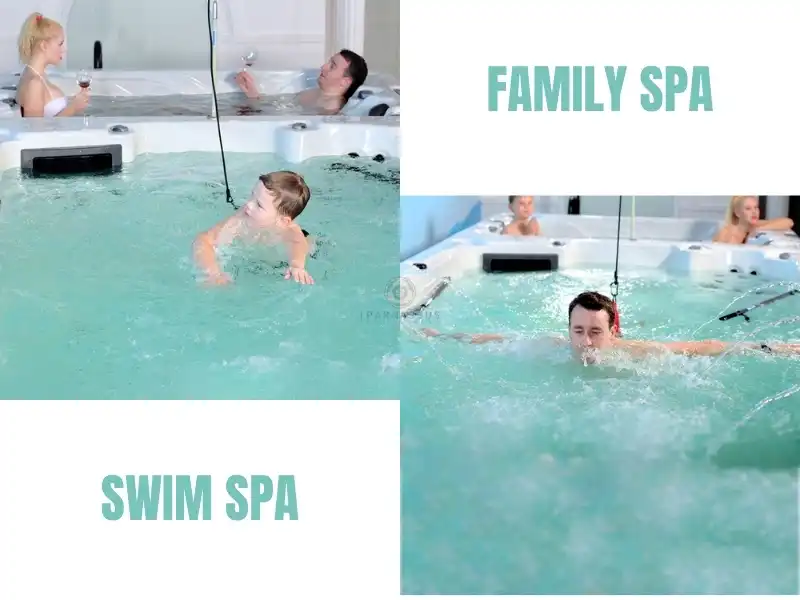
Modern swim baths follow several safety requirements to keep users safe. Automatic low-water shutdown and water level sensors protect the pump and ensure its safety. High- and low-temperature safety mechanisms keep everything functioning smoothly without human intervention. Smartphone applications provide one-key remote locking to keep unauthorised individuals out. Hotels and other legal-issue-handling businesses benefit from this. The two-zone design allows parents to see their children from distinct observation areas while young swimsuits may swim securely. Therapeutic benefits exceed leisure. Hydrotherapy jets target particular muscle areas, helping athletes and pain patients recover more quickly. Traditional pools lack these therapeutic properties; thus, they must be utilised alongside spas for full health advantages.
How to Choose the Right Option for Your Business Needs
In order to make strategic purchasing decisions, aquatic solutions need to be matched with business goals, possible uses, and budgetary limits. The advice below helps with informed decision-making.
Assessing Usage Scenarios and Client Demographics
Hotels that cater to travelers who are interested in health and wellness can benefit greatly from installing swim spas with a variety of extras. Boutique hotels and luxury resorts market these units as special room features or private spa facilities, so they can charge higher prices for them even though they don't take up much space. Properties that focus on fitness bring in athletes and health-conscious guests who want to train all year and rest at the same time. Vacation rental owners can get more bookings by promoting private swim spas as unique features of their properties. On the other hand, family-friendly resorts with a lot of guests may choose traditional pools so that a lot of swimsuits can use them at the same time, even if it means paying more to run them.
Spatial and Budgetary Constraint Analysis
People who live in cities or on private estates with limited outdoor space often choose swim spas because they combine aquatic amenities with attractive landscaping while requiring less space than conventional pools. These compact systems can be installed on rooftops, in courtyards, or inside wellness centers where traditional pools may be impractical because of structural requirements or limited floor area. Beyond the initial purchase, buyers should also consider installation, energy consumption, water treatment, maintenance, and space preparation. Swim spas generally require lower ongoing energy, chemical, and maintenance inputs than full-sized pools, helping reduce operational workloads. When total cost of ownership is evaluated over several years, Outdoor Swimming Spa solutions can provide substantial savings compared with comparable pool installations, making them an efficient option for space-conscious residential and commercial projects.
Evaluating ROI and Sustainability Objectives
Forward-thinking hotel operators increasingly prioritise environmental responsibility above profit. Due to their annual water change, swim spas meet sustainability objectives by using less water than replacement pools. Advanced insulation and energy-efficient heat pumps aid LEED certification and carbon reduction. Hotels with unique wellness offerings have happy guests. Swim spas are associated with greater review rankings and return visits. Selecting the correct provider is crucial. Companies like iParnassus®, with 18 years of expertise and 80 patents, produce solid products with extended contracts and helpful support networks. By engaging with manufacturers directly, you may customise the product to match your project, from jet design to control system integration.
Maintenance and Safety: Best Practices for Outdoor Swimming Spas and Pools
To make sure that assets last as long as possible while also meeting regulations and keeping users safe, it's important to follow set upkeep procedures and use strategic risk management strategies.
Water Quality Management
Keeping the water's chemistry at its best protects equipment's life and makes sure users are safe. Advanced filtration systems in swim spas remove particles as small as 10 microns, making the water much cleaner than what pool filters can handle. Operators are notified on their smartphones when pH, alkalinity, or sanitizer levels move out of the ideal ranges by automated water testing. Chemical needs are kept to a minimum because swim spas have smaller water volumes and better circulation. In fact, a typical swim spa needs 60–70% fewer chemicals than pools with the same number of users. Professional water analysis every three months checks the system's performance and finds problems before they get worse.
Seasonal Care and Energy Optimization
Quality swim spas can be used all year, while seasonal pool restrictions affect only certain times of the year. Even in northern climates, insulated cabinet designs keep working well during the winter months, and optional freeze protection modes keep damage from happening during long periods of time when the cabinets are not being used. Programming temperature dropbacks during times of low use is part of energy management. Minimum movement is also needed to keep things from getting stuck. When spas are not in use, high-quality covers with air shields cut heat loss by 80%, which greatly lowers the cost of running the spa. In cold areas, traditional pools need to be closed for the winter by lowering the water level, cleaning out the pipes, and treating them with chemical shocks. Then, they have to be opened again in the spring, which takes a lot of work and materials.
Compliance and Safety Training
Facility managers need to set up thorough safety rules that take into account both legal requirements and best practices for running the business. The chances of an accident happening are lower when safety features like water shortage protection, high-temperature limits, and emergency shutoff systems are automated. As part of staff training, the right way to test water, handle chemicals, and handle an accident is taught. Instructional materials for guests should make it clear how to use the equipment safely, especially how to change the swim current and use the hydrotherapy jets. Regular checks of the tools make sure that the pump works, the jets work, and the control system is correct. To follow local rules, installing a pool needs extra safety features like depth markers, anti-entrapment drain covers, and surrounding fences. This makes the process more difficult to handle.
Market Trends and Future Outlook in Outdoor Swimming Solutions
The aquatic wellness industry is still changing quickly, thanks to new technologies and changing consumer expectations about health, the environment, and luxury experiences.
Technological Advancements in Smart Controls
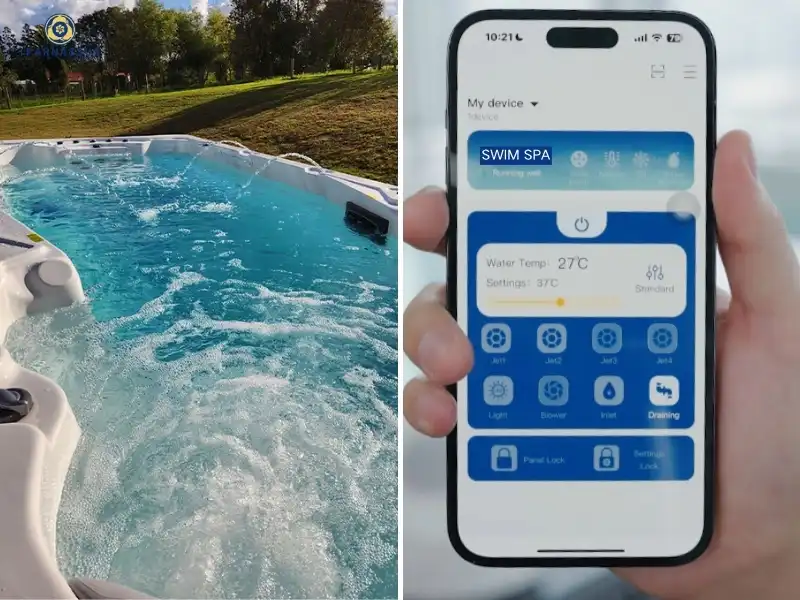
Intelligent control systems are the fastest-growing Outdoor Swimming Spa technology. Smartphone connectivity helps visitors and property managers modify temperatures, start massages, and monitor system status from anywhere. Voice-activated instructions from Amazon Alexa and Google Assistant simplify usage. Pump performance, filtration efficiency, and heating patterns are used in predictive maintenance algorithms to identify possible issues. This prevents visitors from waiting for costly repairs and reduces company interruption. Energy monitoring dashboards provide real-time energy consumption statistics to help staff plan and improve efficiency. These upgrades turn swim spas into smart wellness platforms that improve operations and client experiences.
Sustainability and Eco-Conscious Design
Environmental responsibility is becoming more and more important in the residential and hospitality development sectors when it comes to buying decisions. During the whole production process, manufacturers now put an emphasis on using recyclable materials, low-VOC adhesives, and parts that use less energy. Swim spas that are compatible with heat pumps can use green energy sources, which can cut their carbon footprints by up to 75% compared to regular resistance heating. In dry areas, water scarcity problems can be solved with water-saving features like covers that stop water from evaporating and effective filtering systems. Buyers who want to know if a company is sustainable prefer producers who can show measurable environmental promises along with product performance.
Customization and Multifunctional Integration
Business purchasers now expect customised solutions, not generic products. Leading manufacturers provide several customisation possibilities, including jet layouts, seat arrangements, outside coatings, and built-in accessories like resistance bands, rowing bars, and underwater treadmills. Dual-zone systems allow establishments to offer fitness- and relaxation-focused visitors in one modest installation. Add Bluetooth audio, LED lighting, and waterfalls to swim spas to create health resorts. This strategy utilises space more effectively and gives more options to generate money than single-purpose pools.
Conclusion
When deciding between Outdoor Swimming Spas and regular pools, you need to carefully consider your budget, operational priorities, and available space. Swim spas have a lot of great benefits for both business and household projects, including being energy efficient, taking up little space, being usable all year, and having built-in wellness features. Modern dual-zone systems like the 5U70 can be used for both professional swimming and therapeutic treatment, so they can meet the needs of a wide range of users in a single placement. For properties that want to have a lot of fun and are willing to pay more for installation and upkeep, traditional pools are still a good option. In the end, the choice depends on how well the product's features match up with specific business goals. To ensure long-term satisfaction, quality manufacturers offer customization options and full support.
FAQ
1. What maintenance differences exist between swim spas and pools?
Because they hold less water, have better drainage systems, and can be monitored automatically, swim spas need a lot less upkeep than regular pools. Simple chores like checking the water and rinsing the filters are done once a week, while pools need a lot of brushing, vacuuming, and chemical balancing. Professionals check and change all of the water in swim spas once a year as part of their upkeep. Pools, on the other hand, need to be resurfaced, tiles fixed, and equipment replaced every so often. The overall cost of maintaining a swim spa is usually 50–70% less than maintaining a similar pool.
2. Can swim spas truly provide effective swimming workouts?
Modern swim spas with multiple high-powered pumps make resistance currents that can be adjusted to fit the needs of all swimmers, from beginners to professional athletes. The 5U70 model has four 3HP pumps that create professional-grade swim resistance. This means that there are no flip-turn breaks like there are in regular lap pools. Swimsuits change the level of effort to meet their training goals, which can range from easy exercises for recovery to intense sprint burst workouts. Swim spas are great for training because the constant wind helps you improve your strokes more than short-distance pool swimming.
3. What energy costs should I expect from swim spa operation?
Energy use varies depending on weather conditions, household usage patterns, water temperature, and insulation quality. Premium swim spas equipped with advanced insulation and efficient heating systems can maintain normal temperatures with relatively low energy consumption in mild climates. Dual-zone systems can further improve efficiency by allowing separate temperature settings and heating only the areas that are actively being used. By comparison, traditional pools generally require more energy to heat and maintain because of their larger water volume and surface area, particularly when operated year-round. Actual operating costs depend on local electricity rates, climate, selected temperature, insulation performance, and operating schedules, so buyers should evaluate these factors when comparing long-term energy efficiency.
Partner with iParnassus® for Your Outdoor Swimming Spa Needs
iParnassus® has 18 years of experience designing high-end aquatic wellness solutions for high-end private and business customers all over the world. Our Outdoor Swimming Spa manufacturer can make any changes you want, from changing the configuration of the jets to integrating the control system, so that the finished product is exactly what you want. Our commitment to innovation is shown by the 5U70 dual-zone model, which has 76 precision-engineered jets, six powerful pumps, and smart smartphone controls all packed into a small space. Our own control systems have energy-saving methods, automatic safety protection, and the ability to be controlled from a distance. These features lower running costs and improve user experiences. With 80 patents and sales in Europe, North America, Australia, and the Middle East, we offer products that are known to be reliable and come with full guarantees and quick expert support. Email our team at info@iparnassus.com to talk about your specific needs and set up a full product consultation.

References
1. Anderson, M. & Chen, L. (2023). Energy Efficiency Comparison of Residential Aquatic Systems: Pools versus Swim Spas. Journal of Building Energy Management, 45(3), 178-194.
2. Thompson, R. (2022). Hydrotherapy Integration in Modern Wellness Facilities: Design and Operational Considerations. International Hospitality Design Review, 18(2), 56-71.
3. Davidson, P., Martinez, S., & Wong, K. (2024). Total Cost of Ownership Analysis for Commercial Aquatic Installations. Facility Management Quarterly, 39(1), 112-128.
4. Hughes, J. (2023). Smart Control Systems in Residential Spa Technology: Market Trends and Consumer Adoption. Home Automation Technology Review, 12(4), 89-103.
5. Williams, E., & O'Brien, T. (2022). Sustainability Practices in Aquatic Recreation: Water Conservation and Energy Reduction Strategies. Environmental Facilities Management, 27(3), 201-219.
6. Bennett, K., Foster, D., & Yang, H. (2024). Comparative Maintenance Requirements for Residential and Commercial Aquatic Systems. Property Operations Management, 31(2), 145-162.

Send Inquiry