What Size Inground Swim Spa Fits Your Backyard?
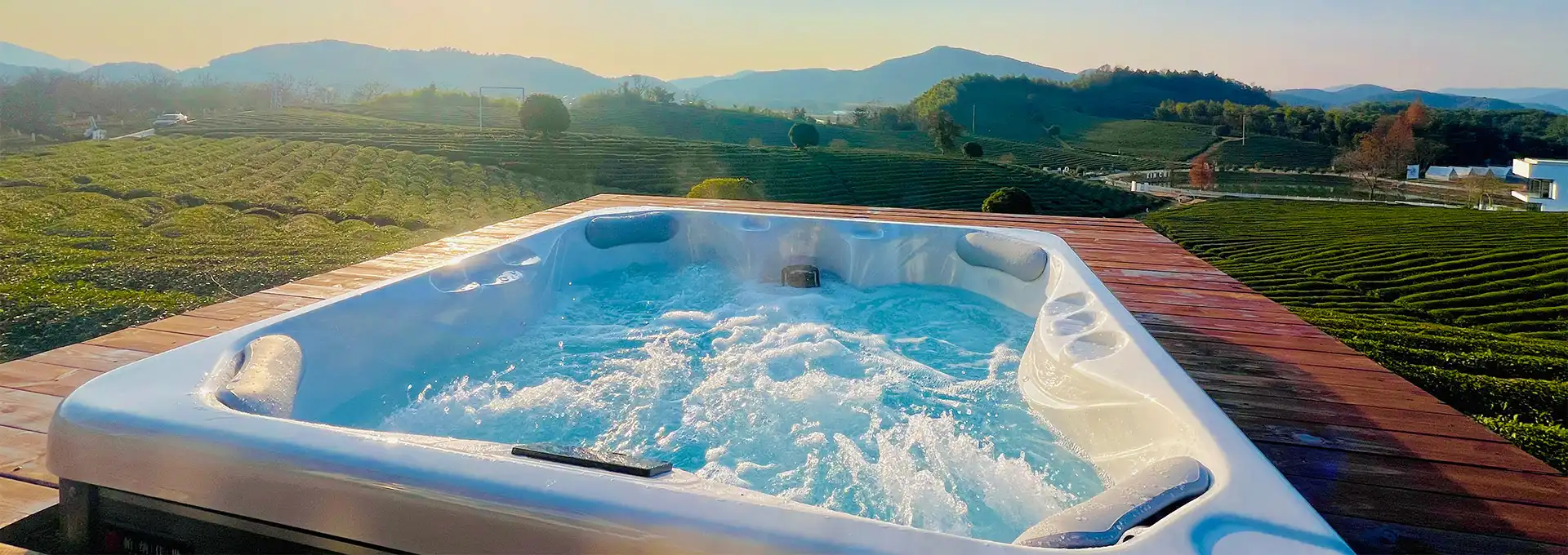
Choosing the right size for an inground swim spa depends on your available backyard dimensions, intended use, and design goals. Most units range from compact 12-foot models to expansive 19-foot configurations. A recessed swim spa integrates flush with your yard, eliminating the visual bulk of above-ground alternatives. Whether you are planning a private villa retreat or a hotel wellness zone, matching product dimensions to your site ensures proper water flow, sufficient seating, and safe access — all without compromising the landscape you have worked hard to design.
Understanding the Importance of Choosing the Right Inground Swim Spa Size
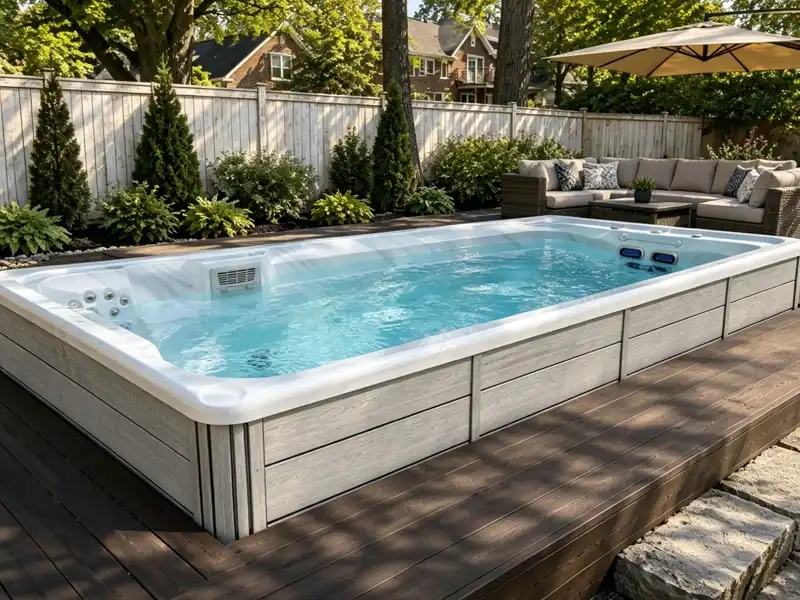
Size is not just about square footage. It directly affects swim current performance, user capacity, installation depth, and long-term operational cost. Getting it wrong can mean an undersized unit that frustrates serious swimmers or an oversized excavation that disrupts drainage and triggers zoning issues.
Why Size Affects Performance
If the tank is at least 16 feet long, swimmers can do a full stroke cycle against the flow. Shorter units are good for recovery and building strength, but they make it harder to swim laps. The way the pumps are set up is also important. You can make a current strong enough for competitive training with three 3.0HP pumps, but it only works in units that are the right length and depth.
Avoiding Costly Sizing Errors
Oversizing makes drilling more expensive for no reason and might not work with the rules for barriers in your area. When sellers undersize their homes, buyers feel bad and get less money back (ROI). This is especially true in places of business where pleased clients bring in cash. When people get their spas, the Pool & Hot Tub Alliance says that one of the main reasons they're not happy with them is that they were the wrong size.
Aligning Size with Business Goals
The spa has to be able to take care of more than one person at a time for hotel and resort builders. For a private home, a machine with only one zone might be enough. It saves time and money to choose the main use case first, like fitness, hydrotherapy, or social relaxation, then choose the size.
Key Dimensions and Factors to Consider When Measuring Your Backyard
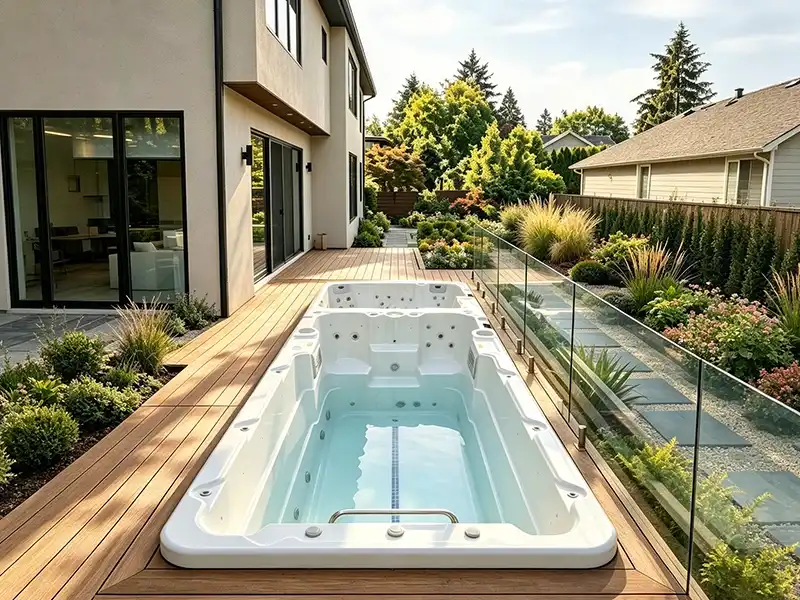
Make sure you know the right size of the area before you ask for a quote. It's not just how long and how wide it is. What you can put there depends on its depth, how close it is to buildings, and how easy it is to get in and out.
Measuring Usable Space
First, make sure that the area where the unit will go is free of anything that could get in the way. Take away the area that the deck, plants, retaining walls, and tool rooms need. For a standard inground swim spa, the opening has to be the exact size of the product. One of the good things about a single-side service access approach is this. Next, I'll talk about this more.
Depth and Structural Considerations
Most installs that are underground need a concrete vault or reinforced slab under the basin to hold up the weight of the full basin, which can be over 20,000 pounds for bigger ones. When deciding how deep to dig, the rough-in for the electricity and plumbing must also be taken into account.
Integrating Drainage and Landscape Features
With a built-in straight drain system, water goes away quickly and doesn't pool, which could damage nearby buildings. Make a plan for how the site will drain before you start digging. Check with your landscape architect to make sure the drain path doesn't go through any concrete features or irrigation lines.
Comparing Inground Swim Spa Sizes: Find the Best Fit for Different Business Needs
A swim spa can be put in a closed-off area and comes in three main types. Every size works best for a different group of people or projects.
Compact Models (12–14 Feet)
This kind of building can go on smaller lots and private terraces. Two to four people can fit in them, and they're great for hydrotherapy and low-impact water exercise. When jets are used, they are usually put on the lower back and shoulders. They are used in fitness workshops and hotel private suites that don't have a lot of room.
Mid-Range Models (15–17 Feet)
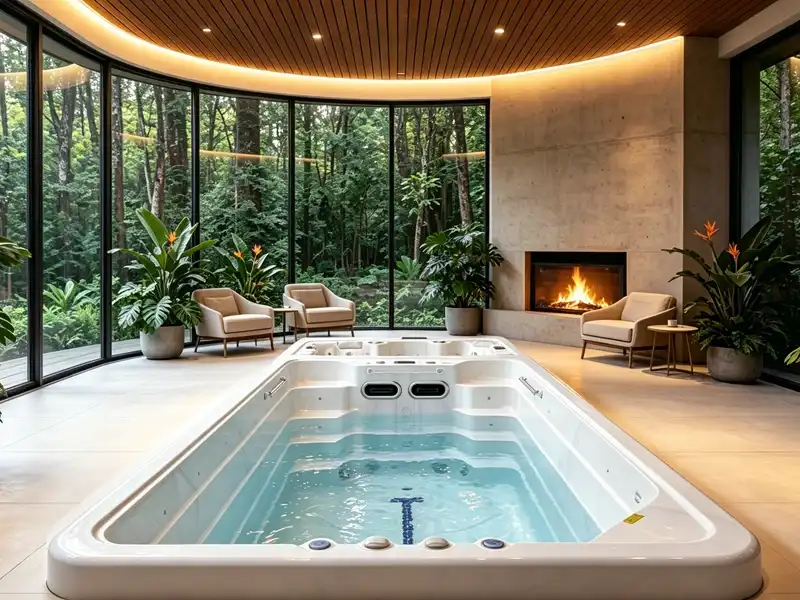
This is the most popular range for small-scale catering and home projects. Two different temperature zones can be set up, one warmer for spa use and one cooler for swimming. They can fit four to six people. These units are a good balance between how much they cost to set up and how many things they can do.
Large Models (18–19+ Feet)
Large units make the strongest currents because they are designed for pools used for business and fitness. It's strong enough for test-trained athletes because it has three 3.0HP pumps. A lot of vacation pools, rehab centers, and high-end private homes fall in this price range. The wide steps on one end make it safer, and they can also be used as seats, which is a useful feature for something this size.
Installation, Maintenance, and Operational Considerations Based on Swim Spa Size
It costs more to install bigger units, but if you plan ahead, it will be much easier to keep up with all sizes.
Site Preparation Requirements
There needs to be a concrete base that is the right size for the inground swim spa to go in. Before the shell is put on, the pipes for water, electricity, and a floor drain need to be roughed in. Hiring a good worker from the start will help you stay on schedule and avoid having to make changes.
The Single-Side Service Access Advantage
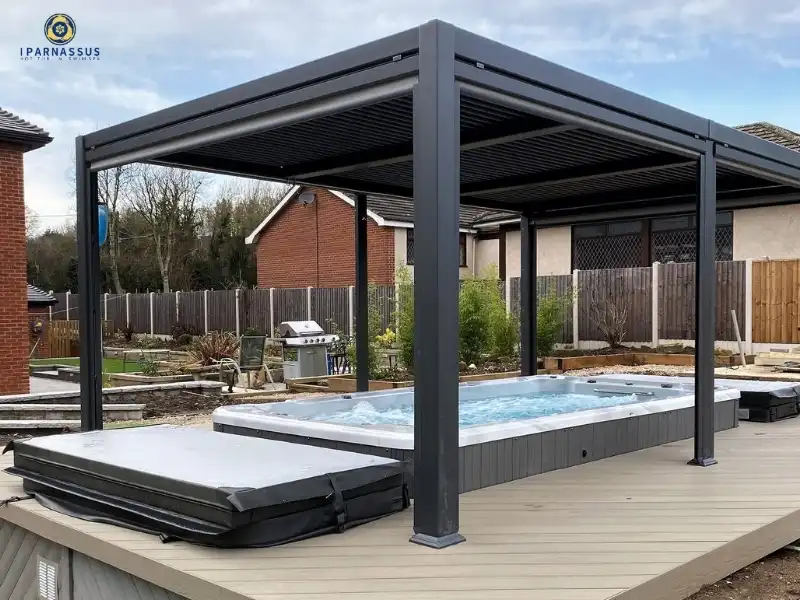
One of the best things about modern inground swim spas is that they have a service access panel that can be moved and is completely waterproof on one side of the unit. It has built-in ladders for technicians to use, and it's where all the electrical parts, pumps, and other components are set up. The unit footprint is the same as the installation footprint, so you don't need to set aside space on all four sides for maintenance. That saves a lot of space on small lots or when the spa is next to a building that blocks it.
The main useful things that building managers and installers can get from this design are these:
- No side-panel removal required: The waterproof service bay lets technicians reach all parts, so the machine is down for less time while it is being checked out and fixed regularly.
- Built-in ladders inside the access zone: Technicians can safely get in without using outside platforms or other tools because the entry zone has stairs built right in.
- Direct drain system: Getting rid of water faster and better cuts down on the time it takes to fill up again after draining.
One of the biggest problems with having an in-ground swim spa is that it's hard to get to for maintenance. These perks fix that problem. Plus, they make the product useful for business owners who can't take long breaks.
Energy Efficiency and Safety by Size
Bigger units need more power to heat and move water. Ground-level high-density foam insulation must be used on the shell walls and floor to keep the heat inside. Smart temperature controls that can be monitored in real time help workers keep an eye on how much is being used and change the settings without being there. This keeps the costs of running the business fixed.
How to Make an Informed Purchase: Size-Related Procurement Strategies for B2B Clients
At this price point, you need to do more than just compare products to decide what to buy. They need to be able to talk to their supplier in a way that is honest and based on professional knowledge.
Aligning Budget with Size and Specification
High-end recessed inground swim spas cost at least $12,000 to $28,000 before they are installed. The most expensive ones are bigger and have pump arrays with more power and touchscreen controls. Know what size you need first, then make the specs fit your budget. Don't do it the other way around.
Working with OEM and Custom-Sizing Partners
Different sizes are needed for some jobs, like a certain length to fit a deck module or less depth for a hole that isn't very deep. Because the maker has technical patents and an in-house R&D team, you can ask for changes that won't affect the structure or your warranty when you work directly with them.
Evaluating Brands on Maintenance and Support
The help you get after the sale is just as important as the item itself. What is the guarantee for each part (shell, pumps, electrical)? Also, make sure that you can get extra parts where you live. A touchscreen control interface that works with smartphones cuts down on the number of times technicians have to come out to make small changes. This lowers the product's total cost of ownership over its lifetime.
Conclusion
To get the right size inground swim spa, you need to find a seller who can give you both the product and the help you need. You should also be honest about what you want to use the spa for. There are both small and big aquatic exercise projects that can work. The best one is the one that fits your room perfectly, meets the needs of your guests or clients, and can be used for years without tiring out the staff. Make sure you measure correctly and that each need is matched with a written need.
FAQ
1. What is the minimum backyard size needed for an in-ground swim spa?
Most small recessed models need a room that is at least 12 feet by 8 feet. But you should think about the deck space around it and how the water will drain. This usually means adding two to three feet to the side that you can get to.
2. Do I need extra space around the unit for maintenance?
If you only want one side of service access, you only need room on the side with the service button. The unit footprint is the right size for the excavation, so there is no need for extra space around the outside on the other three sides.
3. Can swim spas be customized to non-standard dimensions?
Yes. Manufacturers who have their own building teams can make unique lengths, widths, and depths. This can be used for big business or home projects. Check the warranty to see if any changes you made are covered before you sign off.
4. How many users can a mid-range swim spa accommodate?
One that is 15 to 17 feet long usually has enough space for four to six people to sit down comfortably. It has a separate swimming lane and a zone for relaxing if the two-temperature option is chosen.
5. Is an inground swim spa suitable for year-round use?
Of course, as long as the unit has the right level of protection for how it will be put in place. If you put high-density insulation in the ground and cover it well, the water will stay at a good temperature all year.
Connect with iParnassus® — Your Trusted Inground Swim Spa Supplier
iParnassus® brings 18 years of spa manufacturing experience and 80 registered patents to every project. Whether you are sourcing as a developer, architect, or hospitality operator, our team offers personalized size consultations, technical specifications, and project-specific guidance. Contact our team today at info@iparnassus.com to discuss your inground swim spa requirements and request a detailed proposal.

References
1. Pool & Hot Tub Alliance. 2023 Industry Standards and Consumer Satisfaction Report. PHTA, 2023.
2. Kowalsky, Terry. Aquatic Facility Design and Management. Human Kinetics, 2020.
3. National Swimming Pool Foundation. Pool and Spa Operator Handbook. NSPF, 2022.
4. Spa Business Magazine. Global Wellness and Aquatic Facility Trends. Spa Business, 2023.
5. APSP (Association of Pool & Spa Professionals). Standards for Residential Inground Spas and Swim Spas. APSP, 2021.
6. American Institute of Architects. Outdoor Living Space Integration Guidelines for Luxury Residential Projects. AIA, 2022.

Send Inquiry